

Padel rule misconceptions are quite common, especially among players with a tennis or squash background, because although padel resembles these sports, it has its own unique rules. The most common misconceptions concern the serve, use of the glass and wire mesh, touching the net and the scoring system. In this article, we go through the 10 rule myths that spark the most arguments on court, one by one, along with the facts.
As the O’Padel Sky coaching team, we explain the common belief, the actual rule and what it means in practice for each myth. One note: the rules that apply in official tournaments are based on federation rulebooks; some local practices may be seen in social matches and club events. When in doubt, clarifying the rules with your opponents before the match is always the best approach.
Serve Myths
Myth 1: “You can serve however you like, even overhead.”
The truth: In padel, the serve is underhand. The server bounces the ball in their own service area and hits it at or below waist height. The serve must land diagonally in the opponent's service box. Serving overhand out of tennis habit is not allowed in padel. In practice, the most common fault is hitting the ball above waist height; taller players in particular can avoid this by bending their knees slightly when serving.
This rule turns the serve from an attacking weapon into a tool for starting the point and supports the rally-focused nature of the game. For serve technique, see padel serve technique post.
Myth 2: “A serve that hits the wire mesh after bouncing in the box is good.”
The truth: A serve is good if it hits the glass after bouncing in the opponent's service box; but if it hits the wire mesh (metal fence), it's a fault. This is one of the rules players mix up most often. The confusion comes from the fact that the ball hitting the wire mesh during play is allowed in certain situations, but the rule for the serve is different. In practice, aiming your serve inside the box toward the back glass reduces this risk. It's important to keep this difference between the glass and the wire mesh in mind when serving.
Myth 3: “In padel, you only get one serve.”
The truth: As in tennis, you get two serves in padel. If your first serve is a fault, you hit a second serve; if both serves are faults, you lose the point (double fault). For all the details on the serve, check out our padel serving rules article.
Summary
- The serve is underhand and you get two attempts; a serve that hits the wire mesh after bouncing in the box is a fault.
- When crossing to the other side, the ball must first touch the opponent's floor; a ball that hits the opponent's glass directly loses the point.
- Sending the ball over by playing it off your own glass is within the rules.
- Touching the net with your body or racket loses the point; golden point isn't mandatory in every match.
Glass and Wire Mesh Myths
Myth 4: “If the ball hits my opponent's glass directly, the point is mine.”
The truth: Quite the opposite. The ball you hit must first touch the floor on the opponent's side. If it hits the opponent's glass or wire mesh directly without touching the floor, you lose the point. Hitting the glass after bouncing on the floor, however, is allowed, and your opponent must return that ball.
Myth 5: “Sending the ball over by hitting it off my own glass is illegal.”
The truth: It's within the rules. In a tough situation, hitting the ball against the glass on your side and sending it over from there is a legitimate defensive shot unique to padel. However, once the ball crosses to the other side, it must still land on the opponent's floor first. In practice, for this shot to work, you need to hit the ball upward with enough power; otherwise it won't clear the net. This shot can be a lifesaver especially when you're stuck in the back corners. For using the walls, see using the walls in padel and padel glass and fencing rules articles.
| Situation | Conclusion |
|---|---|
| Ball bounces on the opponent's floor and hits the glass | Good, play continues |
| Ball hits the glass without touching the opponent's floor | The player who hit it loses the point |
| Hitting your own glass to send the ball over | Legal |
| Serve bounces in the box and hits the glass | Good serve |
| Serve bounces in the box and hits the wire mesh | Fault |
Shot and Net Myths
Myth 6: “Volleys are illegal in padel; the ball must bounce first.”
The truth: The volley is one of the most important shots in padel and is allowed throughout play. The only exception is the return of serve: the receiver must let the ball bounce first. Otherwise, volleying at the net is the foundation of padel's attacking game. Volleying the return of serve gives the point to the serving side and is one of the most common little disputes in social matches. For technique, see padel volley technique article.
Myth 7: “Lightly touching the net is fine.”
The truth: If you touch the net, net posts or the structure holding the net with your body, clothing or racket while the ball is in play, you lose the point. This rule is especially important for players who come to the net aggressively. In practice, the most common case is a player lunging forward to reach a short ball, losing balance after the shot and touching the net. After a hard volley, you need to keep your balance and not get too close to the net. For net positioning, see padel net position post.
Myth 8: “If the ball goes out of the court, the point automatically ends.”
The truth: That depends on the court's design. On courts that allow playing outside (with doors or openings), if the ball lands on the opponent's floor and leaves the court, a player can go outside and try to bring the ball back into play. This creates one of the most exciting moments in padel. However, whether this rule applies depends on the court's design and the organizer's rules. For details, see padel outside-the-court shot rule .
The best place to learn the rules is on court. Plan a match or lesson on our indoor courts at Skyland Istanbul.
Scoring and Match Format Myths
Myth 9: “Golden point is mandatory in every padel match.”
The truth: Golden point is a format in which a single deciding point is played at 40–40, and it's preferred in many tournaments and social matches. But it isn't mandatory in every match; you can also play with the classic advantage system. Which system is used depends on the tournament rules or what the players agree before the match. Details: what is the golden point .
Myth 10: “If the ball touches the ceiling or lights, the point is replayed.”
The truth: As a general rule, if the ball hits the ceiling, lighting or other structures above the court, the player who hit it loses the point. That's why ceiling height directly affects the lob game on indoor courts. Keep this in mind when hitting high lobs indoors. Some facilities may have local rules specific to their structure; in that case, it's best to ask before the match. For lets and situations requiring a replay, see lets and replays in padel post.
- The scoring system is the same as tennis: 15, 30, 40, game.
- Sets are usually played to 6 games, with a tiebreak if needed.
- Serving order and changing ends follow specific rules.
The question of golden point vs. advantage is often debated in social matches, especially when players from different groups come together. Golden point shortens matches and raises the excitement at every deuce; the advantage system can lead to longer, more grueling games. Deciding together which one to use before the match starts prevents arguments mid-set.
For full scoring details, see padel scoring system .
Lesser-Known but Important Rules
In addition to the ten myths above, there are some rules that are often overlooked in social matches. Knowing them makes a difference, especially in tournament and league matches.
- The receiving player: The player diagonally opposite the service box being served into returns the serve; their partner cannot interfere with this serve.
- Ball hitting a player: If the ball hits a player or their clothing before touching the opponent's floor, that player's team loses the point.
- Leaving the court to reach the ball: This is only possible if the court's design and the organizer's rules allow it; clarify before the match.
- Stalling and slowing down play: Being ready to play within a reasonable time between points is part of fair play; long delays unfairly disrupt your opponent's rhythm.
- Foot position when serving: The server must not step on or over the service line.
- Changing ends: Players change ends after odd-numbered games, as in tennis.
Some of these rules concern situations that rarely arise on court, but they can be decisive in tournament matches. When you're unsure about a situation, asking the organizer or a coach is always the right approach. For substitution and timeout rules, see substitutions and timeouts in padel, and for racket rules, see padel racket rules articles.
Why Are These Myths So Common?
Most rule misconceptions stem from habits carried over from other racket sports. Tennis players are used to serving overhead, and squash players are used to hitting directly into the wall. In addition, rules in social matches are often passed on by word of mouth, and local practices gradually start to be seen as “rules.”
- Habits from other sports: Players try to apply tennis and squash rules to padel.
- Word of mouth: Rules are learned from other players, not from written sources.
- Local practices: Club- or group-specific rules are mistaken for general rules.
- Differences between courts: Rules such as playing outside the court vary by court design.
We compared the rule differences between tennis and padel in our article padel vs tennis rule differences . If you're new to padel, our article padel first lesson explains which rules you'll learn in your first lesson.
Preventing Rule Disputes on Court
Social matches usually have no referee, so the rules rely on the players' shared understanding and honesty. A few simple habits minimize disputes and keep the match enjoyable.
- Before the match, clarify things like golden point, tiebreaks and playing outside the court.
- Call the balls on your own side; if you're not sure, rule in your opponent's favor.
- When you notice yourself touching the net or hitting a double hit, say so honestly.
- In a genuinely unclear situation, offer to replay the point.
For fair play principles, see our article refereeing and fair play in padel , and for the full rules, see our article complete guide to padel rules . Rules for tournaments and leagues at O’Padel Sky are announced before each event; check the schedule on tournaments and leagues page.
Conclusion
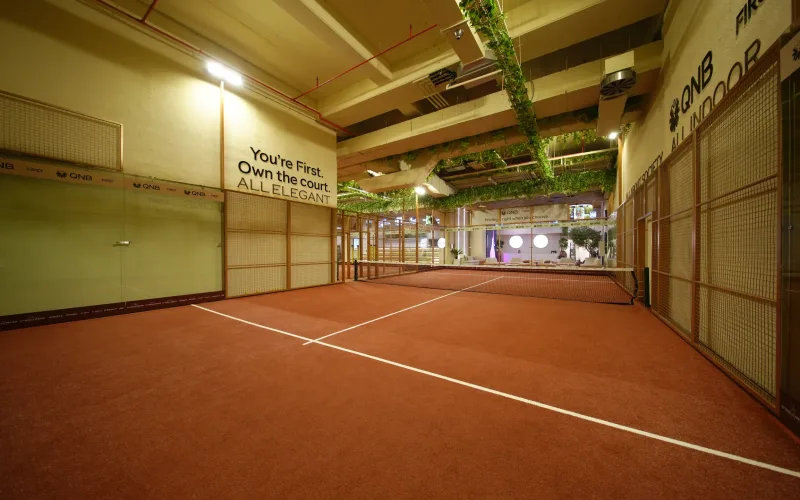
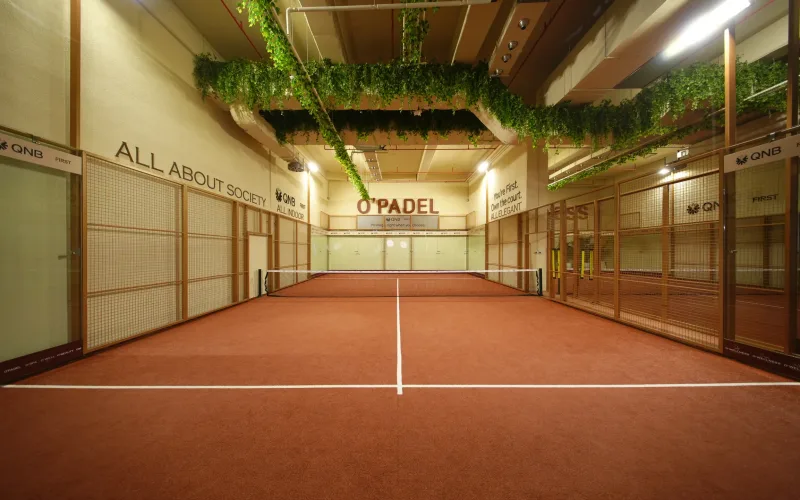
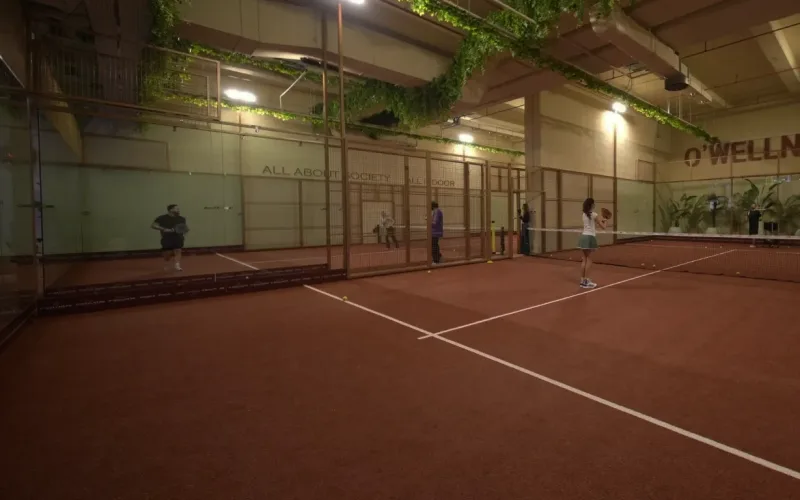
Padel rule misconceptions mostly center on the serve, use of the glass and wire mesh, touching the net and the scoring system. Knowing the basic rules, such as the underhand serve with two attempts, the ball having to touch the opponent's floor first, being free to use your own glass and losing the point for touching the net, both improves your game and prevents unnecessary arguments on court. At O’Padel Sky, located in Skyland Istanbul in Huzur Mahallesi, Sarıyer, you can learn the rules and technique together with padel lessons , practice on our FIP-standard padel courts , and book your match on when making your court reservation page.
FAQ
Yes. A player hitting the ball twice, or both partners hitting the same ball in succession, results in losing the point. The ball must be sent over with a single contact on each shot.
No. The server should not serve before the receiver is ready; if the receiver didn't attempt to play the ball, the serve is replayed.
If the racket hits the ball after leaving your hand, it doesn't count as a valid shot and you lose the point. Using the racket wrist strap reduces both this situation and safety risks.


 Padel Courts
