
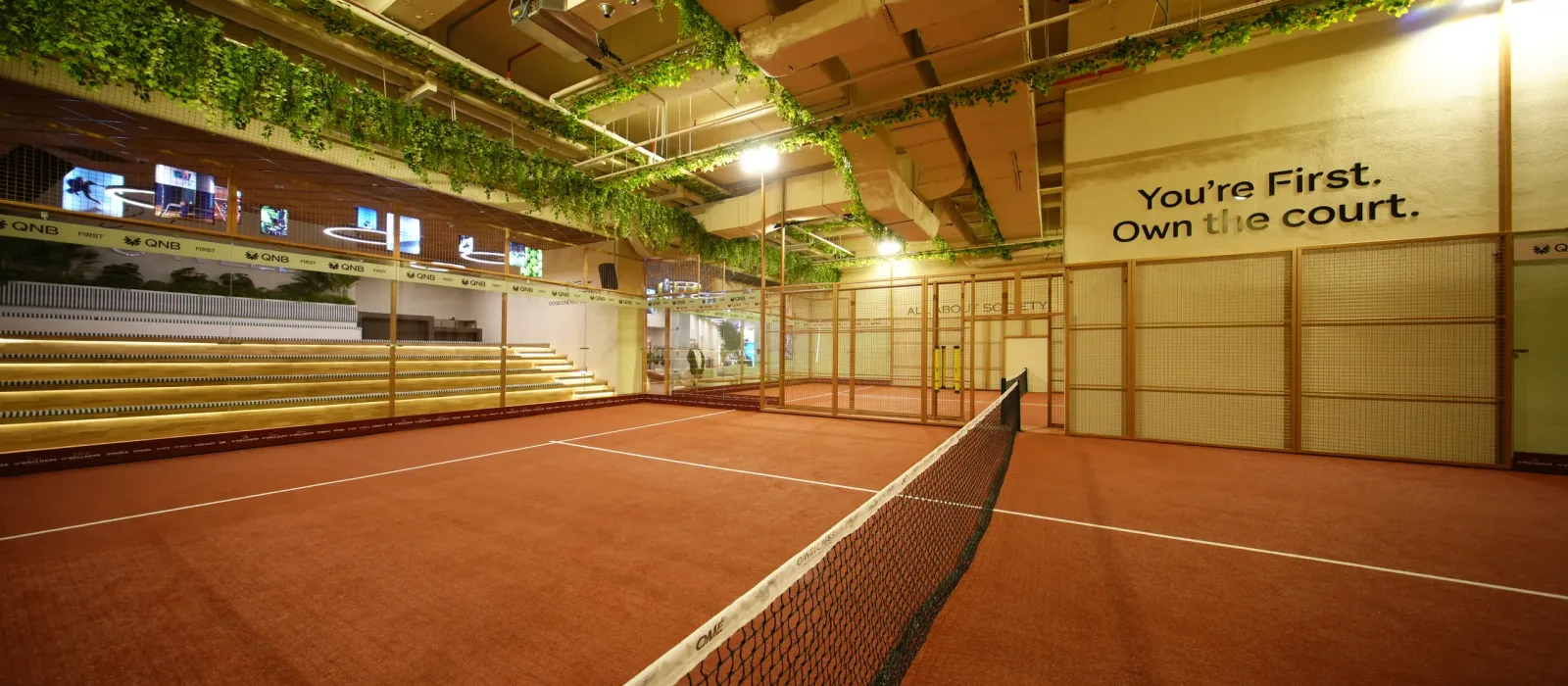
Padel fair play means that in matches played without a referee, the responsibility for applying the rules belongs to the players. The basic principle is this: each team is responsible for balls on its own side. The players on that side decide whether the ball bounced in or out and whether it bounced twice, and that decision is considered final. If neither side is sure, the point is replayed.
Most amateur and club matches are played without a referee; that’s why in padel culture fair play isn’t a courtesy but the mechanism that makes the game work. Below, based on the official FIP rules framework and established club practice, we cover the referee’s duties, which decisions players make, the protocol for resolving disputes and the practices we follow at O’Padel Sky. For the complete rules, see our complete guide to padel rules article.
Summary
- In matches without a referee, each team judges only the balls on its own side; that decision is not up for debate.
- Giving a ball you’re not sure about to your opponent is the core rule of padel etiquette.
- If neither side is sure, the point is replayed; the score and service order don’t change.
- In refereed matches, all decisions belong to the referee and players must abide by them.
- The score is called out loud before the serve; in a dispute, you go back to the last agreed score.
How is responsibility shared in padel without a referee?
A padel court is 20×10 meters and enclosed by walls. This layout makes it almost impossible to see exactly where the ball bounced from the other side of the court. The logic of the rule rests on this physical reality: whoever has the best angle makes the call.
In practice, this means the following. If a ball bounced close to the line on your side, the call belongs to you and your partner. Your opponent can say “I think it was in,” but the call doesn’t change. Likewise, you can’t make the call on a ball on your opponent’s side, no matter how sure you think you are. This symmetry is the only thing that guarantees the system works.
Decisions between partners in doubles
If the two players on the same team see it differently, the rule is simple: the view of the player who isn’t sure doesn’t count. If one says “it was out” and the other isn’t sure, the call is made. If they contradict each other — one says in, the other says out — the team’s decision goes in the opponent’s favor and the point is awarded. This is one of the most respected behaviors in padel. For in-team calling patterns, padel partner communication article.
What does the referee do, and not do?
In tournament matches with a referee, responsibility passes entirely to them. The referee rules on whether the ball is good, service faults, double bounces, out-of-court shots and time rules. Players can ask about a decision but can’t dispute it.
| Decision | Refereed match | Match without a referee |
|---|---|---|
| Ball bouncing in/out | Referee | The team on whose side the ball landed |
| Double bounce | Referee | The team on its own side |
| Service fault (waist height, line, bounce) | Referee | The receiving team |
| Let and hindrance situations | Referee | Mutual agreement, replay when in doubt |
| Racket crossing over the net / touching the net | Referee | The offending player’s own admission |
| Keeping score | Referee announces it out loud | Server calls it out loud |
| Time and break rules | Referee enforces | Reasonable use by mutual agreement |
Here’s the notable point: in a match without a referee, some decisions are left to the offending player’s own admission. Only you know if your racket touched the net or you hit the ball twice; the rule expects you to say so yourself.
In a refereed match, another of the referee’s duties is managing time: the time between points, rest at changes of ends and breaks between sets are under the referee’s control. When a player goes beyond these limits, the referee can first give a warning and, if it persists, a point penalty. In matches without a referee, this balance is left to reasonable use by mutual agreement; leaving the court empty for a long time to drink water or unnecessary delays before serving are considered against the spirit of the rules.
Another difference shows up with medical timeouts. In refereed tournament matches, a medical timeout of a set length can be requested in the event of an injury, and the referee keeps the time. Club matches have no such formality; the players decide together whether play can continue. In the event of an injury, stopping rather than playing on is always the right choice. For how warming up lowers this risk, pre-match warm-up article.
Dispute resolution protocol: four steps
As the O’Padel Sky coaching team, we recommend this order in club matches. Four steps close almost any argument in under a minute.
- Who makes the call? Which side did the ball bounce on? The team on that side decides. Asking this question ends half of all arguments right away.
- Are you sure? If the deciding team isn’t clear among themselves, no call is made. The benefit of the doubt goes to the opponent.
- Neither side is sure? The point is replayed. The score, service order and positions stay the same.
- Is the argument still going? Replay the point and drop the subject. Anyone who wants to can read the rule together after the match; arguing about rules in the middle of the court doesn’t help anyone.
The most important step in this protocol is the second. The principle of “if I’m not sure, it goes to my opponent” is the backbone of padel culture; in the long run, this behavior determines whether you find games at the club and partners for tournaments.
The fastest way to build both rules knowledge and court etiquette is to play with a coach. Pick your time on our indoor courts at Skyland Istanbul and build the right habits from your very first match.
Why does “benefit of the doubt to the opponent” work?
At first glance, this principle seems to cost you points. In reality it does the opposite. In a system without a referee, the only balancing factor is mutual trust; once that trust is broken, every disputed ball sparks a new argument and the match stops being a game.
The average number of doubtful balls in a match is two or three. So statistically, the cost of this principle to you is extremely small. What you get in return is a match that flows, opponents who want to play again and an easy time finding partners at the club. In the long run, the player who plays clean always comes out ahead.
Keeping score and score disputes
In matches without a referee, the responsibility for calling the score out loud belongs to the server. Announcing the score before every serve with your own score first — for example “30-15” — both prevents mistakes and heads off arguments.
If there’s a disagreement about the score, the established solution is to go back to the last score both sides agreed on and continue from there. Disputed points aren’t replayed; only the agreed score counts. If you want a refresher on set and game logic, the padel scoring system article explains this structure step by step, and how the 40-40 situation works is covered in what is the golden point .
When the service order gets mixed up
If it’s noticed later that the wrong player served, the points played up to that moment stand and the correct order resumes from the next serve. This is the practical solution used in both refereed matches and those without a referee. For the full service framework, padel serving rules post.
The unwritten side of fair play: court behavior
The rulebook only governs points; the behaviors that determine the quality of the game belong to club culture. The items below are the standards accepted at O’Padel Sky.
- Return the ball to your opponents. When the point is over, send the ball back to your opponent properly by hand or with your racket; don’t just leave it lying on the court.
- Raise your hand on a lucky point. A quick gesture on a point won off the net cord or the frame is part of the language of the game.
- Call your own faults. Own up to touching the net with your racket, a double hit or an out-of-court error yourself.
- Be mindful of the next court. Wait for the point being played on the neighboring court to finish before retrieving a ball that went over.
- Don’t take your anger out on the court. Don’t slam your racket on the ground or bang on the glass; the 12 mm tempered glass is durable, but the equipment is shared.
- Respect the time. Leave the court on time at the end of your reservation; the next group is waiting.
If you’re just starting out: five things to do in your first three matches
When you're new to padel, gaps in your rules knowledge show up most on the fair play side. The five points below will put you at ease in your first matches.
- Get in the habit of making the call yourself. Calling balls on your own side is your job; failing to take that on is itself a kind of rule violation. When you're sure, say so clearly.
- Announce the score out loud. Calling the score before serving is the step beginners skip most often. This one habit ends score disputes entirely.
- Don't hesitate to ask about the rules. Asking “why was that a fault?” after a point is completely normal. Teaching the rules is part of the culture in the padel community.
- Own your mistakes. Speak up when you notice your racket touched the net or you hit a double. New players who do this are quickly welcomed at the club.
- Match your pace to your partner. When levels differ, keeping the ball in play, not hitting hard, is what makes the match fun.
You'll find a prep checklist for your first match in our preparing for your first padel match article, and how to place your level correctly in the padel level assessment article. If you're curious how the rules differ from other racket sports, the padel vs tennis rule differences article offers a good comparison.
Sharing equipment and space is another side of court etiquette. A water bottle, bag, or spare racket left on court can cause a serious injury mid-point, so all belongings go in the area outside the court or in the corner by the net. On indoor courts, footwear is also a shared responsibility: outdoor soles track sand and dust onto the surface, which affects both the bounce and other players' safety.
Fair play in tournament and league formats
In Americano, Mexicano, and level leagues, points directly affect the standings, so fair play becomes even more critical. These formats are usually played without a referee and with a time limit, so every minute spent arguing comes out of playing time.
Most organizers set the framework with a single sentence at the start: you call the balls on your side, replay when in doubt, and announce the score out loud. For how the formats work, check out our What is Americano, What is Mexicano and how a padel league works articles. If the dispute is about a rules detail, you'll find lets and hindrances covered in the let and replay article, and disputed wall bounces in the glass and mesh rules .
Conclusion: At Skyland, culture, not rules, carries the game
The lack of a referee in padel isn't a shortcoming; it's part of the sport's social character. Hundreds of matches are played without referees every week on our courts at Skyland Istanbul in Sarıyer, and nearly all of them finish smoothly on a single principle: if you're not sure, it goes to your opponent. In our O’People Sky community, made up of players from Maslak, Ayazağa, Levent, and Zekeriyaköy, we pass this culture on to beginners from day one. You can join our community events, explore our lessons, or book a court right now.
FAQ
The rules give each team the right to call balls on its own side, and that call is final. You can remind them once, but insisting disrupts the flow of the match. If the behavior becomes systematic throughout the match, the right move is to raise it with the tournament organizer, or, in a club match, with the club team afterward.
There are no referees in regular club booking matches. At tournaments, league finals, and corporate events, organizers may assign a referee on request. At O'Padel Sky, this can be arranged for later-round tournament matches and private events; just mention it when you make your reservation.
The rules recognize that some violations can only be known by the player who commits them: the racket touching the net, a double hit, the ball touching the body. In these cases you're expected to declare it, and doing so is considered the most basic sign of padel etiquette. Even in refereed matches, declaring it when the referee misses it is standard practice.
In club matches, the common practice is a five- to ten-minute mutual warm-up. Both sides should get an equal number of balls during this time; using the warm-up only to practice your own shots is considered impolite. In tournaments, warm-up time is set by the organizers and is usually shorter.
The rules don't change with level, but the attitude does. The more experienced player is expected to remind beginners of the rules, call doubtful balls in the opponent's favor without hesitation, and keep the pace reasonable. For level-matched pairings, we recommend using our level assessment approach.
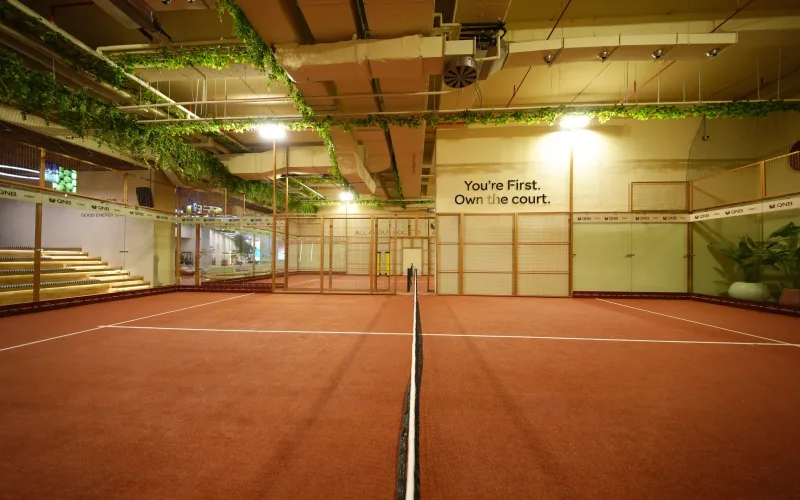
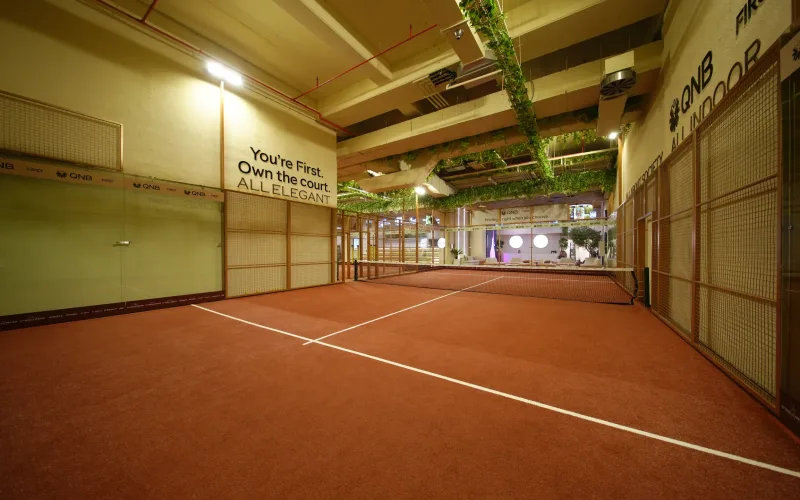
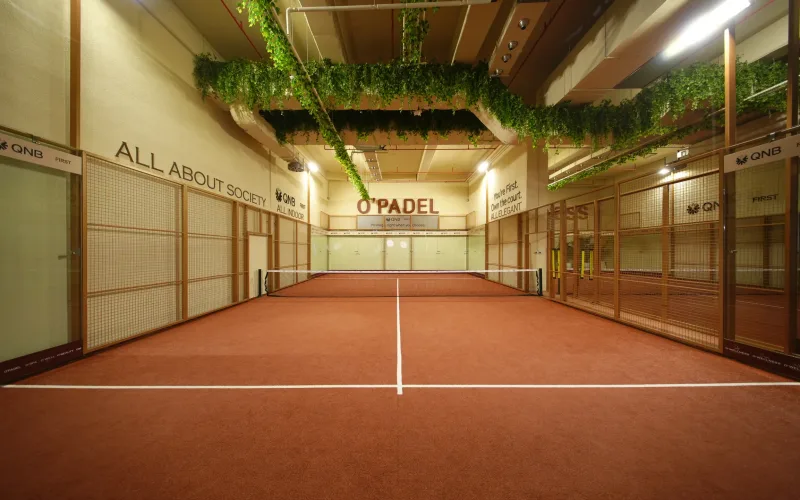


 Padel Courts
