
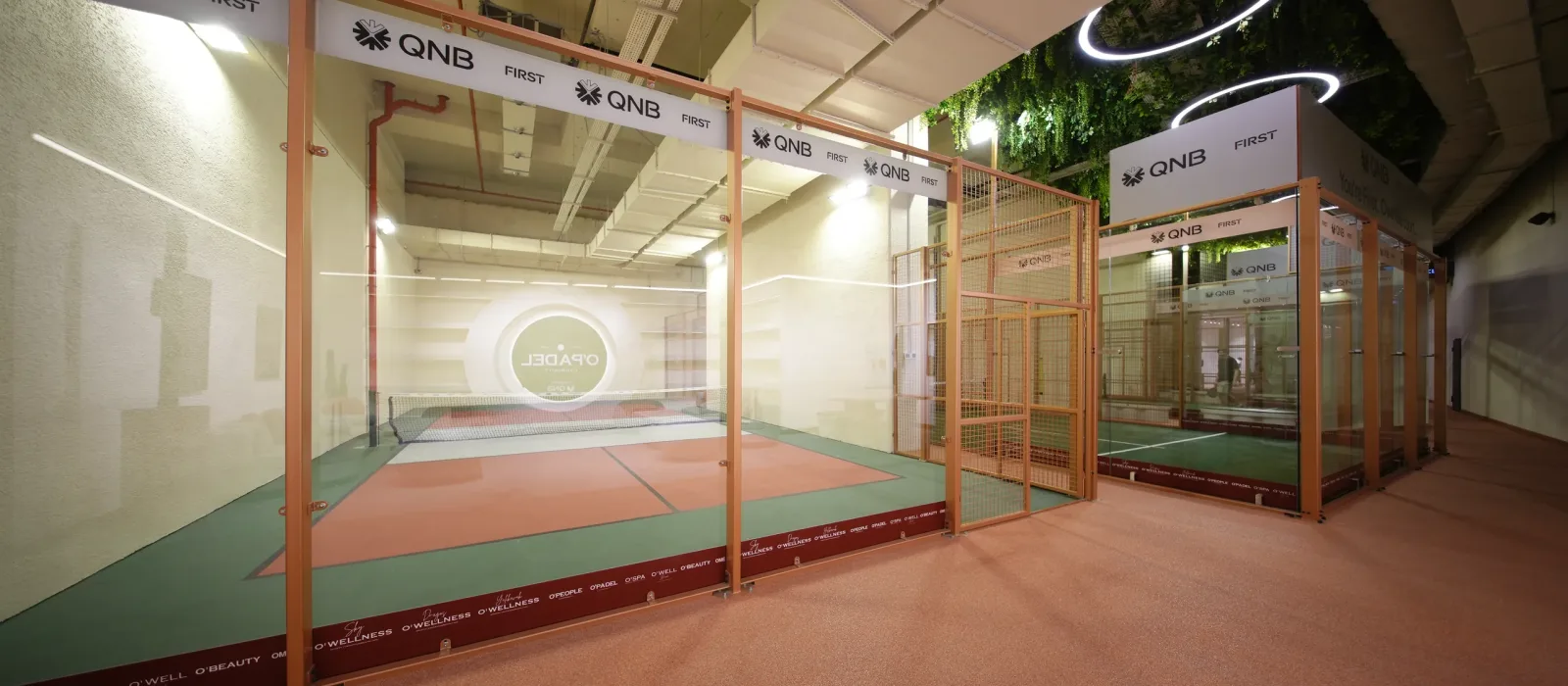
Here’s how padel break rules work in short: there is a short preparation time between points, teams change ends after odd-numbered games (1st, 3rd, 5th …) and may sit down to rest during these changeovers, and a longer break is defined between sets. In case of injury, a medical timeout of limited length can be taken. Player substitution is, as a rule, not possible once the match has started: padel is a fixed two-player team sport.
In this article we go through the time and break rules in order: which breaks are required by the rules and which are a matter of mutual courtesy, why ends are changed after odd-numbered games, how to request a medical timeout and how these times are shortened in tournament formats. To see the full set of rules, our complete padel rules guide .
Summary
- Ends are changed after odd-numbered games; sitting down is allowed during these breaks.
- The time between points is short and cannot be used to slow the game down.
- The break between sets is longer than a changeover and varies by tournament regulations.
- A medical timeout can only be taken for a genuine injury or illness, for a limited time.
- No substitutions are allowed once the match has started; the team of a player who leaves loses the match.
When do you change ends in padel?
Ends are changed after the odd-numbered games of a set: after the first game, then after the third, fifth and seventh, and this pattern continues throughout the set. If a set ended on an odd-numbered game, the new set begins with a change of ends; if it ended on an even total, the teams start the new set on the same side.
Miscounting is the most common mistake with this rule. There is a practical shortcut: if the total number of games is odd, you change ends. For example, at 2-1 the total is three, so you change; at 2-2 the total is four, so you don’t. Calling the score out loud makes tracking easier and prevents arguments at the end of points.
The reason for the rule is fairness. On outdoor courts, sun, wind and surface differences, and on indoor courts the lighting angle and back wall visibility, don’t affect both sides equally. Regular changeovers balance out that difference.
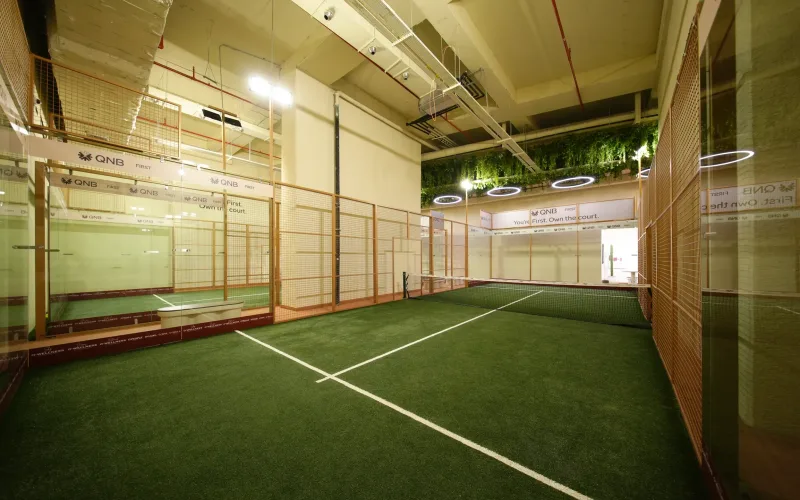
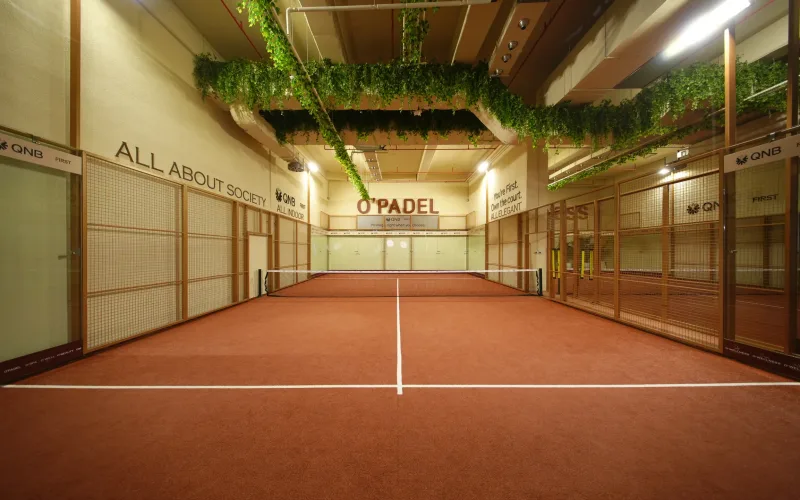
On our indoor courts at Skyland Istanbul, with 500+ lux uniform LED lighting and climate control, the difference between sides is minimal; even so, we apply the rule without exception, because tournament habits are built in club matches.
What should you do during a changeover?
How you use the short break during a changeover can matter more than the score in long matches. At the club, we recommend this sequence to our players.
- Sit down and steady your breathing. Spend the first twenty seconds without talking, breathing through your nose; your heart rate drops noticeably in that time.
- Take a quick drink. Drinking a little at every changeover works better than a lot at once.
- Agree on one tactical point. Agree on one point with your partner, not three; that’s where follow-through begins.
- Read your side of the court. The back glass distance and lighting angle feel different on the new side; notice this beforehand so the first point doesn’t surprise you.
- Get up on time. Take your position five seconds early, not in the last second.
Times: between points, changeovers and between sets
The rules require an upper limit on every break to protect the flow of the game. In tournaments, these times are tracked by the referee; in club matches they are left to mutual courtesy. The table below summarizes when each break applies and what it’s for.
| Break | When | Application | Purpose |
|---|---|---|---|
| Between points | After every point | Very short; time to collect the ball and prepare to serve | Maintaining the rhythm of play |
| Between games (no change of ends) | After even-numbered games | Short; sitting is usually not allowed | Confirming the score, drinking water |
| Changeover | After odd-numbered games | Seated rest; timed in refereed matches | Equalizing court conditions, recovering |
| Between sets | At the end of each set | Longer than a changeover | Discussing tactics, sorting out equipment and fluids |
| Medical timeout | At the moment of injury/illness | Limited time, defined in the rules | Health assessment and first aid |
| Toilet / clothing break | Between sets | Depends on tournament regulations | Reasonable personal need |
Since the exact number of seconds can vary by tournament level and the rule version in force, it is best to confirm with the organizers before the match. For how the rulebook is updated, see FIP padel rules our article.
Time-wasting: not a courtesy issue but a rule violation
The real purpose of the time rules is not to provide breaks but to prevent the game from being deliberately slowed down. Tying your shoes between points, constantly changing balls, talking at length while the opponent is ready to serve: all of these can be treated as time violations in a tournament.
- Being ready to serve: If the serving side is ready, the receiving side is expected to be ready within a reasonable time.
- Collecting balls: Retrieving a ball that has left the court counts toward the time; it doesn’t create extra time.
- Water and towel: Used between games, not during play.
- Tactical talk: You have the right to talk with your partner, but the place for it is between games and during changeovers.
- Deliberate stalling: In a refereed match, it leads to a warning and, if repeated, to penalties up to the loss of a point.
There is also an unconscious form of stalling: stretching out your own preparation. Bouncing the ball on the ground for a long time before serving, going to your towel after every point or repeating the score loudly three times disrupts the opponent’s rhythm. In tournaments these behaviors usually pass without a warning, but they create unnecessary tension with your opponents. Learning to read the tempo of the game is as important as knowing the rules.
In club matches without a referee, these points need to be established as culture rather than written rules. The approach we’ve adopted at O’Padel Sky matches without a referee and fair play article.
The fastest way to learn the time and break rules at real match pace is to play. Book a slot on our indoor courts and work on match management with a coach.
Medical timeouts and injuries: how do you request one?
A medical timeout is requested for an injury or illness that prevents a player from continuing. The request is made to the referee or the tournament official; the clock runs from the moment the assessment begins and cannot exceed the upper limit defined in the rules.
Two points are often misunderstood. First, fatigue or shortness of breath alone does not justify a medical timeout. Second, if the player cannot play when the timeout ends, they are considered to have retired from the match; the time is not extended.
Cramps, wrists and shoulders: our club practice
The three situations we see most often in club matches are cramps, wrist strain and shoulder pain. All three are usually caused by insufficient warm-up. Pre-padel warm-up We see clearly fewer in-match timeout requests among players who follow this routine.
If the pain persists, the right decision is to get it assessed rather than keep playing. Within the same complex, with our recovery and wellness services we support post-match recovery. For shoulder-related complaints, padel shoulder injuries this article helps you tell which symptoms are serious.
Timing also matters when requesting a medical timeout. The request is made after the point ends; stopping play during a point is not accepted under the rules. The only exception is when continuing clearly poses a health risk. In that case the point may be awarded to the opposing team, but health always comes before the score.
The rules also define a separate procedure for situations such as bleeding or vomiting; in these cases play is stopped for hygiene reasons and the court is cleaned. This break does not count as a medical timeout. As a club, we keep first-aid supplies at every court and train our court staff for these scenarios.
Player substitution: what do the rules say?
Padel is played by a fixed team of two players. Once the match has started, replacing a player with someone else is not allowed. If a player is injured or cannot continue, the team cannot complete the match and it is awarded to the opponents.
Before the match starts, things are different. Most tournament regulations allow a partner change before the draw or schedule is published; some organizers require you to register a reserve player. This is purely a matter of regulations, not a rule of play.
| Situation | Player substitution | Conclusion |
|---|---|---|
| Registration stage | Generally allowed | The new partner is added to the schedule |
| Before the match, after the schedule | Depends on regulations | Requires organizer approval |
| During the match | Not allowed | A team that cannot continue loses the match |
| Americano / Mexicano | Partner rotation is built into the format | Pairings change every round |
That is why rotating formats are more flexible for players without a fixed partner. We explained step by step how the formats work in our Americano tournament rules and Mexicano tournament rules articles; for registration and levels, padel tournament rules .
In our club leagues, we turned this table into written regulations: in the eight-week level league, each team registers with two players at the start of the season, a match is postponed if an excuse is given during the week, and players are not substituted. It may seem strict, but it’s the only practice that keeps the standings meaningful.
Warm-up time and pre-match routine
The rules also define a pre-match warm-up period and allow warming up with the ball during it. Balls hit during the warm-up are not points; at this stage, touching the net, the wrong box or a double bounce has no consequence. The let concept doesn’t apply either; for details, see lets and replays in padel .
After the warm-up, the serving order is decided and the match begins. You can find how the serving order is set in our padel serving order article, and the rules of the service motion padel serving rules in this article. For the habit of reading the score, padel scoring system this article is our core reference.
The content of your warm-up matters as much as its length. The rules give you the right to warm up with the ball; you are expected to have prepared your muscles before stepping on court. At our club in Sarıyer, we recommend that players arrive fifteen minutes before their session and spend that time on shoulder and hip mobility. The on-court warm-up is for reading the wall bounce and building a feel for distance.
Conclusion: matches in Sarıyer that keep their rhythm
Break, changeover and time rules are padel’s invisible backbone: applied correctly, they make a match fluid, fair and keep fatigue manageable. We make this routine standard in sessions played on our indoor courts at Skyland Istanbul from 06:00 to 23:00 on weekdays; this way, our players coming from Sarıyer, Maslak, Ayazağa and Levent get used to tournament rhythm in club matches. Browse our courts are worth exploring, our tournaments and leagues or when making your court reservation and you can get started right away.
FAQ
No. A team consists of the same two players throughout the match. If your partner can’t continue, the match can’t be played alone and is awarded to the opposing team. Changes are possible only before the match starts, to the extent the tournament regulations allow.
It’s not mandatory; it’s a right. If you prefer, you can stay on your feet and get back to play quickly, as long as you don’t stretch the time in your favor; play is expected to resume when the opponent is ready. In long matches, sitting gives you a meaningful recovery advantage.
It depends on the tournament regulations. Some organizers treat cramps as eligible for a medical timeout, while others consider them a fitness issue and exclude them. The most practical way to be sure is to ask the tournament official before the match.
In a refereed match, report it to the referee; a warning and then the penalty process follow. In a match without a referee, a direct, calm reminder is usually enough. If the argument drags on, calling the tournament official is better than disrupting your own rhythm.
This depends entirely on the tournament regulations. Some organizers allow coaching between sets, others ban it for the whole match. In club matches and lessons there’s no limit; our coach can give guidance during play, too.


 Padel Courts
