
In short, padel ball rules say this: the ball used in official matches must look like a tennis ball, have a felt-covered rubber construction, be white or yellow, and be approved by the federation. Its diameter and weight are defined in almost the same range as a tennis ball, but its internal pressure is kept slightly lower. This lower pressure reduces the ball's bounce height and keeps it controllable in a game with walls.
In this article, based on the official FIP rules framework, we cover the ball's technical definition, the concept of an approved ball, ball change rules during a match, the effect of pressure on play and choosing the right ball at the club. For the full rules, see complete guide to padel rules article.
Summary
- A padel ball must have a felt-covered rubber construction, be white or yellow, and be federation-approved.
- Diameter and weight are in a similar range to a tennis ball; internal pressure is defined lower.
- Lower pressure reduces bounce, slows the game down and makes play off the walls possible.
- In official tournaments, the ball brand is set by the organizers and is not changed during the match.
- A ball that loses pressure loses its bounce; in club play, its performance drops quickly once the tube is opened.
The official definition of a padel ball
The rules define the ball through three properties: construction, size and pressure. In construction, the ball consists of a rubber core with a felt outer cover. The color can be white or yellow; on indoor courts and under artificial lighting, yellow is noticeably easier to see.
In size, the diameter is about 6.35–6.77 cm and the weight is around 56–59.4 grams. These values are almost identical to a tennis ball, so if you put the two side by side, you usually can't tell them apart with the naked eye.
The real difference is pressure. A padel ball's internal pressure is kept somewhat lower than a tennis ball's. This means the ball bounces less when dropped from a given height. The bounce range for approved balls is defined in the rules, and manufacturers must comply with it.
Why lower pressure? The logic of a game with walls
A padel court is 20×10 meters, noticeably smaller than a tennis court. Add to that the balls coming back off the walls. In a padel match played with tennis ball pressure, the ball would come off the glass too high and too fast; the game would become uncontrollable and rallies would get shorter.
Lower pressure has three effects. First, bounce height decreases and the ball stays below shoulder height; this makes shots like the bandeja and the víbora possible. Second, the rebound off the glass becomes more predictable. Third, rallies get longer and the game becomes tactical. For the rules on glass bounces, see glass and mesh rules article.
What does an approved ball mean?
A federation-approved ball is one whose production has been tested and verified to meet the size, weight, bounce and pressure ranges in the rules. Only approved balls can be used in official tournaments, and the brand to be used is set in advance by the organizers.
There's no such requirement in in-club reservation matches; players can use whatever ball they like. But using an approved ball has a practical benefit: consistency. When you play with the same type of ball, your expectations of bounce and speed stay constant, and your technical progress sets in faster.
| Feature | Padel ball | Tennis ball | Effect on play |
|---|---|---|---|
| Diameter | About 6.35–6.77 cm | About 6.54–6.86 cm | The difference isn't noticeable in play |
| Weight | About 56–59.4 g | About 56–59.4 g | Almost the same |
| Internal pressure | Lower | Higher | The decisive difference |
| Bounce height | Lower | Higher | Determines contact height |
| Outer surface | Felt-covered rubber | Felt-covered rubber | Same |
| Color | White or yellow | Yellow | Yellow is preferred on indoor courts |
| Lifespan | Shortens as pressure is lost | Shortens as pressure is lost | Drops after the tube is opened |
Ball change rule during a match
In official matches, balls are provided by the organizers at the start of the match, and the same balls are used throughout. In long matches, whether new balls are provided at certain game intervals depends on the tournament regulations; this is a rule announced in advance by the organizers, and players can't change it on request.
If the ball is damaged during play — if it bursts, its felt seriously separates or it's visibly deformed — that point is replayed and the ball is replaced. Damage noticed after a point is completed does not retroactively affect the point. For all replay situations, see let and replay article.
In club matches, practice is flexible: when the ball doesn't bounce enough, the players decide together and continue with a new one. For how such decisions are made in matches without a referee, see fair play in unrefereed matches article.
The only way to learn a court's bounce and the right ball feel is to play. Pick a time that suits you on our indoor, climate-controlled courts at Skyland Istanbul — we provide the balls.
Another reason for the approved-ball requirement is safety and durability. Outside the rule limits, an over-pressurized ball hits the glass harder on an indoor court and reaches the player faster; on a small court, this dangerously shortens reaction time. That's why the size and pressure ranges are defined not only for quality of play but also for player safety.
The organizers choosing a single brand in tournaments is an extension of the same logic: ensuring all matchups are played under the same conditions. Using different balls on different courts would undermine the comparability of results. For how tournaments and leagues work, see our tournaments and leagues page, and for formats, see What is Americano .
The ball rule on the serve: the single-bounce requirement
The most commonly confused ball rule comes up on the serve. When serving, you drop the ball and wait for it to bounce on the ground once ; contact must be made after this bounce and below waist height. Bouncing the ball twice or hitting it directly out of the air is a service fault.
This rule is directly related to the ball's pressure: thanks to the lower pressure, the ball bounces to a height below the waist and the underhand serve becomes easy to execute. The same motion would be much harder with a higher-pressure ball. For the full serve framework, see the padel serving rules article, and for a comparison with tennis, see padel vs tennis rule differences .
The ball's effect on play: from rules to tactics
Ball properties aren't just a technical detail but a tactical variable. With a fresher, faster ball, smashes are more effective, more balls get out off the glass and the net player's advantage grows. With a more worn, slower ball, defense gets stronger, rallies get longer and patience becomes decisive.
That's why tournament players take time at the start of a match to read the ball's speed. If the ball is fast, raise your lob height; if it's slow, go on the attack earlier. For how to turn this reading into a game plan, see the padel tactics guide article, and for the transition between defense and attack, see transitioning from defense to attack .
How to test the ball during the warm-up
Spend the first two minutes of your warm-up getting to know the ball. Play a ball off the back glass and watch the rebound: if the glass bounce is high and fast, the ball is fresh; if it's low and lazy, it's worn. Then try a few volleys at the net; the feel of the ball coming off the racket tells you its speed.
These two tests take ten seconds but can keep you from losing the first game of the match. For the full warm-up routine, see pre-match warm-up article.
When does a ball die? Lifespan and storage conditions
A padel ball is sold in a pressurized tube and starts losing pressure the moment the tube is opened. This loss continues even if it isn't played with. In practice, a set of balls ages like this:
- First 60–90 minutes: Optimal performance. Consistent bounce, predictable rebound off the glass.
- 2–4 hours of play: The felt fluffs up and the ball slows a little. Still fine for club matches.
- Over 4 hours: The bounce drops noticeably and the ball feels “heavy.” Not recommended except for training.
- Balls sitting in an open tube: Every week that passes without play increases pressure loss.
Two simple rules for storage: keep the tube closed and don't leave it in extreme heat or cold. Balls left in a car trunk deteriorate quickly due to temperature swings. For equipment care on the racket side, see how to choose a padel racket article.
The technical cost of playing with an old ball
Playing with a dead ball doesn't just spoil the fun, it also damages your technique. To reach a ball whose bounce has dropped, you have to bend more and apply more power, which increases the load on your shoulder and elbow. And since the ball doesn't come off the glass the way you expect, your timing reads settle into the wrong patterns.
We especially recommend using fresh balls in lessons and technical training. The contact feel of a newly learned shot depends directly on the ball's bounce quality. For the technical foundations, see padel shot techniques guide .
How many balls are enough? Club practice
A standard padel tube usually contains three or four balls. Three balls are enough for a match; keeping spares on court cuts the time spent looking for balls and keeps the flow going.
Group lessons and drill sessions are different: coaches use dozens of balls in a single session because the goal is a high number of repetitions. For this kind of work, training balls are an economical choice. For our lesson structure, see padel lessons page.
Choosing the right ball at the club
Padel balls on the market generally fall into two categories: competition (match) balls and training balls. Competition balls are approved, more consistent and shorter-lived; training balls are more durable, but their bounce is less standardized.
- Club matches and tournament prep: Use an approved competition ball. This is where you get the feel you'll face in a tournament. For your preparation plan, see padel tournament preparation .
- Technical training and drills: Training balls are fine, and even economical. But avoid working with completely dead balls.
- If you’re just starting out: A fresh competition ball speeds up learning; consistent bounce settles your contact feel.
- On an indoor court: Choose yellow. Visibility increases noticeably under artificial lighting.
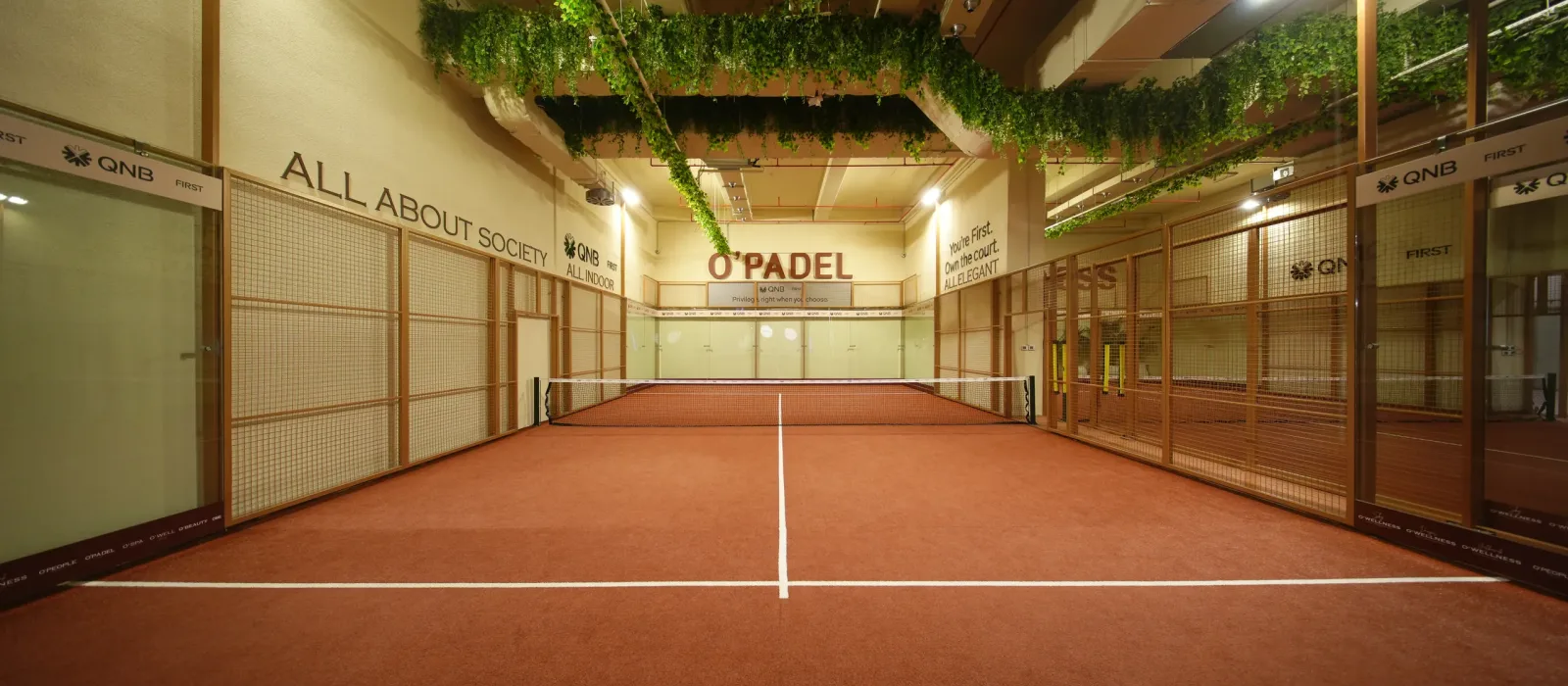
At O’Padel Sky, we provide balls with court reservations; for players taking lessons, the coach chooses the right ball type for their level. If you'd like to bring your own balls, the choice is entirely yours.
Conclusion: Consistent bounce, consistent play at Skyland
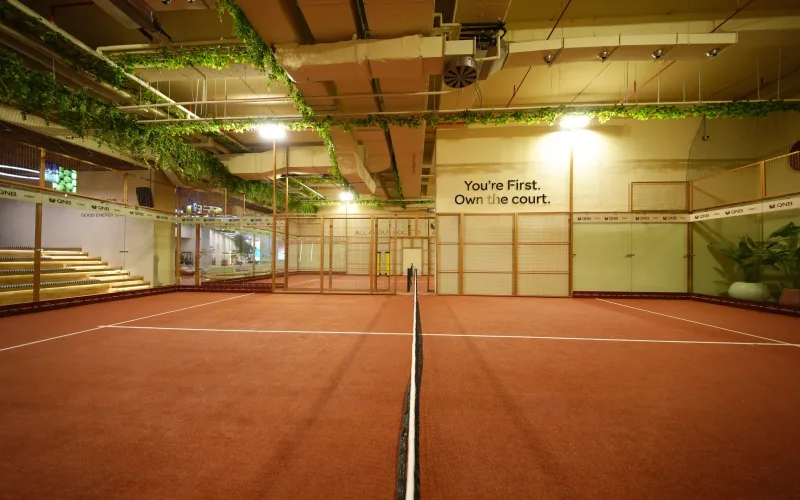
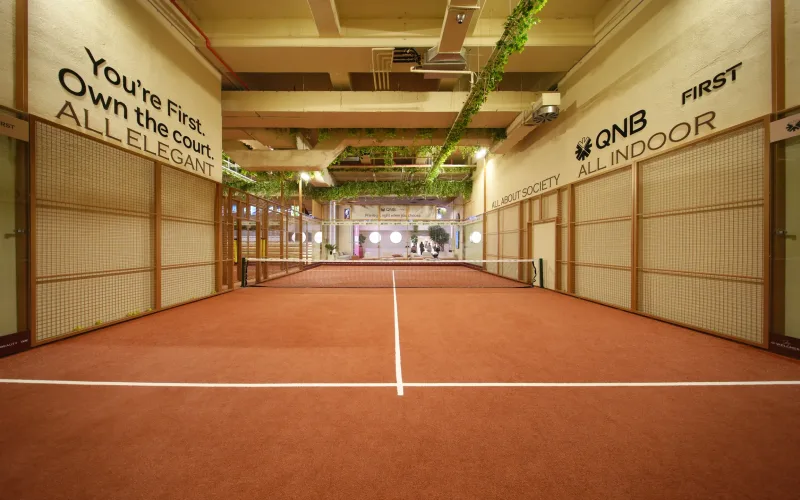
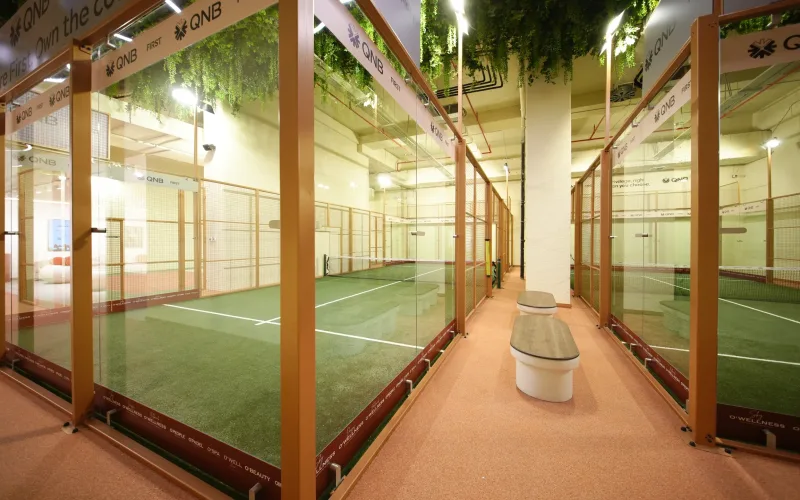
The ball is the most overlooked piece of equipment in padel, yet the one that most directly affects quality of play. A ball with the right pressure makes the right contact height and a predictable rebound off the glass possible. On our indoor, climate-controlled courts at Skyland Istanbul in Sarıyer, temperature and humidity are kept constant, so ball performance stays consistent all day; the seasonal bounce differences you get on outdoor courts don't exist here. This consistency noticeably makes the game easier for our players coming from Maslak, Ayazağa and Zekeriyaköy. Browse our courts are worth exploring, join our lessons or book a court today.
FAQ
Not in official matches, because the rules require a federation-approved padel ball. In in-club training it's physically possible, but we don't recommend it: because of the higher pressure, the ball comes off the glass unexpectedly fast and high, which sets your timing into the wrong pattern.
Balls are sold in pressurized tubes, and pressure loss begins the moment the tube is opened; it continues even if they aren't played with. Add to that the mechanical fatigue and felt loss from contact on court. That's why club players usually switch to a new tube after two or three sessions.
All approved balls must meet the same size and bounce range, so any difference stays within the rule limits. That said, speed feel, felt durability and lifespan can vary between brands. Sticking to the same brand is helpful because it keeps your expectations constant.
Yes. In the cold, internal pressure drops and the ball gets heavy; in great heat, it bounces faster and higher than expected. On indoor, climate-controlled courts, these fluctuations disappear and the bounce stays consistent all day, which is a particular advantage in technical training.
The rules accept both colors. The choice is purely about visibility: on indoor courts with artificial lighting, yellow tones read more clearly against the surface and the glass, which is why clubs mostly use yellow.


 Padel Courts
