
Singles padel, the one-on-one version of padel played between two players, is possible; however, the widely played format that forms the basis of official tournaments is doubles. In short, padel can be played one-on-one, but playing singles on a standard 20×10 meter court is quite demanding, so narrower, specially designed courts are usually used for singles. Many players benefit less from singles and more from one-on-one training drills and modified games.
In this article, the O’Padel Sky coaching team explains how singles padel is played, where its rules differ from doubles, the pros and cons of playing one-on-one on a standard court, and ways to train effectively on your own or with one other person.
Why Was Padel Designed as a Doubles Sport?
Padel’s court, rules and tactical structure are designed for four players. The 10-meter court width is planned so that two players standing side by side can comfortably cover the court. The glass walls allow for long rallies, and the balance between attacking at the net and defending with lobs is built around two-player teams.
When you play alone on a standard court, you have to cover the 10-meter-wide area by yourself. This creates a serious movement load, especially against crosscourt shots and balls coming off the walls at different angles. Rallies can get shorter, and the game can turn into a running game similar to tennis singles. For padel’s basic structure, see what is padel and how to play article.
- Court width: Sized to be shared by two players.
- Tactical balance: The net and back-court roles are shared between two players.
- Social structure: Four-player matches are at the heart of padel culture.
Singles Padel Court: Dimensions and Differences
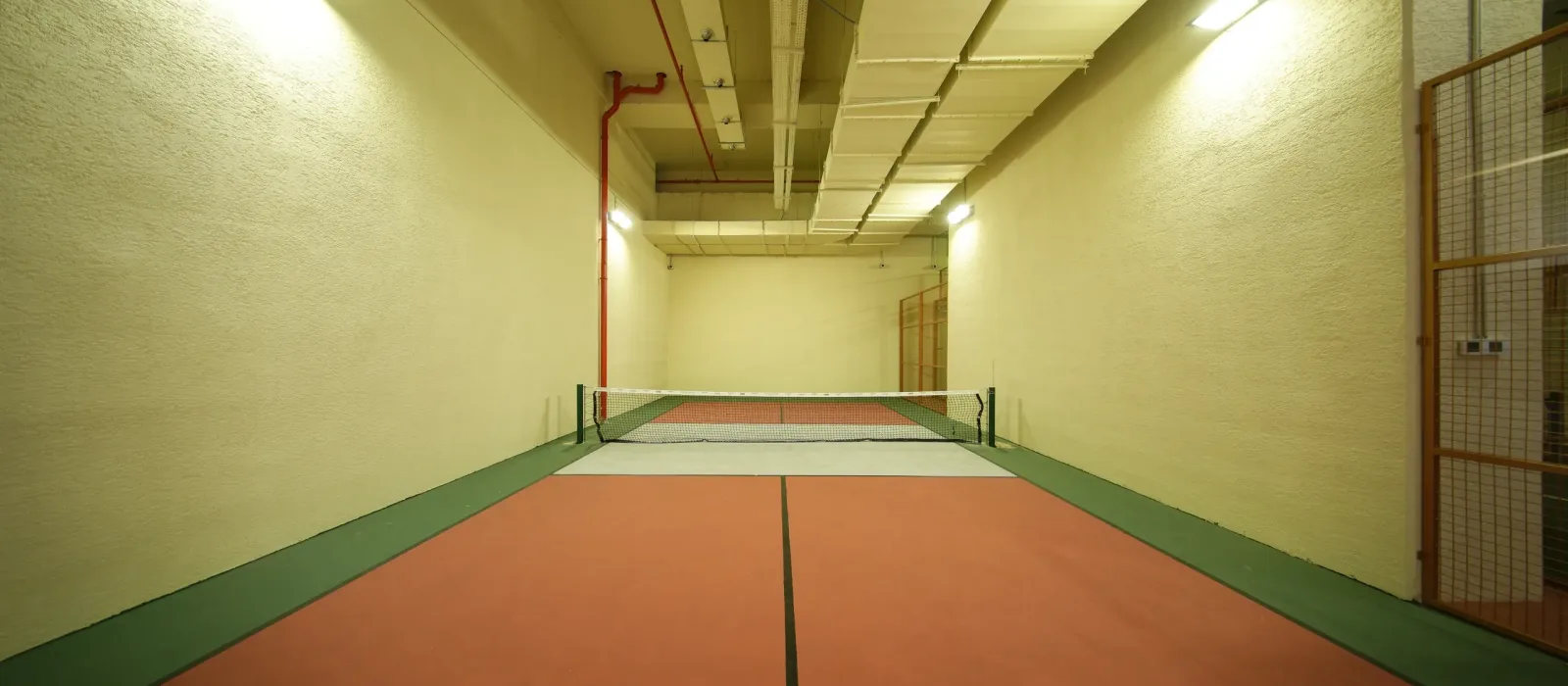
Padel courts designed for singles are the same length as a standard court but narrower. In common practice, these courts are about 6 meters wide. The narrow layout lets a single player cover the court with reasonable movement and helps preserve the character of rallies that is unique to padel.
| Feature | Standard (doubles) court | Singles court |
|---|---|---|
| Length | 20 m | 20 m |
| Width | 10 m | Commonly about 6 m |
| Number of players | 4 | 2 |
| Service area | Two service boxes | Arranged according to the court layout |
| How common | Very common | More limited |
On a narrow court, the serve and return setup, the flow of rallies and the use of the walls can feel a little different from doubles. Someone who plays regularly on a standard court will notice when switching to a narrow court that the angles are tighter and the ball comes off the side wall faster. That is why it takes some time to adjust in your first matches on a singles court.
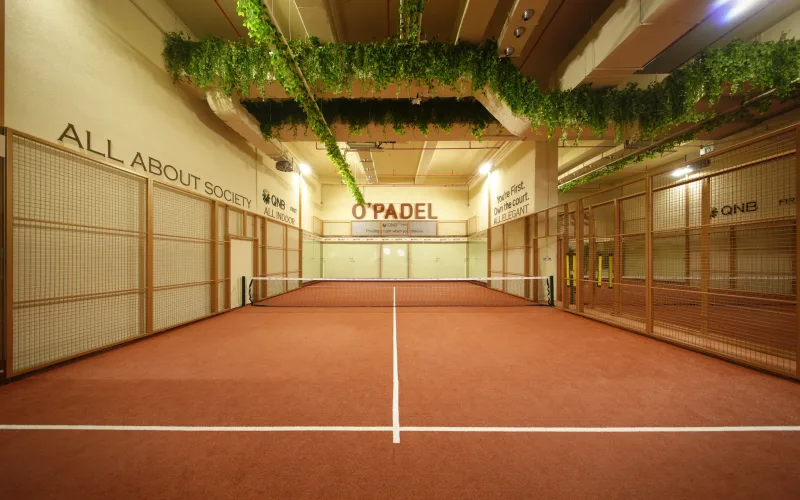
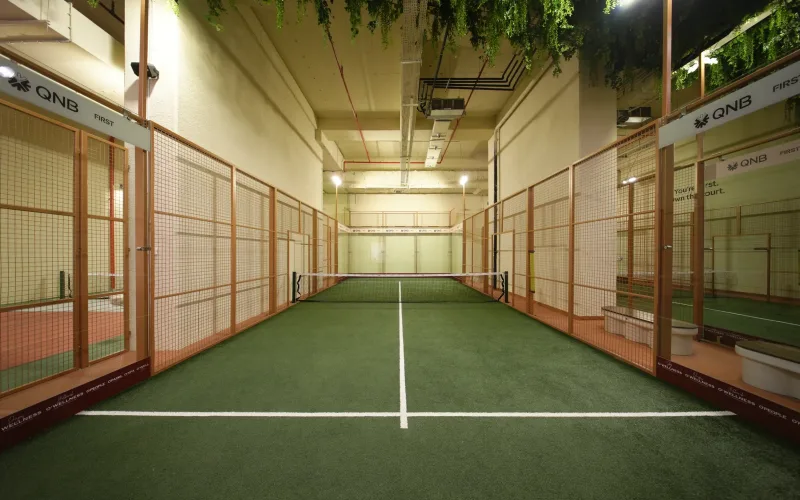
Singles courts may be preferred at facilities with limited space or at clubs where one-on-one training is common. However, most clubs have standard courts. For the dimensions and structure of a standard court, see padel court dimensions and structure article. The courts at O’Padel Sky are standard FIP-size (20×10 m) doubles courts.
Summary
- Padel can be played one-on-one, but the common and official format is doubles.
- Single padel is usually played on dedicated courts about 6 meters wide.
- One-on-one play is possible on a standard court, but the movement load is high; it is usually played with modified rules.
- With two players, the most productive use of the court is half-court games and targeted drills.
Who is single padel for?
Single padel can be an interesting alternative, especially for players who want to push their fitness, have a tennis background, or have a regular partner. For beginners, doubles matches and coached lessons are usually a better starting point, because padel’s core skills, especially using the walls and positioning, are learned more naturally in a doubles setting.
Single Padel Rules: How They Differ from Doubles
The basic rules of single padel are largely the same as doubles: the serve is hit underhand and below waist height, the ball must bounce on the ground in the opponent’s court first, it may then rebound off the walls, and scoring follows the tennis system. The differences mostly concern the court and the serving pattern.
- Serve: The diagonal serve rule is usually kept; the service box changes depending on whether the score is odd or even.
- Return of serve: The same player receives every point, since each team has only one player.
- Court area: On a narrow court, the entire area is in play; on a standard court, the area used for modified games should be agreed in advance.
- Other rules: The rules on not touching the net, hitting the ball only once, the walls and playing outside the court are the same as in doubles.
For the complete rules, see our complete guide to padel rules, and for serve details, our padel serving rules articles. Since single padel can be played with different conventions at different clubs, it is important to agree on the rules with your opponent before the match.
What Can Two Players Play on a Standard Court?
If you have a standard court and a partner, there are more productive options than a one-on-one match. These are the modified games our coaching team uses most often:
Half-court cross-court game
Only one half of the court is used; the two players face each other diagonally and the ball is played only within this cross-court area. Because this game replicates the cross-court rallies of a doubles match, it is very effective both technically and tactically. Wall play, lobs and net positioning are practiced naturally.
Half-court straight game
Moving from the cross-court game to the down-the-line game makes it easier to adapt to different angles. It is played along a straight line on one half of the court. It is useful for developing parallel shots and side-wall play.
Net – back-court game
One player volleys at the net while the other handles balls coming off the wall in the back court. Roles switch after a set number of points. This way, both players spend equal time in attacking and defensive positions. This game is ideal for practicing the attack-defense dynamic of a real match.
| Game | Skill developed | Physical load |
|---|---|---|
| Half-court cross-court | Wall play, lob, placement | Medium |
| Half-court straight | Parallel shot, side wall | Medium |
| Net – back court | Volley, defense, transitions | Medium-high |
| Full-court one-on-one | Fitness, movement, reflexes | High |
Book your court now to train one-on-one with your partner or set up a four-player match.
Tactical Differences in One-on-One Play
One-on-one padel requires different tactical thinking than doubles. Since you cover the court alone, positioning and shot selection become more critical.
Hold the center
In doubles, each player is responsible for one half of the court; in one-on-one play, the basic rule is to return to the middle of the court after every shot. When you drift away from the center, it becomes very easy for your opponent to hit into the open space.
Use angled shots
Running your opponent from one corner of the court to the other is one of the most effective tactics in one-on-one play. Angled shots using the cross-court and the side wall disrupt your opponent’s position. However, you need to balance the search for angles against the risk of errors.
Time your move to the net
In doubles you attack at the net together with your partner, but in one-on-one play there is no one behind you when you are at the net. That makes the lob risk higher. Move to the net only after a deep, quality shot that puts your opponent under pressure. For using the lob, see when to hit a lob in padel post.
Many of these tactics also improve your individual decisions in doubles matches. The court-reading skill you gain in one-on-one play helps you spot gaps faster when playing with your partner.
The Physical Load of Single Padel and Safety
One-on-one matches played on the full area of a standard court require noticeably more running and changes of direction than doubles. This makes for a demanding conditioning workout, but it can also raise the risk of injury. Sudden loads hit the ankles, knees and calf muscles in particular.
- Always do a 10–15 minute dynamic warm-up before one-on-one play.
- Keep match durations short; for example, play in 20–30 minute blocks.
- Make sure you get enough rest and fluids between sets.
- Switch to half-court games as fatigue builds.
If you have a cardiovascular condition or joint problems, or have been inactive for a long time, consult your doctor before starting high-intensity one-on-one games. For warm-up, see pre-padel warm-up, and for injury prevention, knees and ankles in padel .
Don’t skip your cool-down and stretching routine after one-on-one games; it helps your muscles recover after intense running and changes of direction. Find our recommendations in post-padel cool-down and stretching article.
On Your Own: Ways to Find a Partner
Many people searching for “single padel” are not actually looking for one-on-one matches; they are players wondering how to start padel without a partner. In that case, the best solution is to use club options that make it easy to join the doubles format.
- Take lessons: One-on-one or group lessons with a coach are the easiest way to start on your own. Details: padel lessons page.
- Join social tournaments: In formats like Americano and Mexicano, partners are assigned by the organizers; you can sign up on your own.
- Meet-up events: Newcomers Night, held at O’Padel Sky on the first Thursday of every month, is designed to help new players join groups.
- Make the most of early hours: The 06:30 Sunrise Padel sessions are a practical way to find a regular group.
For a detailed roadmap, see our how to start padel on your own article; for events, see What Is Newcomers Night our article and community page.
Solo training
Even without a partner, you can do off-court work that benefits your padel: footwork drills, agility ladder, and core and leg strength training. These sessions make your time on court more productive. For programs, see core training for padel and leg strength for padel .
One-on-one lesson with a coach
The most productive form of one-on-one play is a private lesson with a coach. By controlling the ball feed, the coach lets you work on a specific shot or movement with intensive repetition. These lessons are especially effective for players who want to quickly develop technical skills such as the bandeja, víbora or playing balls off the wall.
Conclusion
Padel can be played one-on-one; on dedicated single courts or on a standard court with modified rules, one-on-one matches offer an enjoyable and challenging workout. Still, the essence of padel is the four-player doubles game, and for many players the most productive use of a court with two people is half-court games and targeted drills. At O’Padel Sky, located at Skyland Istanbul in Sarıyer’s Huzur neighborhood, on our FIP-size, indoor, climate-controlled padel courts you can train one-on-one with your partner, take coached lessons or find new partners through social tournaments. Book your court on our when making your court reservation page.
FAQ
The courts at O'Padel Sky are standard FIP-size (20×10 m) doubles courts. With two players, you can play half-court games and do one-on-one training on these courts.
One-on-one play involves more running and changes of direction than doubles, so it provides an intense conditioning session. It is important to increase the load gradually and to consult your doctor if you have a health condition.
You can book a court with your partner as two people and work on half-court games or drills. For current reservation terms, you can ask our team via the WhatsApp line at +90 539 675 54 54.


 Padel Courts
