
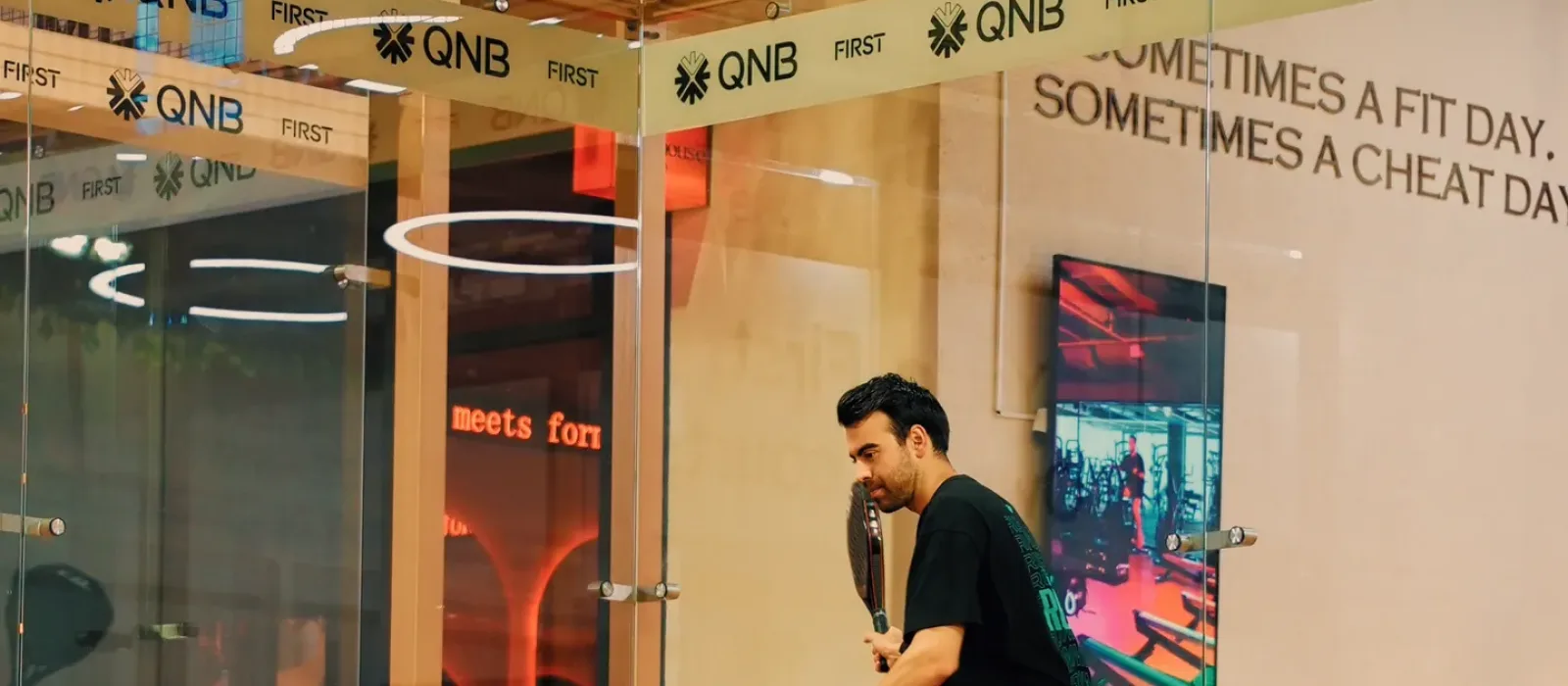
Padel spin, the rotation put on the ball at the moment of contact, directly affects the ball’s flight through the air, its bounce off the ground and especially its rebound off the glass wall. There are three basic shot types in padel: slice (cutting under the ball, backspin), topspin (forward rotation) and flat (straight, no spin). The most commonly used spin in padel is slice, because the ball stays low, comes off the glass less and makes it harder for the opponent to attack. Topspin and flat are effective weapons in specific situations.
In this guide, the O’Padel Sky coaching team explains how each type of spin is produced, how it changes the ball’s behavior, which one to choose in which situation and how you can develop your spin skills. The goal is for you to become a player who chooses the right shot for the situation instead of hitting every ball the same way.
Summary
- Slice (backspin) keeps the ball low and reduces its rebound off the glass; it is the most used spin in padel.
- Topspin safely carries the ball over the net and accelerates it after the bounce; it is used for lobs and some passing shots.
- A flat shot provides speed and directness but has a smaller margin for error.
- Spin choice depends on the height of the ball and on your position and your opponent’s.
- The racket face angle and swing path (high to low / low to high) determine the spin.
What Is Spin and Why Does It Matter?
Spin is the rotation of the ball around its own axis. The direction and angle at which the racket contacts the ball determine the type and amount of spin. Spin changes the airflow around the ball and affects its flight path; when it hits the ground or the glass, it changes the direction and speed of the bounce.
Spin is especially important in padel because the ball hits the glass walls. Two balls hit at the same speed but with different spin will come off the glass in completely different ways. This directly affects how the opponent reads the ball, their timing and the quality of their shot. To understand wall dynamics, see using the walls in padel article.
How the racket affects spin
A racket’s surface texture, weight and balance can affect its ability to generate spin. The rough surface of some rackets provides more grip on the ball. However, if your technique is not right, the racket alone will not make a difference. For racket features, see padel racket materials and racket weight and balance articles.
Slice (Backspin): The Fundamental Spin of Padel
Slice is produced when the racket contacts the ball with a high-to-low, slightly forward motion and a slightly open racket face. The ball spins backward, which makes it float longer in the air and bounce low and slow after landing.
The advantages of slice in padel
- Low bounce: The opponent has to play the ball from below, which makes attacking harder.
- Less rebound off the glass: A ball coming off the back glass travels less far, shrinking the opponent’s comfortable hitting zone.
- Control: A slow, spinning ball gives you confidence in placement and consistency.
- Buying time: Because the ball stays in the air longer, it gives you a chance to get into position.
Slice is used frequently on volleys, the bandeja, crosscourt shots from the baseline and the chiquita. For these shots, see volley technique, bandeja and chiquita technique guides.
Topspin: When and How?
Topspin is produced when the racket contacts the ball with a low-to-high, forward motion. The ball spins forward, dips down in the air and, after landing, kicks up and forward with added speed. It is the spin players coming from tennis are most used to.
Topspin is used more selectively in padel, because a high, fast-bouncing ball comes off the glass strongly and can leave the opponent a comfortable hitting zone. Still, it is very effective in certain situations.
The right uses for topspin
- Topspin lob: A lob that goes over an opponent near the net and runs away quickly after the bounce is a powerful tool for switching from defense to attack.
- Low, fast passing shot: Topspin shots that land at the feet of opponents at the net make the volley harder to control.
- The víbora and some smashes: Rotation combined with sidespin can make the ball come off the glass at unexpected angles.
If you have a tennis background, your reflex will be topspin; balancing this is an important adaptation in padel. Our article the differences between padel and tennis offers more on this transition. For lob technique, see also lob technique our guide.
Flat: Where the Flat Shot Fits
In a flat shot, the racket face meets the ball at a right angle and puts very little spin on it. The ball travels on a straighter path and faster. This is an effective way to leave the opponent no reaction time; however, since there is none of the safety margin that spin provides, the risk of error is high.
- Uses: Finishing shots on high, easy balls, powerful smashes such as the por cuatro, fast volleys at the net.
- Risks: Net errors, and a strong rebound off the glass that gives the opponent an easy ball.
- Tip: Use a flat shot only when you are well balanced and the ball is high enough.
For powerful finishing smashes, see por tres and smash variations guides.
Spin Comparison Table
The table below summarizes the characteristics and typical uses of the three basic types of spin.
| Feature | Slice | Topspin | Flat |
|---|---|---|---|
| Racket motion | High to low, face slightly open | Low to high, face slightly closed | Straight, face square |
| Bounce | Low and slow | High and fast | Medium, fast |
| Rebound off the glass | Low | High | Medium to high |
| Control | High | Medium | Low |
| Typical use | Volley, bandeja, chiquita, crosscourt | Lob, passing shot | Finishing shot, powerful smash |
Want to try different spins on court? Plan a session with a coach and book your court.
Choosing Spin Based on the Situation
Choosing the right spin depends on the height of the ball, your position and your opponent’s position. Here is the simple decision framework our coaching team uses in lessons.
- If you are defending and the ball is low: Choose a controlled, low slice or a lob.
- If your opponents are at the net and putting you under pressure: Try to win back the net with a topspin lob.
- If you are at the net and the ball is at shoulder height: Use a slice volley for depth and control.
- If the ball is high and short: Keep up the pressure with a bandeja (slice) or, if conditions allow, go for a flat finishing shot.
- If your opponent reads the rebound off the glass well: Reduce the rebound with slice and challenge them with low balls.
To see how these decisions fit into an overall match plan, see our padel tactics guide and tempo control article.
Reading your opponent’s spin
Reading your opponent’s spin is just as important as using spin. By watching your opponent’s racket motion, you can predict how the ball will bounce and come off the glass. A high-to-low cutting motion means a low ball that stays short off the glass, so you need to wait closer to the glass. A low-to-high motion signals a high ball that comes off the glass long, so you should position yourself further back.
To include opponent analysis in your match plan, see padel opponent scouting .
Developing Your Spin Skills
Spin improves with wrist and forearm control, a feel for the racket face and a consistent swing path. The drills below are suitable for both beginners and intermediate players.
- Watching the rebound: Hit slice and topspin shots with your partner from a short distance; watch how the ball comes off the glass.
- Target practice: Send low slice balls in front of the service line and topspin lobs into the back corners.
- Alternating series: Switch the type of spin on every shot to improve your control of the racket face.
- Glass play: Do wall drills to feel the difference in rebound when you hit the glass with different spins.
Spin practice can put repetitive load on the wrist and elbow. If you have elbow or wrist pain, consult your doctor or a sports physiotherapist before starting intensive spin work. Tennis elbow you can find more on this topic in our article. A worn-out grip also reduces control and feel for spin; grip and overgrip guide.
Spin on indoor courts
On indoor, climate-controlled courts there is no wind, so the effect of spin on the ball becomes more predictable. This makes it easier to practice delicate shots such as slices and topspin lobs. We covered this topic in detail in our article tactical differences between outdoor and indoor courts . Ball pressure and how long a ball has been used also affect the feel of spin; on this topic, see choosing a padel ball can give you some ideas.
Priorities by level
If you are just starting out, you should first build a foundation with controlled, consistent, nearly flat shots, and then learn the slice. Since slice makes up most of the game in padel, it should be your priority. Once you reach an intermediate level, the topspin lob and the tactical use of different spins come into play. At an advanced level, it becomes possible to steer the ball’s rebound off the glass with sidespin and spin combinations. For your development plan, see padel lessons page.
The best way to bring your spin skills into match play is to consciously try different spins in social and competitive matches. Rotating formats such as the Americano are ideal for testing your spin choices against different playing styles. For tournament and league options, see tournaments and leagues page.
Spin on the serve and return
Spin is an important tool not only in rally shots but also on the serve and return. Since the serve in padel is hit below waist height, placement and spin matter more than power. A serve with a little slice can stay low after hitting the side glass and curve toward the opponent’s body, making the return harder. A topspin serve bounces higher and can leave the returner a comfortable hitting zone, which is why a controlled slice is usually preferred on serves.
When returning serve, you also need to read the spin your opponent puts on the ball. Since a slice serve stays low, the right response is to bend your knees and get under the ball; since a topspin serve bounces higher, the right response is to wait a step further back. On the return, a low slice toward the feet or a topspin lob are the two main options for keeping your opponent away from the net. Our articles on serve technique and service return offer detailed tips on this.
Changing your spin choices on the serve and return during a match is also an effective way to disrupt your opponent’s rhythm.
Whatever your level, the key to improving your spin is curiosity and observation: watching how the ball behaves after every shot gradually makes the relationship between your racket and the ball intuitive.
Conclusion
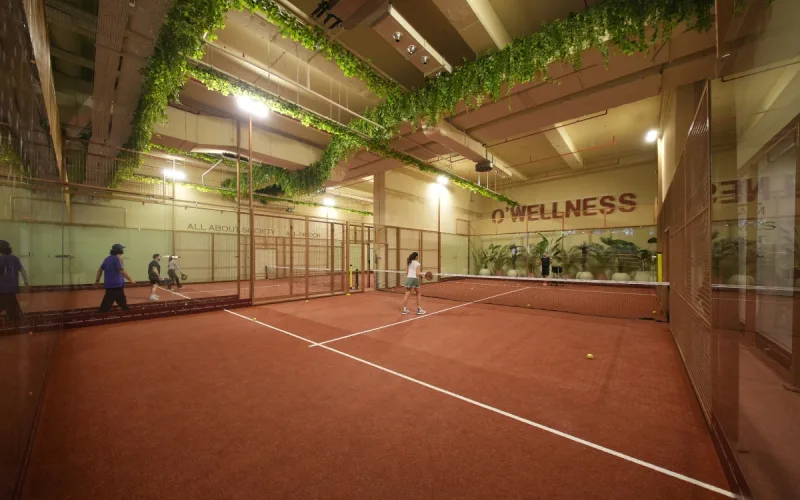
Padel spin is about choosing correctly between slice for control and low balls, topspin for safe lobs and fast passing shots, and flat for finishing shots. Choosing spin based on the situation instead of hitting every ball the same way adds a new dimension to your game. On the wind-free, indoor, FIP-standard courts of O’Padel Sky, located in the Skyland Istanbul complex in Sarıyer, you can practice different spins in a controlled way with the O’Padel Sky coaching team and learn to turn the ball’s rebound off the glass to your advantage.
FAQ
Slice keeps the ball low and reduces its rebound off the glass. This makes it harder for the opponent to attack and gives you more control over your shot.
Topspin is effective in certain situations, but slice is used more often in padel. This adaptation develops with a few lessons and deliberate repetition.
Rackets with a rough surface can help with grip on the ball, but spin is mostly produced by technique. Getting the right technique in place first is more important.


 Padel Courts
