

The bandeja is a controlled overhead shot hit near the net on a high ball, above shoulder height, with slice contact. Its name means “tray” in Spanish, because at contact the racket passes under the ball with a flat, open face, as if carrying a tray. The bandeja’s goal isn’t to end the point: it’s to slow the ball down and send it low and deep to protect your net position and keep your opponents in the back of the court.
In padel, net position wins points, and the bandeja is the only sustainable way to hold that position. In this article, we explain when the bandeja is used, its step-by-step mechanics, target zones, the most common mistakes and drills you can practice on your own. As the O’Padel Sky coaching team, we start teaching the bandeja at the 2.5–3.0 level, because a player who doesn’t learn this shot can’t stay at the net.
Summary
- The bandeja is a controlled volley hit over the shoulder on a high ball with slice contact; it isn’t a smash.
- Its job isn’t to end the point but to slow the ball down and protect your net position.
- The contact point is in front of the body, toward 1–2 o’clock, just above shoulder height.
- The racket face is open, the motion goes from high to low and outward; the wrist stays firm.
- The most effective target is the deep zone near the side glass on your opponent’s backhand side.
What is the bandeja and when is it used
You’re at the net and your opponent throws up a high lob. You have three options: drop back and play the ball off the bounce, try a smash, or hit a bandeja. The first option means giving up your net position. The second carries a high risk of error if the ball hasn’t dropped far enough in front. The third works in almost every situation.
The reason the bandeja is so central is padel’s geometry. The court is narrow, there’s glass behind you and the ball is slow; this combination leads to frequent high balls. Since the lob is your opponent’s safest defense, a player at the net faces several high balls in every rally. Trying to smash all of them makes the error rate unsustainable; running away from all of them and dropping back means surrendering the net. The bandeja is the third path right between these two bad options.
You choose the bandeja under these conditions: the ball is above shoulder height, slightly behind or directly above your body; you don’t have time to reach the ideal contact point for a smash; and your goal isn’t to end the point but to slow the tempo and stay at the net.
The bandeja is also the shot that sets padel’s balance between defense and attack. Your opponent tries to push you back with a lob, and with the bandeja you foil that plan. We cover the tactical side of this exchange in our transitioning from defense to attack and net position articles.
Bandeja mechanics: step by step
1. Grip and preparation
Use the continental grip. No other grip works for keeping the racket face open and hitting both the bandeja and the volley with the same motion; we explain why in detail in our padel racket grip article. As soon as you see the ball rising, bring the racket to shoulder height, beside your ear. Raise your free hand; this helps both your balance and your alignment with the ball.
2. Positioning
Stand sideways. Shoulders facing the side glass, weight on your back foot. Set up not under the ball but slightly behind it, because the contact point should be in front of your body. Never try to run backward when retreating: move back with crossover shuffle steps so your eyes stay on the ball. For footwork, the padel footwork article is a good complement.
3. Contact
The contact point is just in front of your head and slightly above shoulder height, at roughly 1–2 o’clock. The racket face is open, meaning it faces slightly skyward. The motion travels from high to low and from left to right (if you’re right-handed), brushing under the ball. As the ball leaves the racket, it carries side-underspin (slice); this spin keeps the ball low and makes it come off the glass softly.
4. Follow-through
Bring the racket down and to the side of your body, not toward the opposite shoulder. The follow-through ends at waist height. The arm doesn’t stay straight, but the wrist doesn’t break; a player who tries to hit with the wrist loses both control and shoulder health. This detail matters: for how bandeja and smash load affect the shoulder, see padel shoulder injuries .
5. Recovery
Immediately return to the net line after the shot. The goal of the bandeja was to stay at the net; hitting the shot and then waiting at the back defeats its entire purpose. Level with your partner, a few steps forward.
The difference between the bandeja, víbora and smash
All three shots come from a high ball, but their jobs are different. Check the table to keep them straight:
| Feature | Bandeja | Víbora | Smash |
|---|---|---|---|
| Contact height | Above the shoulder, in front of the head | Above the shoulder, slightly further in front | Above the head, at the highest point |
| Spin | Side-underspin | Heavy sidespin | Flat or topspin |
| Speed | Low–medium | Medium-high | High |
| Purpose | Hold position | Build pressure | Finishing the point |
| Risk | Low | Medium | High |
| Frequency of use | Most often | Medium | Selective |
A practical rule: if the ball has pushed you back, bandeja; if the ball sits at shoulder height and in front of you, víbora; if the ball drops in front and comes above your head, smash. For the mechanics of the víbora, see víbora technique; for the smash family, see padel smash types article.
The bandeja sets in not through explanation but through hundreds of repetitions. At Sky, coach-fed high-ball blocks can turn this shot into a habit within a few weeks.
Where to hit it: target zones
The bandeja’s value comes not from its speed but from its placement. Three targets work for you:
- Deep crosscourt, to your opponent’s backhand: The safest and most commonly used target. The ball travels a long way, and you gain time to return to the net line.
- Deep to the side glass (por tres direction): If you place the ball deep and close to the side glass, your opponent gets squeezed against the glass; their return weakens.
- Down the middle: It creates hesitation between the two opponents. It’s especially effective against pairs with poor communication; the partner communication article explains why this weakness occurs.
The target to avoid is a short bandeja that lands in the middle. Your opponent easily lifts this ball or drives it at your feet, and you end up meeting the next ball on defense.
Factor in your partner’s position when choosing a target, too. If you hit the bandeja crosscourt, your partner needs to cover the down-the-line lane; if you hit it down the middle, you should both shift slightly toward the center. The bandeja may look like a solo shot, but the pair’s alignment determines its outcome. If you’re hitting bandejas back-to-back in the same rally, vary your targets too: twice crosscourt, then a deep bandeja to the side glass disrupts your opponent’s footwork and produces the weak return you’re waiting for.
The five most common bandeja mistakes
- Hitting the bandeja like a smash. The moment you add power, the ball loses its slice, travels long and control is gone. Aim for arc and depth, not speed.
- Letting the contact point drift behind your body. If the ball stays behind you, you can’t keep the racket face open; the result is a high, short ball. Take one more step back and get the ball in front of you.
- Not turning sideways. A player who hits with their chest facing the net can’t use hip rotation and puts the entire load on the arm and shoulder.
- Staying back after the shot. The bandeja is meant to protect your net position; hitting the shot and freezing in place defeats the purpose.
- Using the wrist. Swinging from the wrist raises both your error rate and your injury risk. We cover the role of the wrist in our article on wrist use in padel.
Drill program for the bandeja
The bandeja is a matter of muscle memory. Practice twice a week in 15–20 minute blocks:
- Shadow bandeja (off court): 30 reps with a racket, no ball. Side-on stance, preparation beside the ear, open face, follow-through to the side. Check yourself in a mirror.
- Fixed feeding: A coach or partner hits 20 lobs at the same height; you return all of them deep crosscourt with a bandeja. The measure of success isn’t speed but how many land behind the service line.
- Target box: Place a towel in the back crosscourt corner. Count how many of 20 bandejas land within a meter of the towel.
- Bandeja + recovery: After each shot, touch the net line and come back. You’re automating not the shot but the shot-recovery pair.
- Decision drill: Random feeding: if a short lob comes, smash; if a deep lob comes, bandeja. Record the number of correct choices.
For more options, see our list of 20 padel drills; for the full family of shots, see our padel shot techniques guide . If your basic groundstrokes haven’t settled yet, first solidify the mechanics of your forehand and backhand , and on the serve side, your serve technique and return of serve .
Developing your bandeja level by level
Learning the bandeja isn’t a single threshold but three separate ones. Knowing which one you’re at tells you what to focus on.
First threshold: getting the ball over. Your first goal is simply to get the ball over the net and into the court. At this stage, direction, depth and slice don’t matter. Focus on the side-on stance, preparation beside the ear and an open racket face. Most players make two mistakes here: they turn their chest to the net and meet the ball behind their body. Fixing these two gets you half of the bandeja without changing anything else.
Second threshold: depth control. Once you can get the ball over, depth comes next. The goal is for the bandeja to land behind the service line. A short bandeja makes your opponent happy; a deep bandeja keeps them in the back of the court. At this stage, lengthening the follow-through and engaging hip rotation works better than adding power. The measure is simple: out of 20 bandejas, how many landed behind the service line?
Third threshold: direction and repeatability. Once depth is in place, you start choosing targets: crosscourt backhand, deep to the side glass, down the middle. At this stage, the bandeja is no longer defense but a tool for controlling the game. You deliberately pin your opponent in a specific corner and set up the next ball for a smash. A player who reaches this level can sustain a rally with five bandejas in a row and stay at the net without losing a point.
How long it takes to pass all three thresholds depends on how often you play; for a player practicing regularly twice a week, a few months is a reasonable expectation. If you want a realistic timeline, see our how long does it take to learn padel article, and for level definitions, our article on the padel level rating system. Fitness also directly affects the bandeja: staying balanced while moving back takes leg and core strength; core training for padel article explains this connection.
Conclusion: lock in your bandeja on the Sky courts
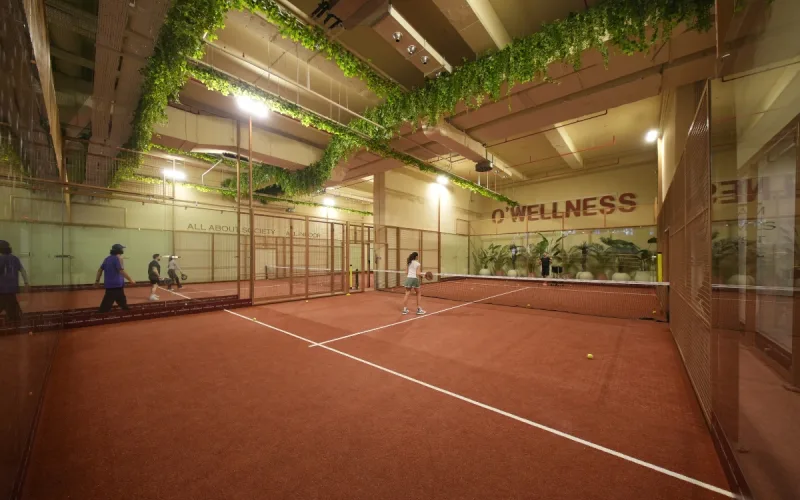
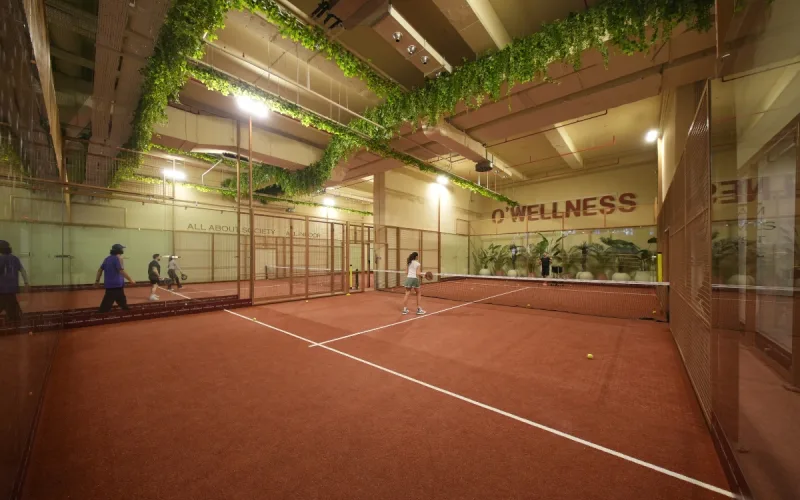
The bandeja is the threshold between learning padel and playing padel. The day you can hit this shot with confidence, you start staying at the net and the rhythm of your matches changes. Our indoor, climate-controlled courts at Skyland Istanbul offer a concrete advantage in this learning process: wind doesn’t disrupt high balls, 500+ lux LED lighting lets you see the ball clearly at its peak, and climate control keeps long repetition blocks from becoming exhausting. If you’re coming from Sarıyer, Maslak or Levent, you can start with padel lessons blocks dedicated to the bandeja, Americano and level league matches to test what you’ve learned, our courts and reservation options are worth a look.
FAQ
Purpose and contact point. A smash is hit with power over the head at the highest point to end the point. A bandeja is hit slightly above shoulder height with slice contact and control; its goal isn’t to end the point but to slow the ball down and protect your net position.
After your basic forehand, backhand and volley are in place, at around the 2.5–3.0 level. Because the bandeja is the key to net play, starting early is an advantage; however, working on the bandeja before your groundstrokes have settled is inefficient.
Usually for three reasons: meeting the ball behind your body, flicking from the wrist and hitting the bandeja with power like a smash. All three put the load on the shoulder joint. Bringing the contact point in front of your body and generating power from hip rotation significantly reduces the load. If the pain persists, consult a sports physiotherapist.
The movement itself, yes: you can build the habits of shadow reps with a racket, a side-on stance and an open racket face in front of a mirror. However, timing a high ball requires feeding; a coach-fed or ball-machine block is the most efficient way.
No, but crosscourt is the default, because the ball travels farther and you gain time to return to the net line. A bandeja deep to the side glass or down the middle are also effective alternatives. The only thing to avoid is a short bandeja that lands in the middle.



 Padel Courts
