
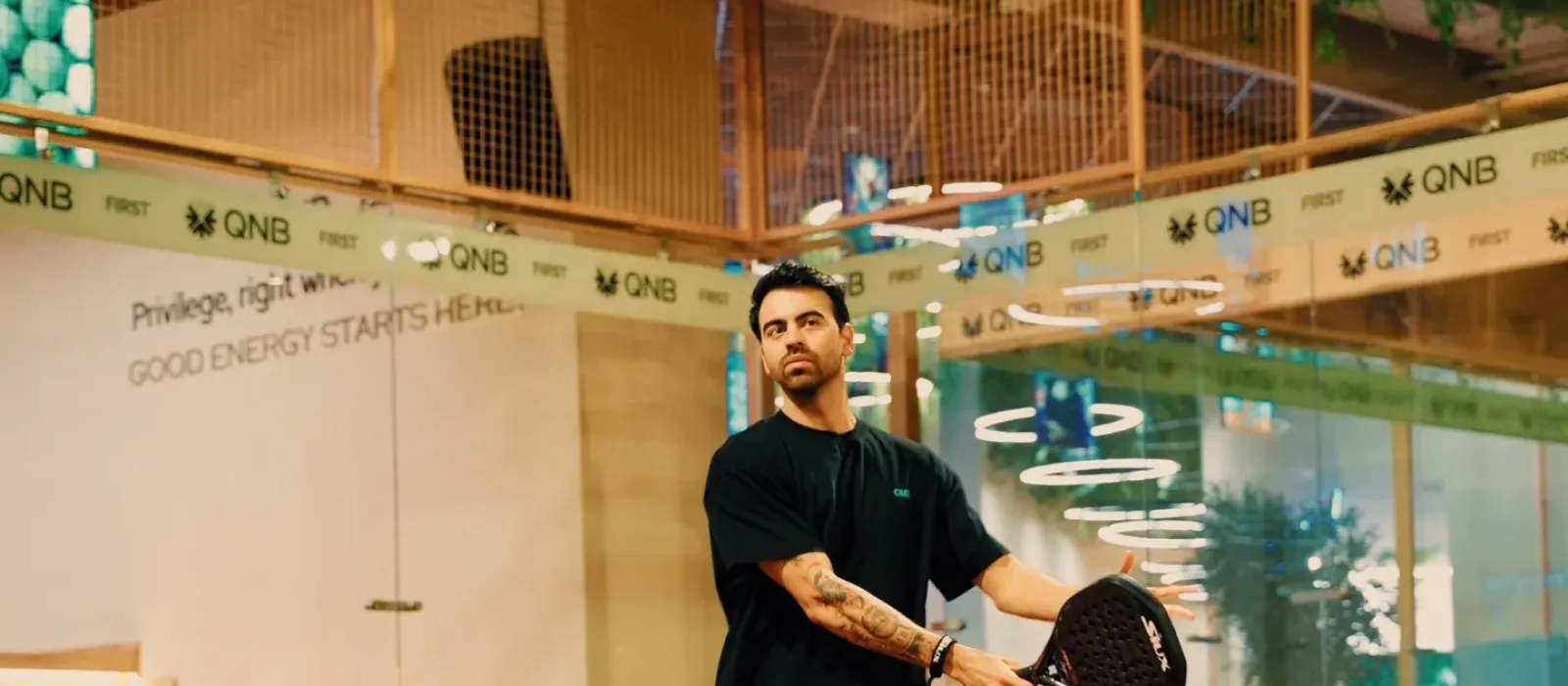
An indoor padel tactics plan, unlike on outdoor courts, is built in an environment where external factors such as wind, sun and air temperature are largely eliminated. On an indoor, climate-controlled court, the ball's trajectory is more predictable, the lob and smash are more consistent, and rebounds off the glass are more regular; this rewards precise placement, patient rally building and technique-based play. Outdoor courts, by contrast, call for more flexible tactics focused on risk management that take the wind and sun into account.
In this guide, the O’Padel Sky coaching team explains the key differences between outdoor and indoor courts, how these differences affect lob, smash, wall play and serve tactics, and how you can adapt your game on the indoor courts in the Skyland Istanbul complex in Sarıyer. If you play on both outdoor and indoor courts, knowing these differences helps you make smarter decisions in both settings.
Summary
- There's no wind or sun on an indoor court; the lob and smash become more predictable.
- On an outdoor court, wind direction, the angle of the sun and temperature directly affect tactical decisions.
- Indoor courts reward precise lobs and patient rally building more.
- Temperature and humidity can affect the ball's speed and bounce; climate control reduces this variability.
- When switching between courts, testing the conditions in the first games is a good habit.
Outdoor vs. Indoor Courts: Key Differences
Padel courts have the same dimensions: a 20×10 meter area enclosed by glass and mesh walls. However, whether the court is outdoors or indoors changes the game noticeably. These differences mostly come from the presence or absence of external factors.
| Factor | Outdoor court | Indoor, climate-controlled court |
|---|---|---|
| Wind | Can change the trajectory of lobs and smashes | Practically none; trajectory is predictable |
| Sun | Can make high balls hard to see at certain angles | None; artificial lighting is constant |
| Temperature | Varies by season and time of day; ball behavior can be affected | More stable; ball behavior is more consistent |
| Humidity and rain | Surface and ball can get heavier; play may be interrupted | Controlled environment, no interruptions |
| Ceiling | No limit | Ceiling height must be considered on very high lobs |
For detailed information on court structure and dimensions, see padel court dimensions and structure our article, and for indoor court options in Istanbul, indoor padel courts in Istanbul guide.
Wind: The Invisible Player on Outdoor Courts
On outdoor courts, wind is the external factor that most affects how a match unfolds. High, slow balls in particular, namely lobs and balls that set up a smash, are noticeably affected by the wind. With the wind at your back, your lobs are more likely to go long; into the wind, the ball may fall short.
Outdoor court tactics against the wind
- Wind at your back: Plan your lobs a bit lower and shorter; on smashes, factor in that the ball will carry further.
- Wind in your face: Hit your lobs deeper and harder; since your opponents' lobs may fall short, get ready for smash opportunities.
- Crosswind: When aiming near the side glass, consider that the wind may push the ball off line.
- Changing sides: When you switch sides, readjust your tactics to the wind.
On an indoor court, almost none of these calculations are needed. This lets players put their full attention on technical and tactical decisions. A player used to indoor courts who moves to an outdoor court can avoid unnecessary errors by testing lob distance in the first games.
Lob and Smash: What Changes on an Indoor Court?
The lob is one of padel's most important tactical tools; it's the main way to push opponents away from the net and switch from defense to attack. Because the lob is more predictable indoors, precise placement becomes more important. A deep lob close to the opponent's back glass lands exactly as planned, with no risk of the wind disrupting it.
The same applies to the smash. Since the ball's landing point is more consistent on an indoor court, timing is easier to dial in. Technical shots like the bandeja, víbora and por tres can be practiced with more control. For these shots, see bandeja, víbora and por tres guides.
The ceiling factor
On indoor courts, ceiling height can be a limiting factor for very high lobs. Depending on the rules in play, the ball hitting the ceiling or structures on it can cost you the point. That's why on an indoor court you need to control lob height and avoid extremely high lobs hit “toward the sky.” The goal should be a deep but controlled arc that lands behind your opponent. For lob technique and timing, see lob technique and when to hit a lob articles.
Temperature, the Ball and Glass Rebounds
Air temperature can affect the ball's internal pressure and therefore its behavior. In general, the ball may feel livelier and faster in hot weather and heavier and slower in cold weather. On an outdoor court, this difference can be felt in a match that starts in the cool of the morning and ends in the midday heat. On climate-controlled indoor courts, the temperature is more stable, so the ball behaves more consistently throughout the match.
Glass rebounds also benefit from this consistency. Reading how far the ball will come off the glass is one of the most important skills in padel. Because external factors are reduced on an indoor court, this reading becomes more reliable, letting you play the walls in a more planned way. For wall skills, check out using the walls in padel and contrapared our articles. For ball pressure and how long balls last, see choosing a padel ball article offers more information.
Spin and indoor courts
In a windless environment, the effect of spin becomes clearer. A ball kept low with slice stays low on an indoor court as expected, while a topspin lob passes over your opponent on its planned arc. For types of spin and how to use them, see our padel spin guide .
Experience the consistency of an indoor court for yourself. Book one of the courts at Skyland now.
Visibility and Lighting
On an outdoor court, the sun can be a serious obstacle, especially when tracking high balls. A player forced to smash into the sun may lose the ball or miss the timing. That's why experienced pairs factor the sun's position into their tactics; for example, they lob more against an opponent playing into the sun.
There's no such variable on an indoor court, but the quality of the lighting becomes decisive. Lighting that is shadow-free, evenly distributed and bright enough makes it easier to track high balls. O’Padel Sky’s courts use 500+ lux LED lighting, which keeps visibility consistent even in evening matches. For court features, see padel courts page.
Adapting Your Game at Skyland
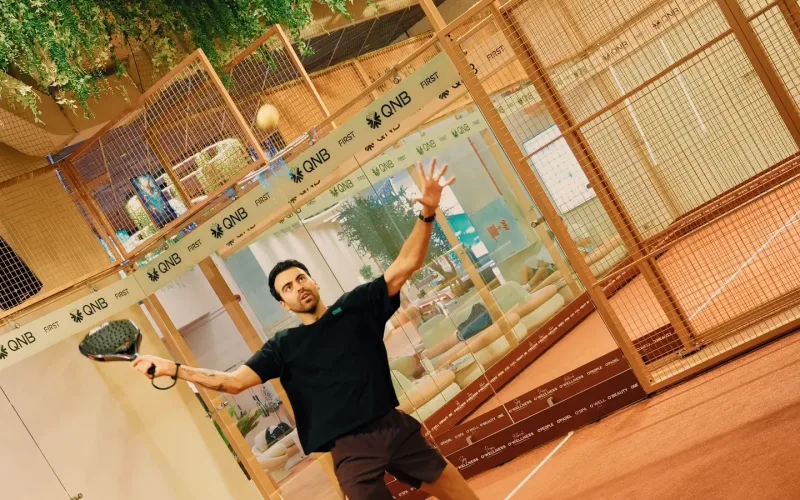
O’Padel Sky’s courts in the Skyland Istanbul complex in Sarıyer are indoor, climate-controlled and FIP-standard, with 12 mm tempered glass and silica sand-filled artificial turf. These conditions may require players used to outdoor courts to make some adjustments to their game.
- Sharpen your lob precision: In an environment where the wind won't correct your shots, aim for deep, controlled lobs and avoid extremely high ones.
- Build rallies patiently: Consistent conditions reward the pair that doesn't make errors in long rallies. For tempo control, see tempo control post.
- Trust your wall reading: Use the consistency of glass rebounds to make bolder wall decisions.
- Try technical shots: Use precise shots like the bandeja, víbora and chiquita more during matches.
- Mind your conditioning: Longer rallies demand more endurance; conditioning program will guide you.
When moving to an outdoor court
A player who regularly plays indoors and will take part in a tournament or a holiday match on an outdoor court should test the conditions in the first games. Understanding the wind's effect with a few lobs and smashes, noting the sun's position and making a quick plan with your partner speeds up adaptation. For tournament preparation, our articles on padel tournament preparation and tournament tactics will be helpful.
Seasonal advantage
Istanbul's rainy winters and humid summers can make it hard to play regularly on outdoor courts. Indoor courts offer the same conditions all year round, so your technical development continues without interruption. For planning your play at different times of the year, see The Istanbul padel season guide.
Playing in the same conditions all year on an indoor court also makes it easier to measure your technical and tactical progress. If you can hit a shot more consistently today that you struggled with a month ago, you know the improvement comes from your own development, not external factors. To assess this progress regularly with our coaching team, visit padel lessons our page, and to test it in a competitive setting, tournaments and leagues page.
Physical preparation and health
Although a climate-controlled environment reduces heat stress on hot summer days, long, fast-paced rallies still demand serious effort. It's important to drink fluids regularly before, during and after a match and to warm up your body well. If you have a cardiovascular condition or a chronic health problem, we recommend consulting your doctor before taking on an intense match pace. For hydration, see padel hydration article.
Planning as a pair
Whatever the court type, tactical decisions work best when made together with your partner. Clarifying your lob strategy, which player takes the middle balls and how to pressure your opponents' weaknesses in a short talk before the match helps you make the most of the consistency an indoor court offers. On an outdoor court, you need to add wind and sun variables to this plan; updating the plan with a quick chat when switching sides is a good habit. For the basics of communication within a pair, see partner communication .
Common tactical mistakes on indoor courts
The consistency of indoor courts can push some players to be more aggressive than necessary. Stable conditions don't mean every ball can be put away; your opponents benefit from the same consistency, and a pair that defends well returns more balls indoors. So instead of impatiently going for a smash on every high ball, keeping up the pressure with a bandeja and waiting for the right opportunity is usually more effective.
- Trying a finishing smash on every high ball
- Hitting extremely high lobs without accounting for ceiling height
- Losing concentration in long rallies and taking risks too early
- Waiting too close to glass rebounds
Avoiding these mistakes lets you truly take advantage of what an indoor court offers.
Conclusion
Indoor padel tactics call for a game where precise placement, patient rally building and consistent wall play take the place of wind and sun. On outdoor courts, reading external factors and staying flexible are the keys to success. The indoor, climate-controlled, FIP-standard courts of O’Padel Sky, located in the Skyland Istanbul complex in Sarıyer, with 500+ lux LED lighting and 12 mm tempered glass, give players from Maslak, Levent, Ayazağa and Zekeriyaköy the chance to play in the same conditions all year round and improve their technique steadily. You can adapt your game to these conditions with the O’Padel Sky coaching team.
FAQ
Because external factors are reduced on an indoor court, conditions are more consistent. This makes it easier to focus on technique and tactics; however, longer rallies may require more patience and endurance.
How this is handled can vary depending on the rules in play and the court's structure. It's best to clarify the club or tournament rules before the match.
The most effective approach is to test the wind direction early, adjust your lob distance accordingly and update your plan when switching sides.
The courts are indoor, climate-controlled and FIP-standard, with 12 mm tempered glass, silica sand-filled artificial turf and 500+ lux LED lighting.


 Padel Courts
