
The effect of weather in padel, is something players on outdoor courts in particular often notice but do not fully understand the reason for. Two matches played with the same racket, the same ball and the same technique can feel completely different because of differences in temperature and humidity. On indoor courts this variability decreases but does not disappear entirely. In this article we cover the effect of temperature, humidity and other conditions on ball behavior and the game, and how to adapt accordingly.
The Effect of Temperature on the Ball
Padel balls are pressurized balls; the pressure of the gas inside and the elasticity of the rubber are sensitive to temperature.
Hot weather
- Internal pressure increases: The gas expands and the ball becomes livelier.
- Higher bounce: The ball bounces higher after contact with the surface.
- Faster play: The ball retains energy better.
- The rubber softens: It sinks more into the racket; this can make control easier but can also cause a loss of power.
- Air density decreases: Hot air is less dense, which means less resistance and faster flight through the air.
Cold weather
- Internal pressure drops: The ball feels “dead.”
- Lower bounce: It bounces less off the surface.
- Slower play: The ball loses energy quickly.
- The rubber hardens: The feel of the shot can be harsh and vibrating.
- Air density increases: More resistance, shorter flight distance.
Practical adaptations
- In heat: Hit with more control; take into account that the ball carries extra energy. Deep balls can easily go out.
- In cold: You need to apply more power. Increase your lob distance; the ball may not travel as far as you expect.
- Storing balls in the cold: Keep balls indoors rather than in a cold environment; balls that suddenly cool before a match feel noticeably dead.
- Warming up in the cold: Extend it to 12-15 minutes; for both muscles and balls.
The Effect of Humidity
High humidity
- The ball gets heavy: The felt absorbs moisture; the ball becomes heavier and slower.
- Less bounce: A damp ball loses more energy.
- Spin decreases: A damp surface grips the racket less.
- The grip gets slippery: Sweating increases and the overgrip saturates quickly.
- The surface is affected: On an outdoor court the sand clumps and the surface slows down.
- Glass surfaces: Moisture buildup can cause reflection and visibility problems.
Low humidity (dry air)
- The ball stays lighter and livelier.
- Spin is more effective.
- Surface dust may increase.
- Fluid loss in the body rises unnoticed; sweat evaporates quickly.
Practical adaptations
- In high humidity: Change balls more often; a ball that has absorbed moisture loses its performance. Use an absorbent overgrip and keep spares. Use the hand towel between every point.
- In dry air: Watch your hydration; loss occurs unnoticed as sweat evaporates.
Wind (Outdoor and Semi-Covered Courts)
There is no wind on an indoor court; but on outdoor and semi-covered courts it can be a decisive factor.
- Tailwind: Balls go deeper; the risk of going out increases. Shorten your lob distance.
- Headwind: Balls fall short. More power is needed; the lob becomes safer.
- Crosswind: The most challenging; the ball drifts sideways. Smash and lob control becomes harder.
- Side advantage: Changing sides gains importance on windy days.
- Tactics: Aggressive shots are risky in windy weather; controlled play and a high percentage of balls in play are preferred.
The Effect of Altitude
At high altitude air density decreases; this affects ball behavior.
- Balls fly faster and meet less resistance.
- The game speeds up noticeably.
- Some manufacturers offer special balls for high altitude.
- When moving to altitude, you need to allow time to adjust.
Since Istanbul is a city close to sea level, this factor is not decisive in local play; however, it should be considered if you are going to a tournament in a different city.
Variables on an Indoor Court
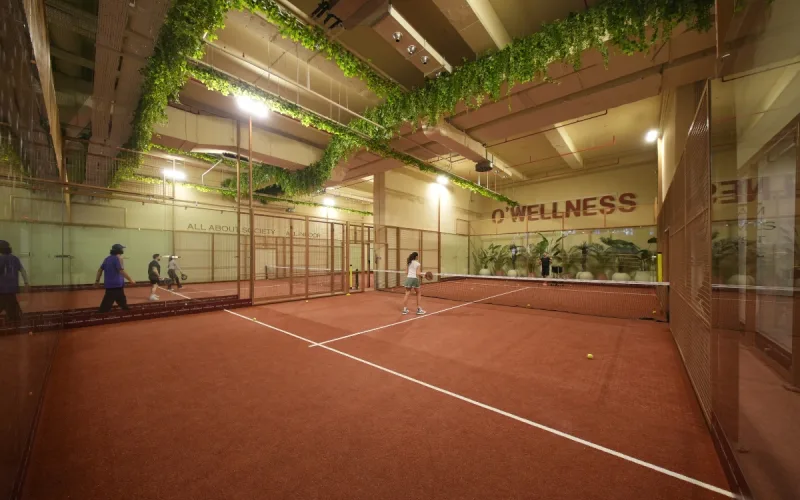
Indoor courts are largely protected from weather conditions, but some variables remain.
- Indoor temperature: Rises during busy hours; the game speeds up.
- Moisture buildup: Can increase with heavy use; ventilation quality is decisive.
- Seasonal effect: Winter and summer conditions may differ depending on the heating and cooling systems.
- Ventilation airflow: A strong air-conditioning flow can create a slight wind effect.
- Dust: Sand dust can accumulate in an indoor environment.
The biggest advantage of an indoor court is predictability: someone who plays regularly at the same facility becomes fully accustomed to the conditions, and this provides a performance advantage.
Ball Choice and Weather Conditions
- New ball: Maximum pressure; fast and lively play.
- Used ball: Pressure loss; slower and lower bounce.
- Opened but unused ball: After the tube is opened, pressure loss begins gradually.
- Ball stored in a cold environment: It needs to be kept indoors before play.
- Damp ball: Loses its performance noticeably; leaving it to dry partially restores it.
Practical recommendations
- Use a new tube for serious matches.
- In cold weather, keep balls indoors rather than in the car.
- Using the same brand provides consistency; pressure and felt differences between brands change the feel of the game.
- Set aside old balls for training and new balls for matches.
Health and Performance in Hot Weather
- Hydration: 400-500 ml before the match, 150-250 ml every 15-20 minutes during the match.
- Electrolytes: Meaningful in matches exceeding 60-75 minutes and with heavy sweating.
- Clothing: Light-colored, thin, moisture-wicking fabric.
- Choice of time: On outdoor courts, avoid midday hours; early morning or evening.
- Sun protection: Sunscreen and a hat on outdoor courts.
- Warning signs: Dizziness, nausea, muscle cramps, extreme fatigue, sweating stopping. At these signs you need to stop playing, move to a cool environment and take fluids; if the complaint does not pass, seek medical help.
Health and Performance in Cold Weather
- Long warm-up: 12-15 minutes; moving into lateral movement with cold muscles increases the risk of injury.
- Layered clothing: Extra layers during the warm-up, taken off during the match.
- Do not use full power on the first balls. Increase gradually.
- Putting on an outer layer right after the match: Cooling down while sweaty is uncomfortable.
- Racket: A racket left in a cold environment may be more fragile; a thermal bag compartment is helpful.
- Hydration: The sense of thirst decreases in the cold but the loss continues; you need to remember to drink.
Assessing Conditions During the Warm-Up
The first 10 minutes of every match are an opportunity to read the conditions.
- Test the ball's bounce height.
- Hit a few lobs and check the flight distance.
- Assess the speed of wall rebounds.
- Notice how slippery the surface is.
- On an outdoor court, determine wind direction and strength.
- Check the condition of your grip; it gets slippery faster in damp weather.
- Do a short assessment of the conditions with your partner.
Tactics Summary by Conditions
- Hot and dry: Fast play; controlled shots, depth control, aggressive net play is effective.
- Hot and humid: The ball gets heavy; patient play, grip management is critical, hydration is the priority.
- Cold: Slow play; more power, long lob distances, long warm-up.
- Windy (outdoor court): Low risk, high accuracy; reduce aggressive shots.
- Indoor courts: Predictable conditions; the best environment for focusing on technique and tactics.
Conclusion
In padel, weather conditions noticeably affect ball behavior and game speed: hot weather livens the ball and speeds up the game, cold weather makes the ball dead and slows it down, and high humidity makes the ball heavy and reduces the effect of spin. Indoor courts largely eliminate this variability, which provides a consistency advantage for those who regularly play at the same facility. Whatever the conditions, the most practical approach is the same: dedicate the first 10 minutes of the warm-up to reading the conditions and adapt your playing style accordingly. Hydration in the heat and a long warm-up in the cold are two non-negotiable rules for health.


 Padel Courts
