
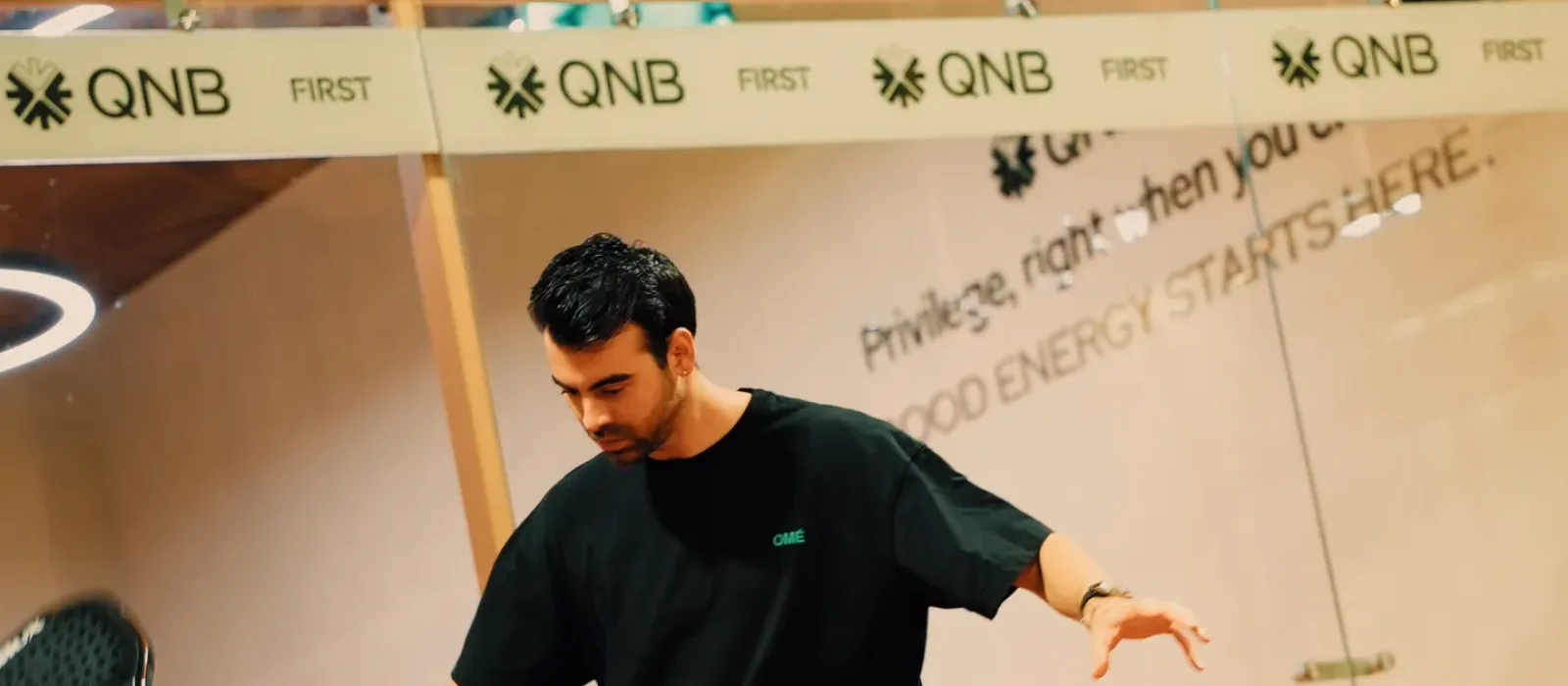
Padel footwork, meaning how you move your feet, is the step pattern that lets you get into position before the shot, stay balanced during it and return to the ready position afterward. Its core components are the split step, the shuffle (side step), the crossover step, retreating steps and recovery. Good footwork comes even before racket technique, because a player standing in the wrong place can't hit a controlled shot even with the best technique.
In this guide, the O’Padel Sky coaching team covers the basic footwork patterns used in padel one by one, explaining when to use each, the most common mistakes, and drills you can do on court or at home. Your goal should be to run less but be in the right place more often, to tire less and reach more balls.
Summary
- The split step is a small preparatory hop made as your opponent hits the ball, and it is the start of every movement.
- The shuffle (side step) lets you move short distances while keeping your face toward the net.
- When retreating, use crossover steps while turned sideways instead of turning your back to the net.
- Recovering quickly after every shot is the key to being ready for the next ball.
- Footwork is the skill that improves fastest with regular, short drills.
Why Is Footwork So Important in Padel?
A padel court is a compact 20×10 meter space, and the glass walls keep the ball in play. This setup calls for short, explosive and frequent changes of direction rather than long runs. Within a single rally, you take dozens of small steps forward, back and side to side. How efficient these steps are directly affects both the quality of your shots and your energy throughout the match.
Footwork is also the foundation of injury prevention. Shots hit from an unbalanced position can put unnecessary load on the knees, ankles and shoulders. On this topic, our knee and ankle in padel article offers more information. The right step pattern reduces this load by putting your body in the best position for the shot.
Three goals of good footwork
- Arriving on time: Reaching the ball early enough to prepare, not at the last moment.
- Hitting in balance: Keeping your weight controlled and stable at contact.
- Recovering quickly: Returning to the center and ready position after the shot.
Ready Position and Split Step
All good footwork starts with a proper ready position. Feet slightly wider than shoulder-width, knees slightly bent, weight on the balls of your feet and the racket held in front at chest height. This position keeps your body “loaded” so you can move quickly in any direction.
The split step is the dynamic version of this ready position. As your opponent is about to hit the ball, you make a small hop with both feet; your feet land just as their racket meets the ball. This small hop pre-tensions your muscles and lets you take an explosive first step the moment you see the ball's direction.
Split step timing
The most common split step mistake is timing. If you hop too early, you've already landed and gone static when your opponent hits; if you hop too late, you're still in the air as the ball goes past you. Good timing develops by watching your opponent's hitting motion. At first, instead of an exaggerated hop, a small movement with your heels lifting slightly off the ground is enough.
- See your opponent approaching the ball.
- Start a small hop just before the shot.
- Land on the balls of your feet just as your opponent's racket meets the ball.
- Take your first step as soon as you read the ball's direction.
Shuffle, Crossover Step and Retreating
Which step you use after the split step depends on the ball's distance and direction. These are the three most common step types in padel.
| Step | How is it done? | When is it used? |
|---|---|---|
| Shuffle (side step) | Gliding sideways without crossing your feet | Short lateral distances, adjusting position at the net and the baseline |
| Crossover step | The outside foot crosses in front of the inside foot | Longer lateral distances, reaching balls quickly |
| Retreating (turned sideways) | Body turns sideways, moving back with crossover or shuffle steps | Against the lob, preparing for a smash or bandeja |
| Adjustment steps | Small, quick steps when very close to the ball | Final position adjustment before the shot |
| Running forward | Normal running steps | Short balls, drop shots or attacking the net |
Shuffle
The shuffle lets you move sideways while keeping your face and body toward the net. Your feet come together but don't cross, so you can change direction at any moment. It's the basic step especially for volleys at the net and small position adjustments at the baseline. For more on volley positioning, our net position in padel article offers more information.
Retreating
The most common mistake against the lob is turning your back to the net and running backward. This makes you lose sight of the ball and leads to an unbalanced shot. The right technique is to turn your body sideways (right shoulder back if you're right-handed) and retreat with side steps or crossover steps. That way the ball stays in your field of view and you get into the right position for a bandeja or smash. For these shots, check out our how to hit a bandeja and smash variations guides.
Foot Position During the Shot
Once you reach the ball, where your feet are at contact determines the power and control of your shot. Padel uses two basic stances: the open stance and the closed (side-on) stance.
- Closed stance: The body turns sideways and the front foot steps toward the target. Ideal for control and direction; preferred especially on groundstrokes and volleys.
- Open stance: The feet stay nearly parallel to the net. Used when time is short, on fast balls and in defense.
Whichever stance you use, your knees should be slightly bent and your weight controlled at contact. When you need to hit a low ball, getting low by bending your knees rather than bending at the waist both improves control and reduces strain on your lower back. For forehand and backhand details, see forehand technique and backhand technique articles.
Footwork on wall balls
Footwork becomes even more critical on balls coming off the glass walls. You need to read where the ball will bounce off the wall and position yourself without getting too close to it, leaving enough space between you and the ball to hit. The most common beginner mistake is getting too close to the wall. We cover this topic in detail in our using the walls in padel guide.
Want to work on your footwork under a coach's eye? Book a court and develop your technique on court.
Recovery: The Steps After the Shot
Many players stop after hitting to watch where the ball goes. But in padel the rally continues, and the next ball usually arrives within a second or two. Recovery is the movement of returning to the center, or the tactically correct position, right after the shot.
Your recovery position depends on the formation you build with your partner. At the net, both players move forward and back together; at the baseline, you hold your defensive position. Moving with your partner as a “two-player block” is the key to not leaving open space on court. On this topic, see partner communication and transitioning from defense to attack articles will help.
Recovery rules
- Finish the shot; don't get stuck watching the ball.
- Return to your tactical position with shuffle steps.
- Split step again before your opponent hits.
- Move level with your partner and in the same direction.
Common Footwork Mistakes
The mistakes our coaching team sees most often in lessons usually come from small habits. Recognizing these mistakes is the first step to fixing them.
- Standing on your heels: When your weight is on your heels, your first step is delayed.
- Skipping the split step: Waiting flat-footed makes you late to every ball.
- Running backward with your back to the net: Makes you lose the ball and leads to unbalanced shots.
- Taking a big last step: Getting too close to the ball or staying too far away; the last steps should be small.
- Bending at the waist: Leaning forward on low balls instead of bending your knees.
- Stopping after the shot: Watching the ball delays your recovery.
For other common beginner mistakes, see most common beginner mistakes article.
Footwork Drills
Footwork is a skill that improves quickly with regular, short drills. You can do the exercises below as part of your warm-up or as a separate training block. If you haven't exercised in a long time, have knee or ankle problems, or have a chronic health condition, consult your doctor before starting intensive agility training.
On-court drills
- Split step reps: As your partner feeds balls, split step before each feed and take your first step toward the ball.
- Side-step corridor: Shuffle back and forth between two points on the baseline; keep your body facing the net.
- Lob retreat: Have a coach or partner hit lobs; turn sideways, retreat and shadow a bandeja.
- Star drill: Go from the center to five different points and back to the center; add a split step each time you return.
Off-court exercises
The foundation of footwork is leg strength, ankle stability and agility. An agility ladder, light jump rope and single-leg balance work strengthen this foundation. For a comprehensive program, see our leg strength for padel and conditioning program for padel articles. The O’Wellness Sky fitness area and O’Athletic Sky’s athletic performance training at Skyland Istanbul let you do this kind of preparation with expert support.
Always warm up before each drill and cool down afterward. For a warm-up routine, you can use our pre-padel warm-up article.
Sample weekly plan
You don't need separate long sessions to improve your footwork. About 10 minutes of focused work two or three times a week, before a match or lesson, starts to make a difference within a few weeks. For example, you could do split steps and shuffles one day, retreating and lob work another day, and the star drill and single-leg balance work on a third day. What matters is consistency; short but regular repetitions make the movement automatic.
To track your progress, it also helps to record short videos of your matches from time to time. When you watch yourself, you can easily spot the moments when you skipped the split step, waited on your heels or turned your back while retreating. Reviewing this footage with your coach clarifies what needs fixing.
For morning players, a short footwork block before Sunrise Padel sessions gets the day off to an energetic start. To do these drills under a coach's supervision in lessons, see padel lessons page.
Conclusion
Padel footwork is a cycle that starts with the split step, continues with shuffles and crossover steps, turns into a shot with the right stance, and finishes with quick recovery. Once you've got this cycle down, you'll reach more balls with less energy and hit more balanced, controlled shots. On the indoor, FIP-standard courts of O’Padel Sky in the Skyland Istanbul complex in Sarıyer, you can work on your footwork step by step with the O’Padel Sky coaching team, and strengthen the physical foundation of this skill at O’Wellness Sky and O’Athletic Sky.
FAQ
Yes, ideally you make a small split step just before your opponent hits each ball. This lets you react to the ball's direction as fast as possible.
Yes. Padel shoes with soles suited to sand-filled artificial turf provide grip and support during lateral movements, improving both performance and safety.
It varies from person to person. With regular, short drills, you may notice your movements becoming more automatic within a few weeks.
If you have pain, you should first consult your doctor or a sports physiotherapist. You can start training once an appropriate loading plan has been set.



 Padel Courts
