
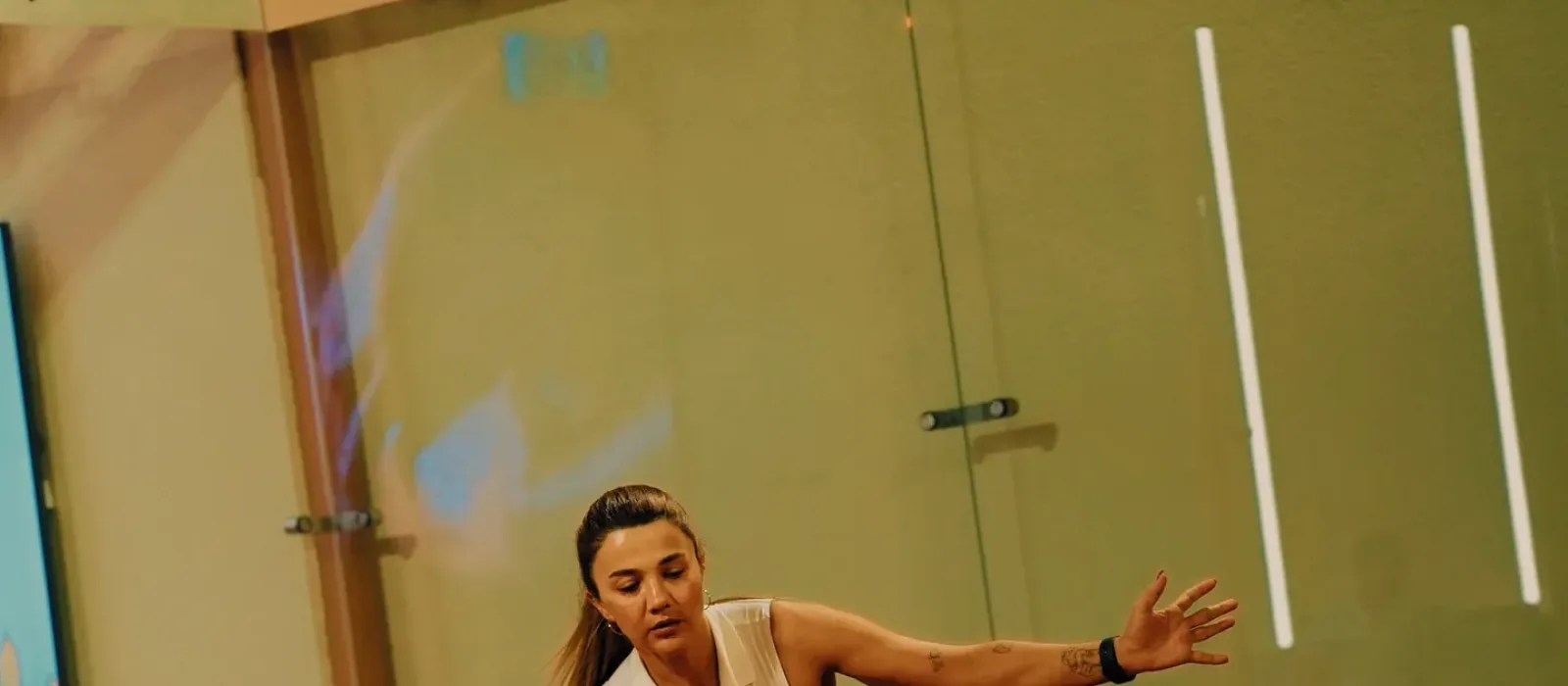
Globo, in padel, is the defensive lob that sends the ball in a very high, deep arc over your opponents’ heads toward the back glass while they are at the net. It differs from a regular lob in having a higher, slower trajectory; this buys you and your partner time to get into position and forces your opponents to retreat from the net. In short, the globo is one of the most reliable tools for getting out of defense and taking back control of the point.
In this article, the O’Padel Sky coaching team explains when to use the globo, its technical details, target selection and the most common mistakes. Since the pair controlling the net has the advantage in padel, hitting a good globo is a fundamental skill for players of every level.
Summary
- The globo is a very high, deep defensive lob played when your opponents are at the net.
- Goal: buy time, push your opponents back from the net and regain the net position.
- Technical keys: open racket face, long low-to-high follow-through, control through the body.
- Ideal target: close to the opponent’s back glass, ideally on the backhand side.
- A short globo gives your opponent an easy smash; depth is everything.
What Is the Globo, and How Is It Different from a Regular Lob?
In padel, lob is the general name for any shot that sends the ball over the opponent’s head. The globo is the especially high, slow member of this family. A lower, faster lob is used to surprise the opponent and create a quick attacking opportunity, while the globo focuses primarily on gaining time and position.
The table below compares the two shots:
| Feature | Attacking lob (low lob) | Globo (high lob) |
|---|---|---|
| Trajectory | Lower, faster | Very high, slower |
| Main purpose | Surprise the opponent, quick attack | Gain time and position |
| Risk | Easy volley if the opponent reaches it | Easy smash if it lands short |
| When? | When the opponent is very close to the net, as a surprise | When defending and you need to recover |
| Difficulty | Precise timing | Control of depth and height |
We covered the general framework of lob technique in our padel lob technique, and timing decisions in our when to hit a lob in padel articles. In this article, our focus is the cornerstone of defense: the high lob, or globo. Having both shots in your repertoire makes it harder for your opponent to guess which lob is coming and makes your defense far less predictable.
When Should You Use the Globo?
The globo is the “breather” shot of defensive play. The following situations show when the globo is the right choice:
- When your opponents are applying pressure at the net: When you are being squeezed by back-to-back volleys and smashes, the globo is the most effective way to break the pressure.
- When you are out of position: If you are pinned in a corner or off balance, a high globo gives you time to reset.
- When your partner is out of position: The globo gives your partner a chance to get back to the middle of the court.
- When your opponents’ overhead is weak: Against opponents who struggle with the smash or bandeja, the globo can win you points.
- When you want to retake the net: A deep globo forces your opponents back and gives you and your partner the chance to move up to the net.
There are also situations where you should avoid the globo. If your opponent is already at the back of the court, a globo makes no sense; the ball is easily returned. Also, if you are taking the ball from a low, unbalanced position, hitting a high, deep globo becomes difficult; in that case, a controlled mid-height shot or a chiquita may be safer.
Globo Technique: Step by Step
The success of the globo depends on balancing two elements: height and depth. A high but short globo gives your opponent an easy smash; a deep but low lob can be intercepted in the air. The steps below help you strike that balance.
1. Preparation and positioning
Turn sideways early and position yourself to get under the ball. Knees bent, weight slightly on the back foot. Meeting the ball in front of your body, at waist height or slightly below, is ideal for the globo. If you are late to the ball or it comes too close to your body, it becomes harder to open the racket face at the right angle and the height of your globo becomes inconsistent.
2. Racket face and grip
With a grip close to continental, you open the racket face upward. The angle of the racket face is the main factor that determines the ball’s height. For grip details, see padel racket grip post.
3. Low-to-high swing
Brush the racket upward from beneath the ball. The movement starts in the legs: gently extending your knees sends energy up into the ball. The arm movement should be smooth and controlled; avoid creating a whip effect with your wrist.
4. Long follow-through
After contact, the racket makes a long follow-through upward and toward the target. The more complete and controlled the follow-through, the more consistent the depth.
5. Movement after the shot
When the globo reaches its target, your opponents are forced to retreat. This is your chance to advance toward the net together with your partner. Staying put after a globo means wasting the time you just gained. For this transition, see moving from defense to attack in padel our article.
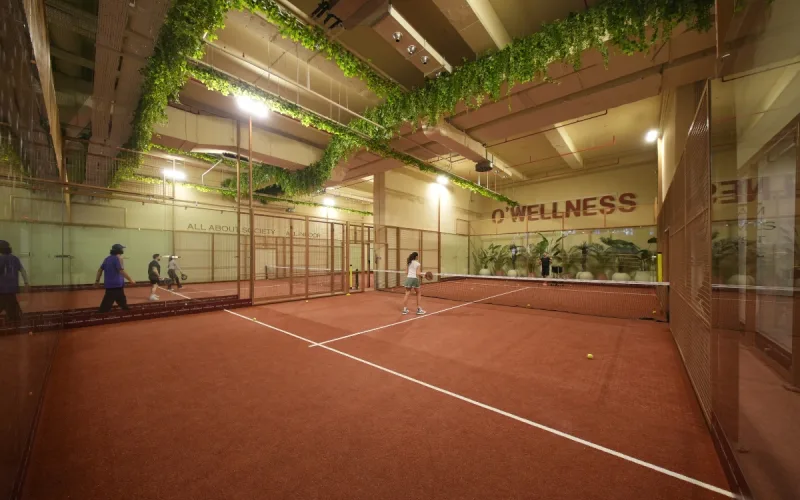
Repetition is key to dialing in the depth and height of your globo. The ceiling and lighting on our indoor courts at Skyland Istanbul are ideal for lob practice; book an hour now.
Target Selection: Where Should You Send the Globo?
The effectiveness of the globo is determined not only by its height and depth but also by its target. The right target makes your opponent’s reply harder and increases your chances of going on the attack.
- The opponent’s backhand side: Overheads are harder on the backhand side. Sending the globo over your opponent’s backhand shoulder increases the chance of a weak reply.
- Close to the back glass: The closer the ball lands to the back glass, the farther back your opponent has to go.
- Between the two players: A globo down the middle can create “whose ball?” confusion between your opponents.
- The weaker overhead player: If one of your opponents is less effective with the smash or bandeja, it makes sense to direct your globos at them. Observations like this are covered in scouting opponents in padel article.
A crosscourt globo increases your margin for error because the court’s diagonal is longer, and it is usually safer. A down-the-line globo travels a shorter distance, so it requires precision, but it carries an element of surprise.
The Globo in a Match: Partner Coordination and Tactical Use
The globo is a powerful shot on its own, but in a match it shows its real value as part of a plan executed with your partner. Defense in padel is a two-person job; the partner of the player hitting the globo also needs to know what happens after the shot.
As soon as the globo is hit, both players watch the ball’s trajectory. If the ball is going deep and high and the opponents are retreating toward the back glass, that is the signal to move forward; both players advance toward the net together, side by side. If the globo lands short, both stay back and take up a defensive position against the opponent’s smash. To make this decision quickly and together, we recommend short calls such as “up” or “stay.” For details, see partner communication in padel article.
Tactically, the globo is also a tool for managing the pace of the match. When your opponents find their rhythm with fast volleys, two or three globos in a row can break that rhythm and pull the match into a slower, more controlled tempo. On managing tempo, our tempo control in padel article explores this idea in a broader context. On critical points, especially when you are under pressure, a risk-free globo often offers a higher percentage than a rushed attacking attempt.
Common Mistakes and How to Fix Them
The globo may look simple, but it is a shot on which many players lose points in matches. These are the mistakes the O’Padel Sky coaching team sees most often:
- Short globo: The ball lands around the service line and the opponent smashes it easily. Fix: Lengthen your follow-through and generate more power from your legs.
- Low globo: The opponent intercepts it in the air without retreating from the net. Fix: Open the racket face more and get under the ball earlier.
- Overly deep globo: The ball clears the back glass and goes straight into the fence or out of the court. Fix: Reduce power while maintaining height.
- Hitting with the arm: Consistency drops if your legs aren’t involved. Fix: Bend your knees and start the movement from below.
- Staying passive after the shot: Not using the time gained after a globo. Fix: When the ball reaches its target, move forward together with your partner.
- Hitting a globo on every ball: You become predictable. Fix: Mix the globo with chiquitas and deep flat shots.
For a soft alternative aimed at your opponent’s feet, take a look at our padel chiquita technique article; mixing the globo with the chiquita keeps your opponents from waiting comfortably at the net.
Globo Drills and Training Tips
The globo is a shot that requires feel and repetition. The drills below are designed to develop your height, depth and target control step by step.
- Depth zone: Mark out a zone near the back glass on the opposite court. Your partner feeds the ball and you try to land your globo in that zone. 3 sets × 10 reps; note your accuracy.
- Net pressure: Two players apply pressure at the net with volleys; the player at the back escapes with a globo at the right moment.
- Globo + move forward: After the globo, you move up to the net with your partner and answer your opponent’s reply with a volley.
- Globo off the glass: Returning the ball with a globo after it comes off the back glass. For glass-reading skills, see using the walls in padel article will help.
- Backhand targeting: Series of globos aimed at the backhand shoulder of the player acting as the opponent.
Lob and globo practice can put strain on the shoulder and back because of the repeated low-to-high movements. We recommend warming up well before training and increasing the load gradually. If you have pain or restricted movement, consult your doctor before starting intensive practice. Warm-up tips: pre-padel warm-up .
To develop the globo and other defensive shots with a structured program, take a look at our padel lessons page. To see your full shot repertoire, our padel shot techniques guide article is also a good place to start.
Conclusion
The globo is the shot that turns defense in padel from waiting into strategy: hit with the right height, depth and target, it breaks pressure, buys time and opens the door to retaking the net. On O’Padel Sky’s indoor, climate-controlled courts with 500+ lux LED lighting at Skyland Istanbul in Sarıyer, you can practice lobs and globos consistently without variables like wind and sun. The O’Padel Sky coaching team is here to help you strengthen your defensive game; for your training time, check out the when making your court reservation and court details on our padel courts pages and put your globo to the in our tournaments and leagues test.
FAQ
The globo is a type of lob. Lob is the general name for shots that send the ball over the opponent's head, while globo refers specifically to a very high, slow, defensive lob.
On outdoor courts, wind and sun can affect the globo’s trajectory and the opponent’s view. On indoor courts these variables are largely eliminated, so height and depth control is more consistent.
Yes. Since the globo is one of the fundamental defensive shots, it is beneficial for beginners to learn it early. At first, it is best to focus on height and depth and leave target selection for a later stage.
The healthiest approach is to reply deep in a controlled way with a bandeja and try to hold your position at the net. Smashing every high ball often gives your opponent an opening.


 Padel Courts
