
What happens in padel when the ball hits the ceiling is a question faced especially by players on indoor courts, and it can cause small arguments mid-match. The lob is one of padel's core defensive weapons, and a good lob draws a high arc. When there is a ceiling, light fittings, ventilation ducts or support beams above the court, there is always a chance that a high ball will touch them. In this article we look at the general principle, the role of local rules and how to behave in such moments.
The general principle: the ball is treated as out of play
In the general approach of padel rules, if a struck ball touches an object that is not part of the court structure before landing on the opponent's side, the side that hit the ball loses the point. The ceiling, the lights and other structures above the court are considered in this category. The logic is simple: the ball has left the volume accepted as the playing area and the opponent's chance to respond to it has been removed.
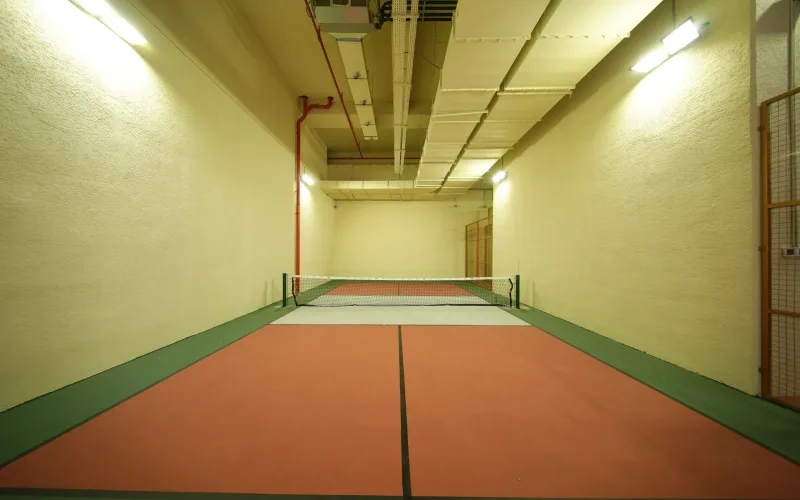
This principle rarely comes up on outdoor courts, because there is nothing overhead. On indoor courts, however, ceiling height varies from venue to venue. In a hall with a high ceiling this happens only on very high lobs, while in a lower building even an ordinary defensive ball can approach the ceiling. This difference changes how often the rule is applied, but not its logic.
The side and back glass of the court, by contrast, are part of the playing area; when the ball strikes them in line with the rules, play continues. The distinction here is between the court itself and the building the court sits in. The glass, the mesh fencing and the net are part of the court; the ceiling, lighting poles, cameras or signs are not. Keeping this distinction in mind makes the decision easier in many situations.
Official rule texts can be updated over time, and tournament organizers can set additional clauses in their own regulations. So treat what is described here as a general framework; what is binding is the current rules of the event or club where you play.
The moment the ball touches the ceiling is usually noticed by a clear sound or a change of direction. In some cases, though, the ball only grazes a light fitting and its trajectory barely changes. The principle is the same for such contact: if contact happened, the ball is out of play. The difficulty lies not in the rule but in establishing whether contact actually took place.
Why local rules matter
Some clubs set local rules according to the structure of their hall. For example, on a court where part of the ceiling is very low or the lights hang into the playing area, it may be agreed that a point is replayed when the ball touches that area. Such arrangements aim to stop players from losing points unfairly because of the venue's architecture.
The problem is that local rules are not always written down and visible. While a group that plays regularly at the same club may be used to a certain practice, a player coming for the first time may not know it. Most arguments arise not from the rule itself but from the two sides stepping onto court with different assumptions.
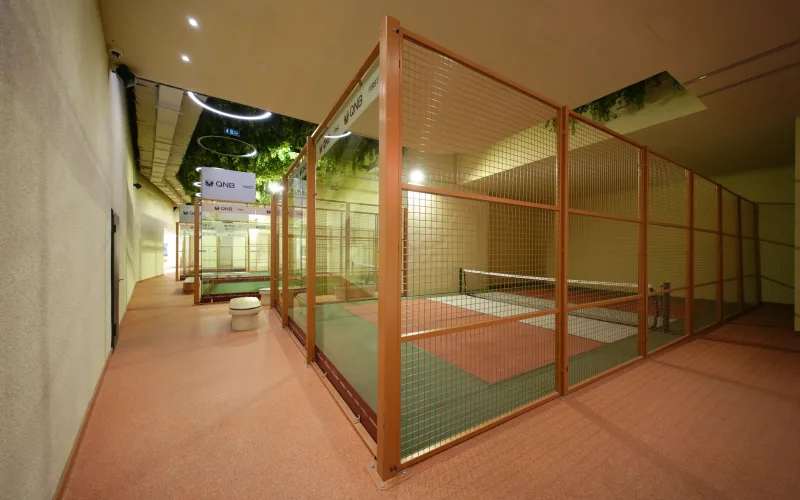
For players on indoor courts, the most practical solution is to ask at reception or a club staff member whether there is any special practice for those courts. If you are coming to an indoor venue such as O'Padel Sky for the first time, taking one look at the structure above the court and settling your question up front avoids lost time during the match.
If a local rule has been set, it needs to be applied consistently throughout the match. Treating a situation that was replayed in the first set as a lost point once the score gets tight is the quickest way to start an argument. Consistency matters more than the content of the rule; as long as both sides are bound by the same rule, the game stays fair.
A short agreement before the match
In social matches played without an umpire, a few seconds of conversation after the warm-up and before the first serve solves a lot. In this conversation you can clarify not only the ceiling but other unclear points about the court as well. The list below summarizes typical topics that can be discussed before a match on an indoor court.
- Whether a ball touching the ceiling or lights means a lost point or a replay
- How beams, ducts or hangers beside or above the court will be treated
- Whether the exit doors are open and whether play from outside the court is possible
- A shared tendency to replay the point in an unclear situation
This conversation does not need to have a formal tone. A short question makes sure both sides play within the same framework. Afterwards, when a ball touches the ceiling, nobody is surprised; the decision has already been made and play continues from where it stopped.
The difference between seeing and being sure
On indoor courts it is not always easy to see whether the ball touched the ceiling. When a high lob passes right next to the lights, the light can dazzle and players can lose sight of the ball for a moment. In matches without an umpire, the general courtesy is to decide in the opponent's favor or replay the point when not sure. This approach may cost a point in the short term, but it protects trust on court in the long term.
Another useful habit is for the player nearest the ball with the best view to speak first. Often the player running back to meet the lob tracks the ball closely and sees best whether it touched the ceiling. When this player honestly says 'it touched' or 'I am not sure', the other three respecting that statement keeps the match flowing.
The tactical effect of the ceiling
The ceiling is not only a rules issue but also a tactical factor. On a low-ceilinged court, hitting very high lobs is risky; so players turn to lower but deeper lobs. This kind of lob narrows the opponent's smash angle while reducing the chance of touching the ceiling. The depth and timing of the lob come to the fore instead of its height.
When you start playing on a new court, try to feel the distance between you and the ceiling by hitting a few lobs during the warm-up. This short test helps you understand at what height you stay safe during the match. The court's lighting layout also matters; from some angles the ball can disappear into the light, and that can affect your choice of lob.
From the opponent's point of view the situation is similar. A pair who knows the ceiling is low may stand closer to the net, assuming the other side will struggle to lob. That increases the value of low, fast down-the-line balls or low shots such as the chiquita. The court's architecture shapes your game plan without you noticing.
It is also possible to work on this situation deliberately in training. A coach can help players adapt to different courts by setting up deep lob drills that stay below a certain height. The aim is to be able to control the peak of the lob and adjust the arc to the height of the ceiling. This skill is especially valuable for players who play tournaments at different venues.
FAQ
If the ball touches the ceiling and lands on the other side, does the point stand?
In the general approach, no; the hitting side loses the point the moment the ball touches an object outside the court. But if the club has a different local rule, that one applies.
What if the ball touches the ceiling on my own side?
A struck ball touching an obstacle before crossing to the other side generally goes against the hitting side. If there is uncertainty, act according to your pre-match agreement.
Who decides this rule in a tournament?
The tournament organizer's regulations are decisive. If there is a pre-tournament technical meeting or briefing note, that is the best place to look for court-specific rules.


 Padel Courts
