
Padelde bir oyuncunun olgunluk göstergesi, her topa aynı gücü uygulayıp uygulamadığıdır. Orta-ileri seviyede hâlâ çoğu oyuncu, hızlı gelen topa hızlı, yavaş gelen topa da hızlı karşılık verir. Oysa padel vuruş hızını bilinçli olarak üç kademede ayarlayabilen oyuncu, rakibin ritmini bozar ve kendi hata oranını düşürür.
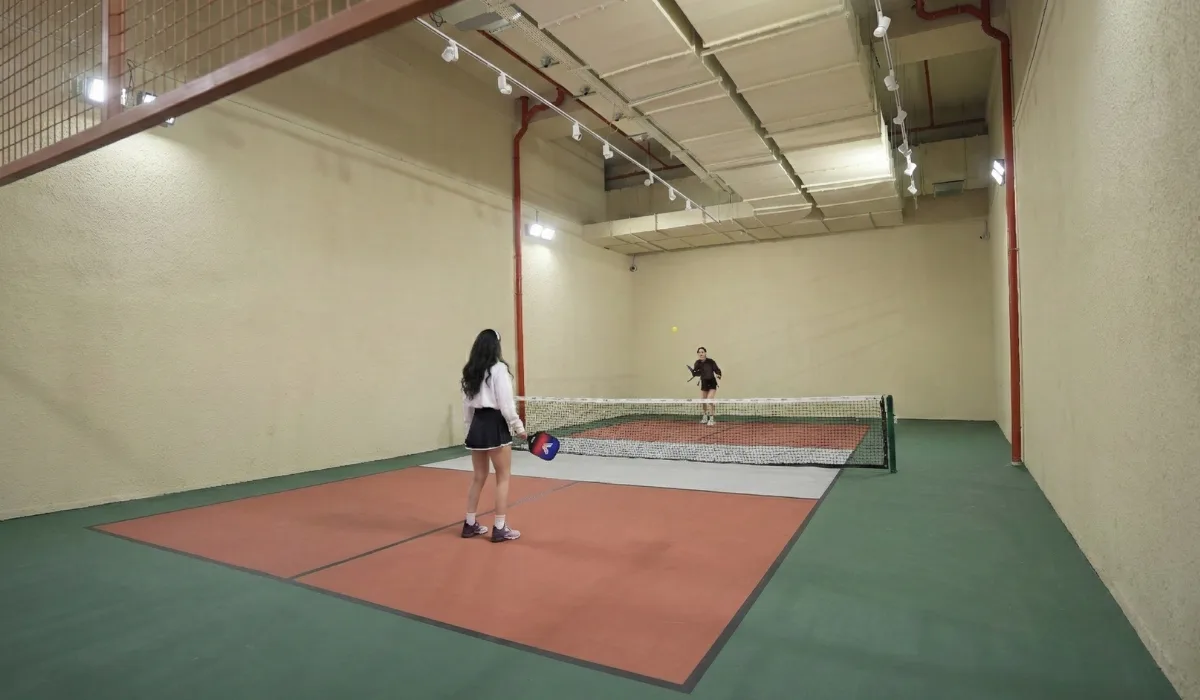
Players at O’Padel Sky in Skyland can adjust these three levels to their own tempo.
A common example: two players send balls at the same speed repeatedly and the opponent adjusts to the pace. The moment a player changes speed, the opponent loses balance. This article explains how to make that change planned.
Why Three Levels?
Three levels are enough to simplify speed control: slow, medium and fast. The slow level means sending the ball high and soft; it is used to break rhythm and gain time. The medium level is the controlled rally tempo. The fast level is used in finishing and pressure moments.
Thinking about too many levels lengthens decision time. Three levels are easily separated in the mind and you can define a keyword for each: “soft,” “normal,” “hard.” Choosing one of them on every ball provides consistency and variety together.
The practical benefit of separating speed levels is diagnosing your mistakes more clearly. Feedback such as “I hit too fast” or “it stayed too slow” is far more useful than saying “I made a mistake.” The level names build a shared language and make it easier to talk both to yourself and with your partner.
Slow Level: Breaking the Rhythm
The slow level is a weapon many players underestimate. A high, slow ball disrupts the opponent’s fast-play rhythm, gives them time to think and pushes them to hurried mistakes. Against opponents with a hard-hitting habit especially, the effect of a slow ball is surprising, because the opponent cannot use their own power.
You use the slow level in defense too. Sending a high, slow lob from a position where you are under pressure buys time to recover position. This is not a passive but a strategic choice and a way of not letting the opposing pair speed up.
- Slow: break rhythm, gain time, get out of defense
- Medium: controlled rally, short-range placement, safe play
- Fast: finishing, pressure, the opponent’s weak moment
- Changing levels is more effective than sticking to a single speed
The effect of the slow ball takes on a different dimension on an indoor court. Because ceiling height is limited, the lob cannot always be sent very high; but a slow lob at medium height makes the opponent’s smash preparation harder. Knowing your court and finding a suitable lob height is the basis of using the slow level with confidence.
Medium Level: The Reliable Base
The medium level is the base of the game. In a rally most strokes should be at this level: controlled, deep, placed balls. If this base is reliable, the other two levels become effective surprise weapons. If the base is faulty, speed changes become meaningless.
At the medium level depth and direction take priority. Where the ball goes matters as much as its speed. A medium-paced ball sent to the opponent’s feet, deep crosscourt or near the side glass is often more effective than a hard ball, because it is both safe and difficult.
Another job of the medium level is to patiently search for the opponent’s weak point. Controlled, consistent medium-paced balls raise the chance of the opponent making errors and make the shift to the fast level easier when an opening appears. This patience often wins more points than the finishing stroke.
Fast Level: When and How?
The fast level should be used when certain conditions are met: a balanced position, a ball at suitable height and a clear target. If these conditions are not met, a fast shot mostly turns into an error. Many players try fast shots even when there is no opportunity and gift the point to the opponent.
At the fast level too, hardness should not come at the cost of control. A clear aim toward the target shows that less than full power is often enough. Full power is needed only when the opponent is completely out of position or there is a very clear opening. Otherwise a stroke slightly below full power is often the best balance.
The hidden side effect of changing speed is that it disrupts the opponent’s racket timing. An opponent used to fast balls hits a slow ball early and sends it high or into the net. An opponent used to slow balls is late on a fast one. In both cases the error arises thanks to your single speed change.
At the same time you need to keep your own rhythm. While changing speed, your own preparation should stay consistent; even if you will hit slow, do the racket preparation early and clearly. If the opponent cannot guess the speed of the stroke from your preparation, the change is far more effective.
Mixing the Levels
The real strength comes from changing levels. Playing at a medium pace throughout a rally and shifting the opponent with a sudden slow ball, or circling with slow balls and finishing with a sudden fast shot, disrupts the opponent’s timing. When the opponent has grown used to the pace, a slow ball catches them unprepared.
There is one rule to mixing: do not let the opponent predict. If you create a pattern such as always playing slow every third ball, the opponent notices it. Varying your choices as the situation demands prevents a pattern from forming.
How to Practice
Set up an exercise to work on speed levels: while rallying with a partner, say which level you will play at the start of each rally. Then deliberately change levels during one rally and watch your partner’s reaction. After a few rounds the levels become something you feel.
In a match a short reminder is enough: “what speed for this ball?” If the opponent plays fast, try answering slow; if they play slow, answer fast. If you have an arm or shoulder problem, consult your physician before forcing fast strokes.
Finally, remember that speed is set not by the arm but by the legs and hips. For a slow stroke, shortening weight transfer and hip rotation gives a more consistent speed adjustment than slowing the arm. When the arm movement suddenly slows, the stroke often falls short; so setting the level with the torso and feet is safer.
You can also turn the transition between levels into a warm-up habit. Playing five balls slow, five medium and five fast during the warm-up and comparing the feeling between them prepares the body for the three levels before the match. That way, when you make a choice in the match, your body already knows that speed.
A short review at the end of the match helps too: which level did I use least today, in which was my error rate high? Most players notice they use the slow level least. This single piece of information gives a clear direction for the next practice.
This three-level approach gives your game both discipline and variety. Discipline comes from assigning a conscious speed to each ball; variety comes from answering with different levels according to the opponent’s pace. Against players tied to a single speed, a three-level player often takes control of the rally.
FAQ
Is playing slow a weakness?
No. A slow ball is a strategic tool for rhythm control and gaining time.
Should I always hit at full power?
No. In most situations less power gives more control and a higher rate of winning points.
How do I feel the levels?
Practice each level separately and assign yourself a keyword for each.



 Padel Courts
