
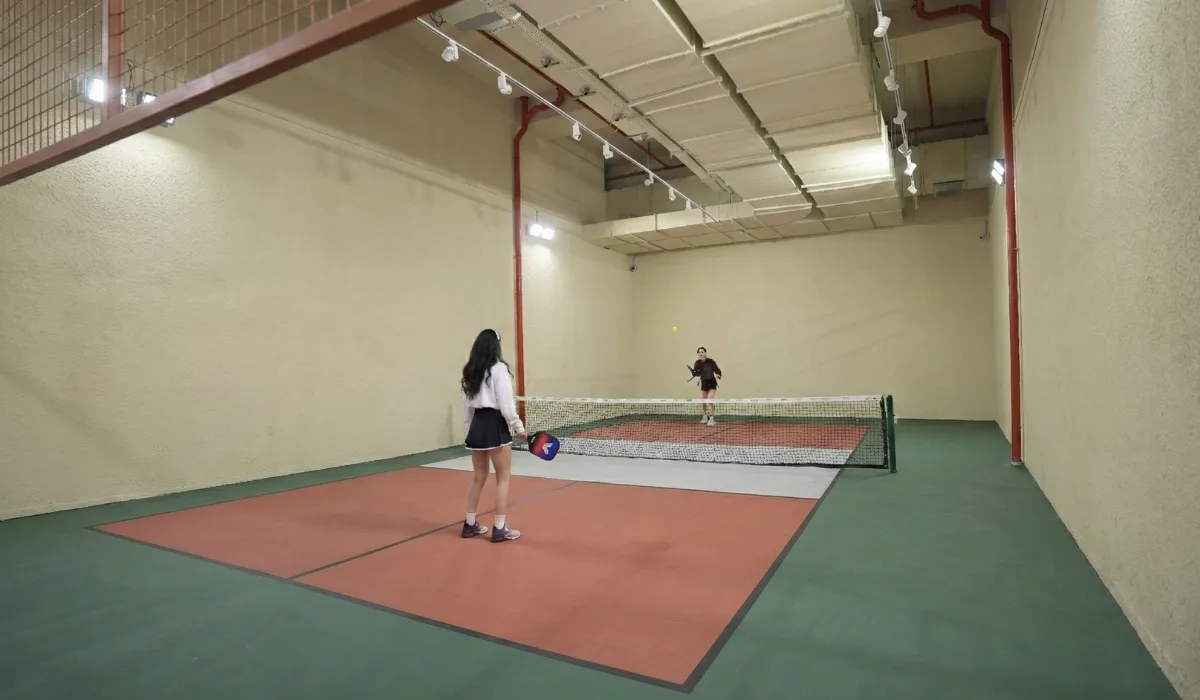
Birçok padel oyuncusu haftada üç dört kez kortta olur ve yine de aylarca aynı seviyede kalır. Sebep, kortta geçirilen zamanın büyük kısmının bilinçli tekrar yerine alışkanlık tekrarıyla geçmesidir. Aynı rakiplerle aynı tempoda oynamak oyunu sürdürür ama zayıf noktaları dönüştürmez.
Those playing at O’Padel Sky in Skyland can easily add this structure to their weekly schedule.
Deliberate practice is a form of repetition that focuses on a specific goal, includes immediate feedback and works just outside the comfort zone. Most players can add this method to their sessions with a few simple steps.
The idea of deliberate practice is a widespread principle from sports science: improvement is determined not just by time but by the quality of the work. In a social sport like padel this principle is especially important, because time on court is mostly mixed with fun and conversation. Fun is valuable, but setting aside a separate time slot with an improvement goal is the healthiest way to combine the two.
First, Set a Single Goal
Every session should begin with a single main goal. “Let me improve my game” is a general intention; “this session I will work on returning to the net after a bandeja” is a workable goal. The narrower the goal, the clearer the feedback.
Taking the goal from the notes of a previous match personalizes the session. If a mistake repeats over three matches, that mistake is the goal of the next session. This builds a bridge between practice and match and the work does not go to waste.
When choosing the goal it is also useful to rank priorities. Which shot loses you the most points in matches? Improving which shot affects the rest of your game the most? Basic shots such as the return of serve, the first volley and the lob usually bring greater gains than fine details. Strengthening the foundation first and then moving on to subtleties is a sensible order.
Build a Feedback Loop
Repetition without feedback only reinforces habit, good or bad. For that reason a short check is needed after each repetition: where did the ball go, how was the contact, did I reach the target? A partner, a coach or a phone recording can provide this feedback.
Making feedback numerical is also a powerful method. Out of twenty balls how many did you put in the target area? Tracking this ratio over five sessions makes progress visible. Even small increases give motivation and confirm the direction of the work.
- A single main goal for each session
- A short check after each repetition: target, contact, rhythm
- Numerical tracking: how many of twenty balls hit the target
- Increase difficulty gradually: first slow, then paced, then under pressure
In feedback, remember that your own feeling and reality do not always match. You may feel a stroke was good and see it as bad on video, or the opposite. This difference is valuable information for developing awareness. Over time the gap between your feeling and reality narrows and your self-correction skill grows.
Work Just Outside Your Comfort Zone
An exercise that is too easy brings no progress, and one that is too hard builds an error pattern. The ideal difficulty is a level where most repetitions succeed but you still make some errors. If the exercise is easier than that, increase the tempo or make the target smaller; if it is harder, lower the tempo or enlarge the target.
Difficulty can be increased gradually. Working the same shot first with static balls, then with slightly moving balls, then at match tempo and finally under pressure (counting points) makes the movement solid in all conditions.
A Sample Session Structure
A simple structure for a session could be: ten minutes of warm-up and light rallies, twenty minutes of controlled repetitions focused on the target shot, twenty minutes of short games using this shot at match tempo, ten minutes of free play and finally a short note-taking. This structure balances focused work with the feel of a match.
The durations can be adjusted to the situation but the main principle does not change: first controlled, then conditioned, finally free. Keeping this order makes it easier to transfer the learned movement to match conditions.
Saying a short intention sentence at the start of the session gathers focus. Saying “today I will only place the second volley” prevents the mind from scattering. Returning to the same sentence at the end of the session and evaluating the result turns the work into a closed loop.
Keeping a small table for measurable progress is also useful: date, target shot, number of attempts, number of successes and a short note. After four or five weeks this table shows the speed of improvement and the pauses. In plateau periods this record becomes a valuable archive reminding you which work was effective.
Rest and Dosage
Deliberate practice is mentally tiring. When focus drops in sessions, it is more efficient to stop or lighten the work. Repetitions done when tired can reinforce wrong patterns. A few short, focused sessions a week often provide more benefit than long, scattered ones.
Make rest days and sleep part of the plan too. Skills settle during rest; so intense work without rest does not give the expected benefit. If you have pain or ongoing discomfort, consult your physician before continuing training.
Making Use of a Coach and a Partner
Working with a coach is one of the most effective forms of deliberate practice, because the coach both clarifies the goal and gives real-time feedback. Telling the coach a single goal before the session increases the value of the lesson. In sessions without a coach, a patient partner can partly take on the same role.
When working with a partner, goals should be compatible. If one of you works on the target shot while the other wants to play a match, the session becomes inefficient. Sharing goals at the start of the session and setting aside time for role swaps lets both players benefit.
Finally, the aim of deliberate practice is not to reduce the enjoyment of the game but to increase it. An improving shot grows the confidence and pleasure you feel in matches. Keeping work and play in balance ensures that both improvement and motivation last in the long run.
Leave a small margin of flexibility in the session plan. On some days the body or mind may not be ready for the planned work; on such days reducing the goal or shortening the session is better than not working at all. Consistency provides more benefit than one perfect session.
Sharing the same goal with a friend and watching each other’s sessions provides both motivation and an outside eye. When two people focus on the same shot, a detail noticed by one contributes to the other’s improvement as well. Joint work is often more sustainable than individual work.
Remembering that every new skill needs hundreds of repetitions to become automatic keeps patience alive. You may not see a big difference in the first sessions; the difference usually appears around the third or fourth week. This delay is normal and does not show that the method is not working.
To get started, try choosing a single goal this week; take three lines of notes at the end of the session. A habit that starts small creates a clear difference in your game within a few months.
FAQ
Is deliberate practice better than playing matches?
The two complement each other. Matches test play and decision-making; deliberate practice transforms specific weaknesses.
Should I set a new goal every session?
No. Keeping a goal for several sessions consolidates improvement. Change the goal when you have made progress.
Can I train alone?
Wall work and serve drills can be done alone; however, video recording is useful for feedback.


 Padel Courts
