

The difference between padel and pickleball can be summed up like this: padel is a racket sport played on a 20×10 meter court enclosed by glass walls, with a perforated racket and a pressurized ball, where the walls are part of the game; pickleball is a net sport played on a smaller court without walls, with a flat-faced paddle and a perforated plastic ball. Both are quick to learn, social, and have spread rapidly around the world in recent years; however, they differ markedly in feel, physical demands, and tactical structure.
In this article, we, the O’Padel Sky coaching team, compare padel and pickleball in terms of court, equipment, rules, physical demands, learning curve, and social side. Our aim is not to show that one is better than the other, but to help you see which sport better suits your goals, physical condition, and lifestyle.
The Two Sports in Brief: Where Did They Come From?
Padel originated in Mexico in the second half of the 20th century and then gained a large player base in Spain and Argentina. Today it is spreading rapidly in many European countries and in Türkiye. The game is based on a combination of a tennis-like scoring system and the use of walls familiar from squash. You can learn the basics of the sport in what is padel and how to play article.
Pickleball, on the other hand, emerged in the US in the 1960s as a game improvised in a family backyard with a badminton court and whatever equipment was on hand. After remaining popular in North America for many years, it has recently begun spreading to other countries. It brings together elements of tennis, badminton, and table tennis.
What the two sports have in common is that they lower the barrier to entry for racket sports. Unlike tennis, they don’t require a long technical learning process; you can play enjoyable rallies from your very first sessions. That makes both of them social and inclusive sports.
Court and Equipment Comparison
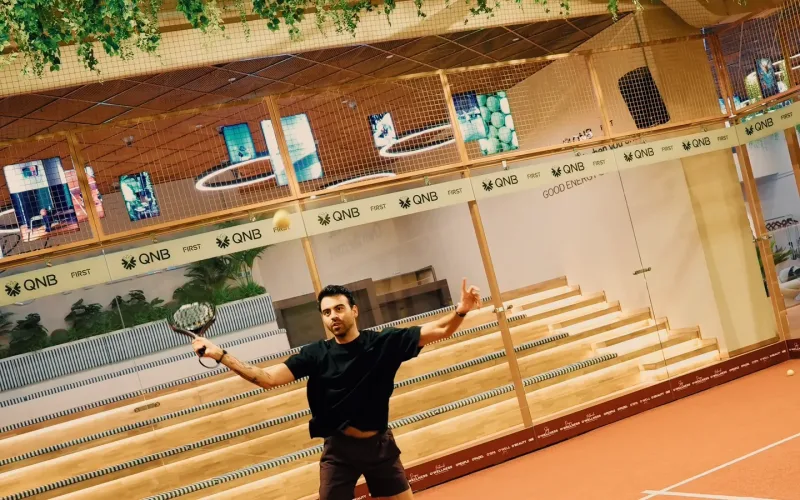
The most visible difference between the two sports starts with the court. A padel court is an enclosed space surrounded by glass and mesh fencing, while a pickleball court is an open area without walls, similar in size to a badminton court. Equipment also directly shapes the character of the game.
| Feature | Padel | Pickleball |
|---|---|---|
| Court size | 20 × 10 m | About 13.4 × 6.1 m |
| Walls | Glass and mesh fencing, part of the game | None |
| Surface | Usually sand-filled artificial turf | Hard surface (concrete, acrylic, etc.) |
| Racket | Perforated, foam-core racket without strings | Flat-faced, lighter racket (paddle) |
| Ball | Similar to a tennis ball, pressurized | Perforated plastic ball |
| Number of players | Almost always doubles (4 players) | Singles or doubles |
| Serve | Underhand, after one bounce | Underhand |
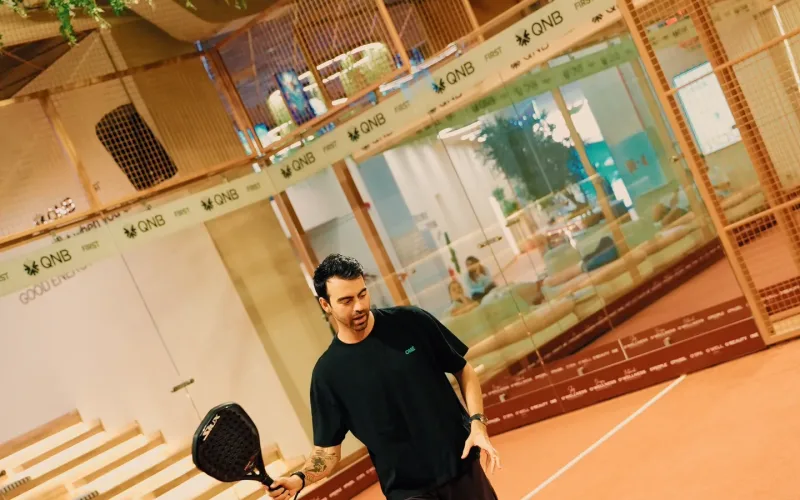
For more information on the structure and dimensions of a padel court, see padel court dimensions and structure our article. The courts at O’Padel Sky are built to FIP dimensions, indoor and climate-controlled, and equipped with 12 mm tempered glass, silica sand-filled artificial turf, and 500+ lux LED lighting.
Racket and ball feel
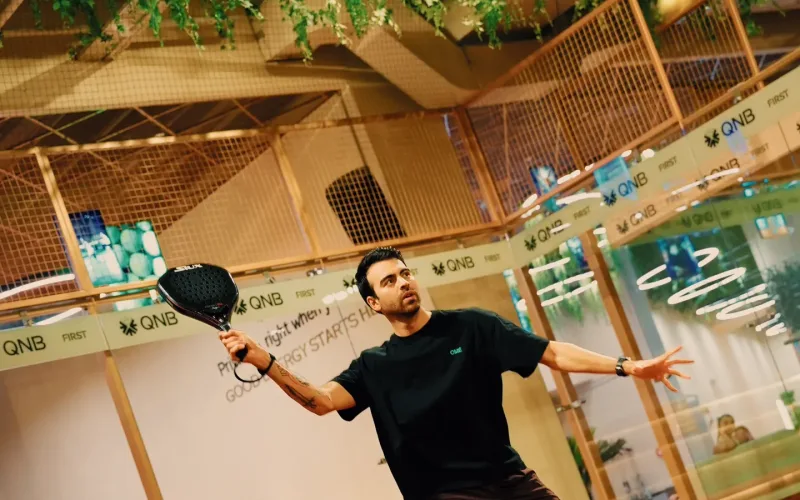
Thanks to its foam core, a padel racket “carries” the ball slightly and offers the player a balance between control and power. The pressurized ball bounces off the glass walls, extending play. In pickleball, the plastic ball travels more slowly through the air and bounces lower off the ground, which favors short shots focused on reflexes and placement. You can learn about the features of padel rackets in how to choose a padel racket article.
Rules and Scoring System
Padel uses the tennis scoring system: 15, 30, 40, and game; six games make a set, and the match usually goes to the first pair to win two sets. In many social matches and some tournaments, golden point is used at deuce. The ball must first hit the ground on the opponents’ side; after that, it may bounce off the glass walls, and players may also play the ball back off their own walls.
In pickleball, games are usually played to 11 points, win by two. Under traditional rules, only the serving side can score. The sport’s most distinctive rule is the no-volley zone in front of the net, known as the “kitchen”: players cannot hit the ball out of the air in this area. This rule encourages a game of precise, short shots at the net.
- Padel: Tennis scoring, walls in play, attacking at the net is encouraged.
- Pickleball: Games to 11 points, no-volley zone, controlled short shots at the net.
- What they have in common: In both, the serve is hit underhand, and teamwork is decisive in doubles play.
For the full padel rules, see complete guide to padel rules and padel scoring system .
Summary
- Padel is played on a 20×10 m court with glass walls; pickleball on a smaller court with no walls.
- Padel uses tennis scoring; pickleball usually uses games to 11 points.
- Padel requires more changes of direction and court coverage; pickleball relies on reflexes at the net.
- Both are quick to learn; the choice should be based on your goals, physical condition, and community.
Physical Demands: Which Is More Tiring?
Both sports require effort ranging from light to intense, depending on a person’s pace of play, level, and match length. So there is no single answer to the question “which one is more tiring.” Still, there are some general differences stemming from the structure of the courts.
In padel, the court is larger and the walls prolong play, so rallies usually last longer. Players frequently move between the net and the back of the court, turn and crouch to return balls off the walls, and use overhead shots such as the smash and the lob. This can create a more comprehensive load in terms of leg strength, agility, and shoulder health.
In pickleball, the court is smaller, so the total running distance is usually shorter; however, fast reflex duels at the net and short explosive movements play a big role. The hard surface can put a different load on the joints than sand-filled artificial turf.
| Physical aspect | Padel | Pickleball |
|---|---|---|
| Movement area | Larger, frequent transitions between net and back | Smaller, focused on the net |
| Overhead shots | Smash, bandeja, and vibora are used often | Less |
| Rally length | Usually long because of the walls | Variable, short duels are common |
| Surface | Sand-filled artificial turf allows sliding | Hard surface |
Whichever sport you choose, if you have a cardiovascular, joint, or chronic health condition, consult your doctor before starting a new physical activity. For padel-specific physical preparation, conditioning program for padel and pre-padel warm-up our articles will guide you.
Want to decide by trying padel yourself? Schedule your first session now on our indoor courts at Skyland Istanbul.
Learning Curve and Tactical Depth
Both sports are fun from the very first sessions, but different skills come to the fore as you progress. In pickleball, the basic rules and shots are learned quickly; at advanced levels, patience at the net, ball placement, and soft short shots called “dinks” become decisive.
In padel, the biggest learning topic in the early stage is using the walls. Reading how the ball comes off the back glass, stepping in at the right time, and positioning in sync with your partner take time. At advanced levels, shots such as the bandeja, vibora, chiquita, and lob, along with transitions between attack and defense, add tactical depth. We cover these topics in using the walls in padel and padel tactics guide our articles.
- First sessions: In both sports, the basic shots and rules are learned quickly.
- First months: In padel, reading the walls comes to the fore; in pickleball, discipline around the no-volley zone.
- Intermediate: In padel, net attack and the lob; in pickleball, the short game and patience.
- Advanced: In both, partner communication, opponent analysis, and pace control are decisive.
If you are wondering how quickly you can progress in padel, see how long does it take to learn padel article offers a realistic framework.
Transition notes for tennis and squash players
Players with a tennis background adapt quickly to the fundamentals of padel strokes, but they need to get used to a shorter, more compact swing. Squash players have an advantage in reading the walls, but learning to position as a doubles pair can take time. Tennis players switching to pickleball, on the other hand, have to rein in their habit of rushing the net because of the no-volley zone rule. You can explore the differences between padel and tennis rules in padel vs tennis rule differences article.
Social Side and Community
One of the shared reasons for the rapid spread of padel and pickleball is their social nature. Both sports are mostly played in doubles and allow players of different levels to have fun together. Club events, social tournaments, and meetup nights are a natural part of these sports.
In padel, formats such as Americano and Mexicano let you meet many players in a short time. At O’Padel Sky, Americano is held on Wednesdays and Saturdays; the O’People Sky community helps new players settle in with events such as Newcomers Night on the first Thursday of the month, Women’s Padel Meetups, and Sunrise Padel at 06:30 in the morning. For details, see What is Americano our article and community page.
Which One Is Right for You? A Decision Guide
The right choice depends on your goals and circumstances. The questions below can help you clarify your decision.
- Are you looking for more comprehensive conditioning and movement variety? Padel’s larger court and wall play may better suit this goal.
- Do you enjoy a short-range, reflex-heavy game? Pickleball’s net-focused structure may appeal to you.
- Do you have a tennis background? Thanks to the similar scoring system and strokes, adapting to padel is usually quick.
- Do you want to play regularly all year round? Choosing a sport with indoor courts near you makes it easier to keep up your routine in Istanbul’s climate.
- Do you want to join a community? Check which sport has a more active club and event calendar in your area.
Many players try both sports and eventually focus on one. The easiest way to try padel is a beginner lesson with a coach; you can find lesson options on our padel lessons page. If you want to start on your own, how to start padel on your own our article guides you step by step.
Is it possible to play both sports?
Absolutely. Switching between racket sports can improve hand-eye coordination and reflexes. However, since the stroke mechanics and rhythm of the two sports differ, it is more efficient to focus on one at first and build solid fundamentals. Wall-reading skills in padel in particular require regular repetition.
Conclusion
Padel and pickleball are two fast-growing sports that make racket sports accessible to everyone. Padel offers a more comprehensive physical and tactical experience with its glass walls, large movement area, and tennis scoring, while pickleball promises a different kind of fun with its compact court and net-focused play. If you want to try padel, O’Padel Sky, located in Skyland Istanbul in Sarıyer’s Huzur neighborhood, is an easy-to-reach starting point from the Maslak, Levent, and Zekeriyaköy area, with indoor, climate-controlled courts built to FIP dimensions, a structured lesson program, and wellness facilities in the same complex. Our courts padel courts page, plan your first match on our when making your court reservation page.
FAQ
No. A padel racket has a perforated foam core, while a pickleball paddle is lighter and flat-faced; the balls are different too. Each sport should be played with its own equipment.
It depends on the person’s physical condition. Both sports can be played across a wide age range; if you have a chronic condition, we recommend that you consult your doctor before starting.
O'Padel Sky's courts are FIP-sized courts designed for padel. For current services, you can get information via our WhatsApp line at +90 539 675 54 54.


 Padel Courts
