
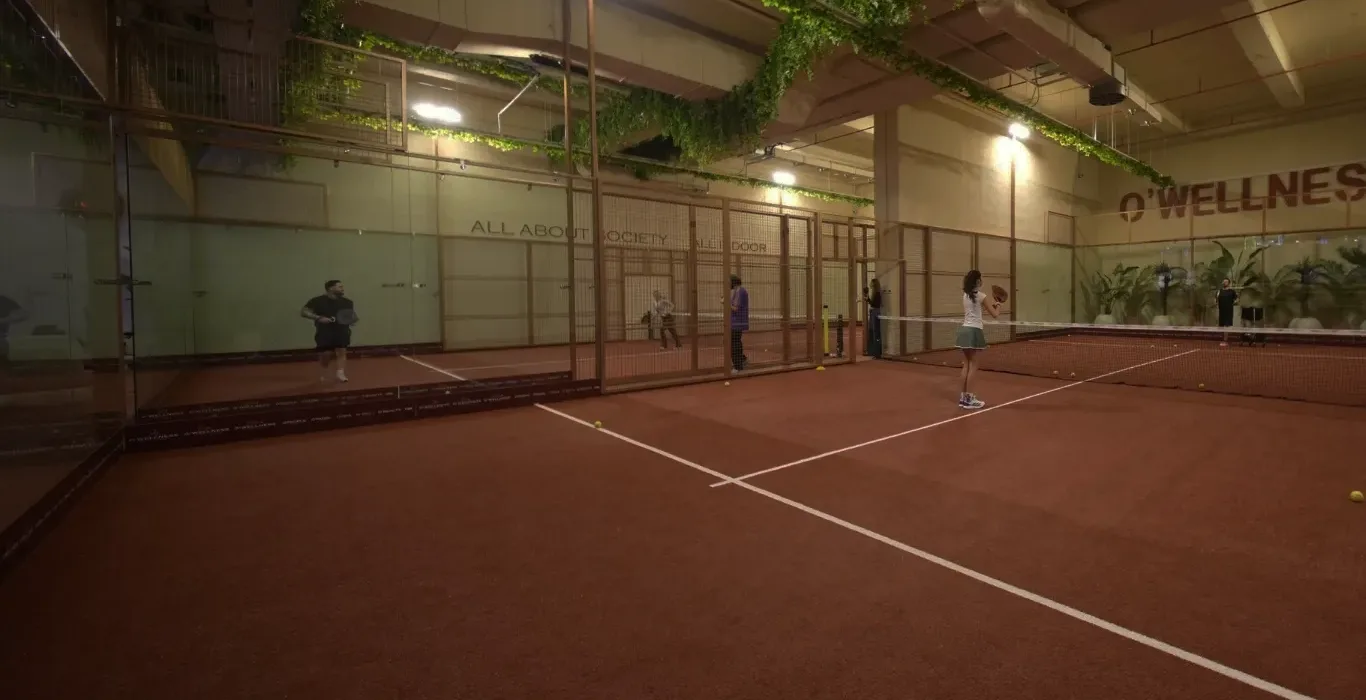
Padel ball lifespan is a subject most players don't care much about but one that directly affects play quality. A new ball bounces lively, fast and predictably, while an old ball behaves dead, slow and irregularly. This difference changes your hitting feel, the tempo of rallies and even the load on your wrist and elbow. In this article we explain why a padel ball has a limited life, how it should be stored and when to replace it. When playing at O'Padel Sky, this knowledge will make your sessions more efficient.
Why does a ball lose pressure?
Padel balls are felt-covered rubber balls with compressed air inside. With each hit and each bounce the ball deforms, and this flexing gradually lowers the internal pressure. Air slowly escapes through the microscopic pores of the rubber; heavy play speeds up this process.
An opened ball can starts the pressure loss of the balls faster. Balls stored in a sealed pressurised can keep their target pressure until the can is opened. So the opening date of new balls is a good reference for usable life.
The felt wears over time too. The nap of the cover disappears and the ball can become slicker and faster. But pressure loss usually shows itself as the first and most noticeable sign.
Signs showing it is time to replace
There are simple tests to tell when a ball needs replacing. The first is bounce height: a ball dropped from waist height that bounces noticeably low or sticks to the floor has lost its liveliness. The second is hitting feel; if the racket gives a 'dead' and heavy feeling on contact, it is time to replace.
If the ball feels too soft when squeezed with the fingers, this too is an indicator of pressure loss. Felt wear and accumulated dust also change the ball's behaviour. A session with new balls will make the difference felt immediately.
- Bounce is clearly low when dropped from waist height
- A heavy, lifeless feeling on contact
- Too soft when squeezed with the fingers
- Worn felt, slick surface
- Slower rallies, the ball falling short
Proper storage methods
Storing balls you aren't using in a cool, dry place extends their life. The trunk of a hot car, a sunny windowsill or a damp storage room harm the balls. Heat can cause the expansion of the pressurised air and deterioration of the rubber structure.
Ball pressure savers, that is lidded pressure tubes, can be used to extend the life of opened balls. The effect of these accessories is limited, but they can help if you don't play regularly. Also grouping your balls and using them in a single session lets you consume their life more evenly.
Indoor courts and ball life
On indoor courts balls are protected from factors like wind, sun and humidity. This can make the balls behave more consistently and stay in good quality somewhat longer. But heavy use still lowers pressure; for this reason facilities renew balls at intervals.
If you bring your own balls, prefer brands matching the ball type the facility recommends or uses. Keeping separate ball sets for training and tournaments is also a good habit; playing with new balls on match day makes performance more predictable.
Managing balls on tournament and match day
Ball quality matters on match day, since playing an important match with an old ball may negatively affect performance. In tournament or league matches the new balls determined by the organisation are usually used. If you will play with your own ball, open the can just before the match and check the condition of the balls after each set.
On heavily played tournament days the frequency of changing balls can increase. If starting every match with new balls isn't possible, saving the balls lightly used in the previous match for warm-up may make sense. That way fresher balls remain for the match.
There are also differences between balls due to brand. Playing with the same brand and model gives a consistent feel. Avoid mixing balls of different brands during a match; each ball can carry a different bounce and speed character.
The relationship between balls and equipment
Ball speed and pressure are also related to your racket choice. With new, lively balls a soft racket works very well, while with old, dead balls a stiffer racket can make up for lack of power. The reverse is true as well: with lively balls an overly stiff racket can lead to loss of control.
The load on your wrist and elbow also depends on the condition of the ball. Dead balls feel heavier and require more arm strength per shot; this can put extra load on joints in the long run. So changing balls is important from an injury-prevention perspective too.
Although weather conditions matter less on indoor courts, intensity of use affects ball life. Balls played in busy hours wear faster than those played in quiet hours. That is why a facility tries to preserve play quality by renewing its balls frequently.
The rubber and felt structure of balls
Two main elements determine the performance of a padel ball: the inner rubber core and the outer felt cover. The core affects bounce height and liveliness, while the felt affects air resistance, speed and durability. When the felt is tightly woven the ball keeps its shape longer and behaves more consistently.
That balls are approved matters too. In official tournaments, balls approved by the federation are used; these balls conform to the standard in size, weight and bounce. The standard of training balls may be more flexible, so choosing approved balls in serious matches increases consistency.
When choosing a ball, look at the information on the can and make sure you are using the same ball as the opposing player. Price should not be the only criterion; cheap balls may lose pressure quickly and become more costly in the long run.
In conclusion, you can think of the ball as the unsung hero of equipment. The care shown to it quietly shows itself in the quality of your game.
As a final note, check the date and season information before opening the can. Balls that have stayed on a shelf for a long time can age even if sealed. For players who value freshness, preferring freshly manufactured balls is also an option.
When working with children and beginners, soft, low-pressure balls make learning easier; rallies get longer, errors fall and morale rises. Keeping old balls for this purpose is both an economical and a pedagogical method.
Making use of old balls
Balls that have lost pressure are not completely rubbish. Using them for slow rally practice with beginners, for serve and short-ball drills or for practice with feeding machines gives them a second life. A slow ball gives the player more time in the learning stage.
In the end the ball is one of the cheapest yet most effective parts of your equipment. Check the condition of the balls before your next match and open new ones if needed. Play with lively balls at O'Padel Sky and enjoy the true taste of your game.


 Padel Courts
