
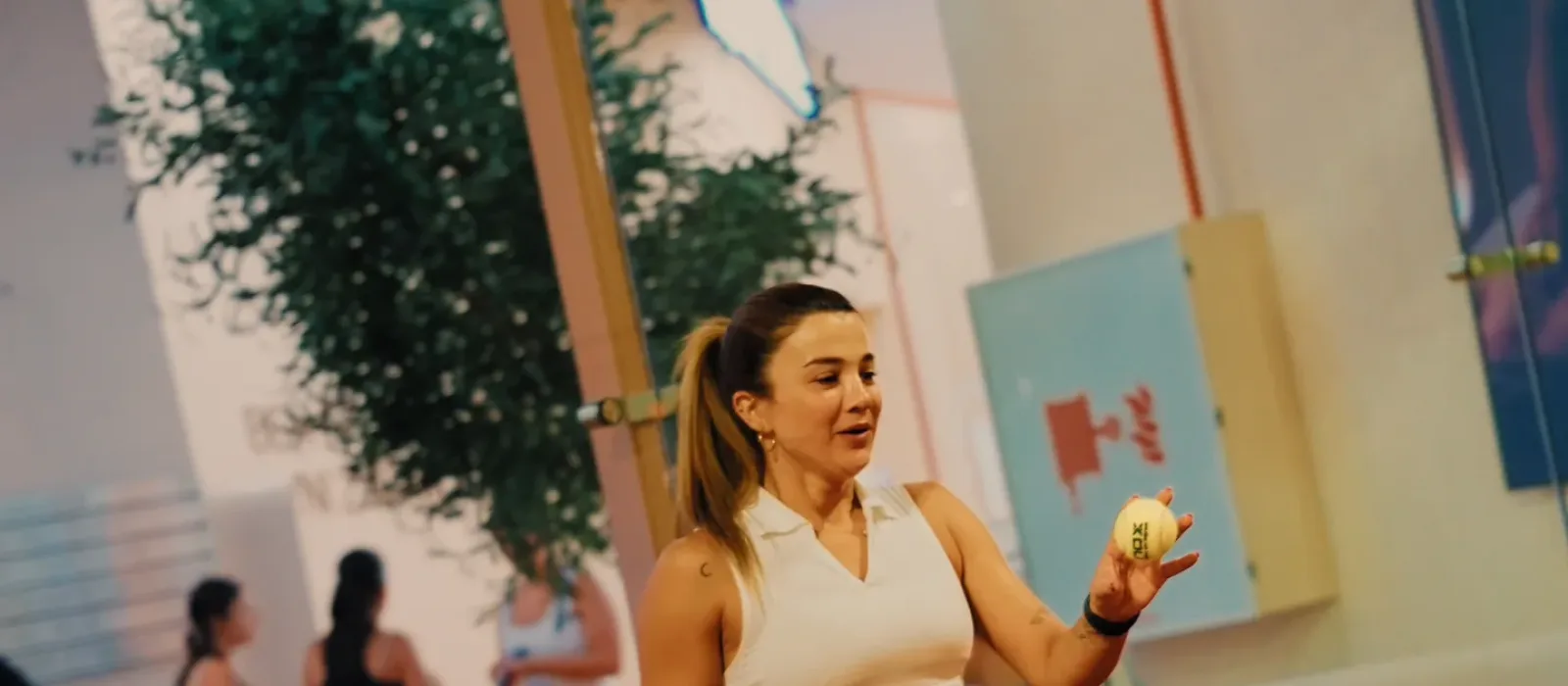
Padel racket rental, especially for beginners and occasional players, is a practical way to start playing without buying your own racket. Buying makes more sense for players who play regularly, have started to understand their playing style and want to gain consistency with a racket of the right weight, balance and stiffness for them. In short, renting or trying different rackets in the first weeks, then buying once you play more often and your preferences are clearer, is usually the most balanced approach.
In this guide, the O’Padel Sky coaching team explains the advantages of renting and buying a racket, which is more suitable at which stage, what to look for once you decide to buy and how to plan your racket needs at O’Padel Sky in Skyland Istanbul. We recommend checking the current terms for rental and demo rackets at reception.
Summary
- Renting a racket or using a club racket makes sense for your first lessons and when you play occasionally.
- Once you start playing once a week or more, having your own racket brings consistency.
- Trying rackets of different shape, weight and stiffness before buying makes the right choice easier.
- Mentioning your racket needs when you make your reservation saves time when you arrive at the court.
Advantages of Renting a Racket
Many people new to padel face the question “which racket should I buy?” before their first lessons. Yet at this stage the right answer is often “don't buy one yet.” Starting with a rental or club racket removes the risk of investing in equipment before you know whether you'll stick with the sport.
- Low barrier to entry: You can try the sport without buying equipment.
- Chance to try different rackets: You can feel the differences in shape, weight and stiffness on court.
- Easy to carry: No need to carry a racket after work or while traveling.
- A solution for guests and friends: You can set up a match with friends trying padel for the first time.
- Corporate events and celebrations: Equipment is no longer an issue for group events.
For group events, corporate padel event and padel birthday party guides.
Limits of renting
The downside of rental rackets is that you may play with a different racket each time. Since every racket has a different weight, balance and feel, gaining consistency can be harder. Also, since club rackets are usually chosen to suit a wide range of players, they aren't tailored to a particular playing style. Once you start playing regularly, these limits become more noticeable.
Advantages of Buying
Owning your own racket is one of the important steps in progressing at padel. Playing regularly with the same racket helps you gain feel and consistency in your strokes. Over time, you internalize how the ball comes off the racket, which area gives you better control and how much power you need to apply.
- Consistency: You play with the same feel in every match.
- Personalization: You set details like grip thickness, overgrip preference and frame protector to suit you.
- Fit: You can choose a model that suits your level, build and playing style.
- Hygiene: The grip and handle are used only by you.
- Long-term convenience: Frequent players no longer need to rent every time.
To extend the life of your racket, see padel racket care and racket frame protector articles.
Which Option at Which Stage? Decision Table
The table below is a general framework recommended by the O’Padel Sky coaching team based on how often you play and your level. It is not a strict rule; you can adapt it to your situation.
| Situation | Recommendation | Why? |
|---|---|---|
| First lesson / first try | Rental or club racket | Don't invest before you get to know the sport |
| Playing a few times a month | Rent and try different rackets | Discover your preferences |
| Playing regularly once a week | Time to consider buying | Consistency starts to matter |
| Playing more than once a week | Buy | Your own racket is essential for developing feel and control |
| League or tournament player | Buy + backup racket | Be prepared for match-day surprises |
Signs you're ready to buy
- You've built a regular weekly playing routine.
- You've started to develop clear preferences among the rackets you've rented.
- Your basic shots are solid and your playing style (control or power) is taking shape.
- You've started joining leagues, Americano events or tournaments.
- You notice that playing with different rackets hurts your consistency.
Mention your racket needs when you book, and it will be ready when you arrive at the court. Book your court now.
What Should You Try Before Buying?
The biggest risk in buying a racket is choosing based only on looks or popularity. The right racket is the one that suits your level, physical attributes and playing style. Trying different rackets during your rental period to clarify these preferences helps you avoid a bad investment.
Racket shape
Padel rackets generally come in round, teardrop and diamond shapes. Round rackets offer a large sweet spot and control and are usually recommended for beginners. Diamond-shaped rackets are power-oriented and suit more experienced players. The teardrop shape offers a balance between the two. For details, see padel racket shapes guide.
Weight and balance
A racket's weight and balance point affect both the feel of your shots and the load on your arm. A very heavy or head-heavy racket can tire a beginner's arm. Our article on racket weight and balance offers detailed information on this topic.
Material and stiffness
The racket's face and inner foam determine its stiffness and how fast the ball comes off the racket. Soft rackets provide more comfort and help transfer power to the ball, while stiff rackets offer control and precision. For material differences, see padel racket materials post.
For the right starter racket for your level, see padel rackets for beginners, and for advanced players, advanced padel racket read our guides. For the overall selection process, our article how to choose a padel racket is a comprehensive starting point.
Common Mistakes When Buying
The racket selection mistakes our coaching team sees most often usually come from not assessing your level and needs correctly.
- Buying a racket above your level: Power-oriented models used by professional players can make control harder for beginners.
- Buying without trying: Deciding without testing the racket's feel on court.
- Looking only at the design: Looks are not as important as performance and comfort.
- Ignoring arm health: If you have elbow or shoulder sensitivity, you should avoid stiff and heavy rackets.
- Not planning maintenance: Neglecting details like a frame protector and overgrip.
If you have elbow or shoulder complaints, we recommend consulting your doctor or a sports physiotherapist before choosing a racket. On this topic, see tennis elbow article offers more information.
Planning Your Racket Needs at O’Padel Sky
If you're playing for the first time at O’Padel Sky, located in the Skyland Istanbul complex in Sarıyer, simply mention your racket needs when you book. You can get information on rental and demo racket options and current terms from reception or via WhatsApp at +90 539 675 54 54.
In lessons, our coaches can recommend a racket type that suits you based on the stroke characteristics they observe as you play with different rackets. This feedback is extremely valuable before you make a purchase decision. For lesson options, see padel lessons, and for reservation options, when making your court reservation pages.
After buying your own racket
It's natural to need an adjustment period during your first few matches with a new racket. During this time, get used to its feel by trying it on different shots, and adjust the overgrip thickness and wrist strap to suit you. A suitable bag to carry and protect your racket is also important; on this topic, see padel bag and accessories guide.
When do you need a backup racket?
For players who play more than once a week or compete in league or tournament matches, a backup racket can save the match when the unexpected happens. Frame damage, a grip problem or a crack in the face shouldn't stop your game mid-match. A backup racket with specs similar to your main racket makes the switch easier. For tournament preparation, see padel tournament preparation article.
When should you replace your racket?
A racket's lifespan depends on how often you play, the conditions of use and how well you maintain it. Consider replacing your racket when you notice cracks in the face, deep damage to the frame or a clear change in the feel of your shots. The inner foam can lose its elasticity over time, which affects how the ball comes off the racket. Asking your coach for an opinion on your racket's condition helps you decide when to replace it.
Making the most of your racket trial period
Instead of seeing your rental period simply as “playing without a racket of your own,” you can turn it into a deliberate trial period. In each session, note the shape, approximate weight and stiffness of the racket you used; after the match, briefly write down which shots felt comfortable and which were difficult. After a few weeks, these notes will clearly show which features suit you.
Here are some questions to keep in mind during your trial period:
- How did racket control feel on volleys and the bandeja?
- Did the ball go deep enough on shots from the baseline?
- Did you feel fatigue in your arm or shoulder after the match?
- Did the racket provide enough power on smashes and high balls?
- Was the grip thickness comfortable in your hand?
Sharing your answers with your coach makes the racket recommendation much more accurate. Because your coach observes your stroke mechanics during lessons, they can also assess details you may not notice. For example, the area of the racket where you usually make contact shows whether a racket with a larger sweet spot would benefit you.
Briefly trying your partners' rackets is also a practical way to get to know different models. However, judging a racket after just a few shots can be misleading; if possible, use a racket for at least one full session before deciding. Social matches and events like the Americano are also great opportunities to meet players who use different rackets and hear about their experiences. For community events, see community page.
Budget and priorities
Budget is naturally a factor in the buying decision. The most expensive racket is not always the most suitable one; especially at beginner and intermediate levels, a model that suits your level usually performs better than a high-end model. When planning your budget, factoring in complementary gear such as shoes, overgrips, a frame protector and a bag alongside the racket helps you make a balanced investment. Since shoes are the most critical piece of equipment for injury prevention, they should be at the top of the list.
Whichever path you choose, what matters is that your racket makes your game easier and helps you enjoy your time on court. Starting with rentals and switching to your own racket at the right time is a balanced approach that protects both your budget and your progress.
Conclusion
Padel racket rental is the most sensible option while you're getting to know the sport and trying different rackets; buying, on the other hand, speeds up your progress once you play regularly and your preferences are clear. The right decision depends on how often you play, your level and your goals. At O’Padel Sky, located in the Skyland Istanbul complex in Sarıyer, you can mention your racket needs when booking your first sessions and, when the time comes, choose the racket that suits you best with recommendations from the O’Padel Sky coaching team.
FAQ
You can mention your racket needs when you book. For current terms on rental and demo racket options, contact reception or reach us via WhatsApp at +90 539 675 54 54.
It generally makes sense to buy once you're playing regularly, once a week or more, and have tried different rackets to clarify your preferences.
Round rackets are generally recommended for beginners because they offer a large sweet spot and control.
Not at first. However, once you play regularly, switching between rackets can make consistency harder; at that point, moving to your own racket is beneficial.


 Padel Courts
