
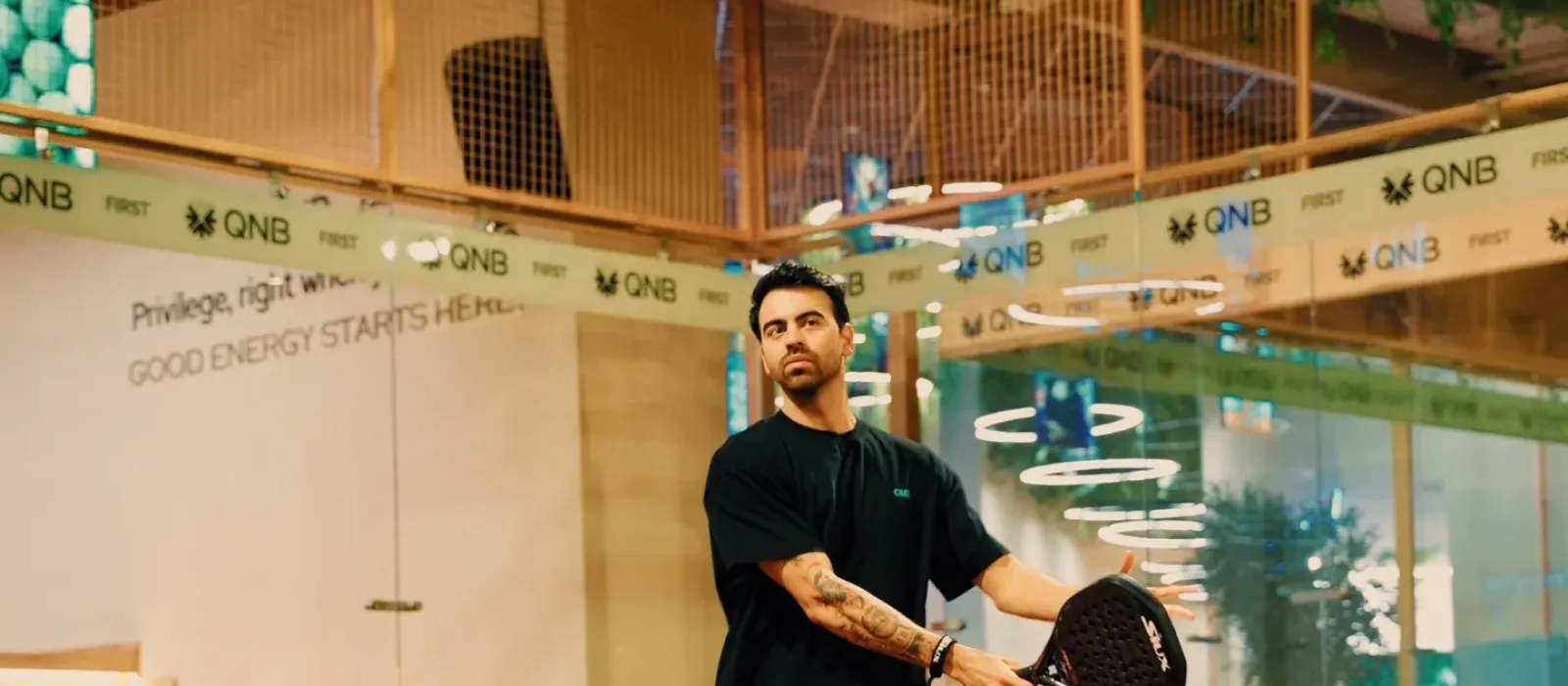
An advanced padel racket is one that deliberately shifts the trade-off between power, control and forgiveness toward power for players above level 4.5. Two shapes dominate this segment: diamond and hybrid (teardrop-to-diamond transitional shapes). The short answer: if you're a finisher at the net and hit the center consistently, go diamond; if you play both sides and want margin for error throughout the match, hybrid is the right choice for you.
As the O’Padel Sky coaching team, in this article we compare diamond and hybrid rackets on balance, sweet spot, core stiffness, face material and injury risk. Our goal isn't to recommend a brand; it's to help you read your own playing profile and ask for the right specs. Since we have rental rackets in different shapes on our courts at Skyland Istanbul’s, you can feel the difference you've read about on court the same week.
Summary
- Diamond racket: balance above 27.5 cm, high and narrow sweet spot, maximum smash power; for attackers who hit the center consistently.
- Hybrid racket: balance 26.8–27.5 cm, mid-high sweet spot, limited power loss, noticeably higher forgiveness.
- At the advanced level, the decision isn't made on shape alone but on the trio of shape + core stiffness + surface texture.
- A diamond racket increases arm and shoulder load; if you have a history of tennis elbow or shoulder problems, hybrid is the safer route.
- For most advanced players, the ideal solution is a two-racket rotation: hybrid for training and diamond for matches.
What Does Advanced Mean? Define Your Level Before Choosing a Racket
The padel level system runs on a scale from 1.0 to 7.0. In racket selection, “advanced” usually means 4.5 and above: a player who can direct the serve, hold the net position with a bandeja, use the víbora and smash selectively and read the ball coming off the glass. Upgrading equipment before reaching this level almost always hurts performance.
You can do a simple self-test. If fewer than ten percent of your shots in a training session are off-center, if your forearm doesn't burn at the end of a three-set match and if you consciously choose between bandeja and smash based on the ball's height, you're ready for advanced equipment. If one of these three is missing, investing in technique first will get you results faster.
If you want to measure your level objectively, padel level assessment you can check the criteria list in our article or ask our club coaches for a quick assessment. Basing your equipment decision on your level is a more valuable step than comparing brands.
Diamond Racket: What Do You Gain, What Do You Pay?
In a diamond shape, the widest part of the head is near the top of the racket and the center of mass sits far from the handle. This lengthens the pendulum arm: at the same arm speed, the racket head produces higher linear speed and more energy is transferred to the ball. You feel the difference on smashes, víboras and put-away shots.
The price is paid in two ways. The first is forgiveness: the sweet spot moves up and narrows, off-center hits create more torsional torque and the ball both slows down and loses direction. The second is load: the long pendulum puts more moment on the wrist and forearm; because preparation takes longer, you risk being late in quick exchanges at the net.
To really get the most out of a diamond racket you need three things: a high and consistent contact point, solid trunk rotation and footwork that doesn't break down during the match. If all three are in place, a diamond racket makes your finishing shots visibly harder.
In practice, the scenario where a diamond racket shines most is this: the opponent has sent up a high ball from defense, you're positioned near the net and you want to finish it in one shot. At that moment, head weight gives a clear advantage over a softer shape in turning arm speed into ball speed. On the other hand, the same racket will catch you late on a fast volley at your feet.
That's why a diamond racket isn't a preference, it's a commitment. It requires you to keep your fitness, footwork and preparation discipline consistently high. How to plan your weekly conditioning load is covered in conditioning program for padel our article.
Hybrid Racket: The Default for the Modern Advanced Player
Hybrid rackets are intermediate shapes between teardrop and diamond; manufacturers usually call them “teardrop-diamond,” “high-balance teardrop” or similar names. Mass shifts toward the head, but not as much as in a diamond; the sweet spot is clearly above center yet stays wider laterally.
This shape has also gained ground on the professional circuit in recent years. The reason is simple: padel is getting faster. If you hit hundreds of fast reaction shots in a match, keeping your average shot quality high wins more than one perfect smash’s. The hybrid preserves exactly that average.
Another practical advantage shows up during transition periods. Players who jump straight from teardrop to diamond usually see a drop in shot quality for two or three weeks. The hybrid splits this step in two: first you raise your contact point, then you accept the loss of forgiveness.
Choose a hybrid racket if you alternate between the right and left sides, if the transition from defense to attack is at the center of your game, if you spend more than three hours a week on court or if you've had elbow or shoulder complaints in the past. The mechanics of the transition are covered in detail in transitioning from defense to attack our article.
Diamond or Hybrid? Comparison Table
| Criterion | Diamond | Hybrid (teardrop-diamond) |
|---|---|---|
| Balance range | About 27.5 cm and above | About 26.8–27.5 cm |
| Sweet spot location | Upper area, narrow | Mid-upper area, wider |
| Smash power | Highest | High |
| Forgiveness | Low | Medium-high |
| Fast net reactions | Demanding | Comfortable |
| Arm and shoulder load | High | Medium |
| Best suited for | Left-side finisher, pure attacker | Two-sided, high-volume player |
The balance values in the table are approximate references; manufacturers' measurement methods can differ. So trust the head weight you feel holding the racket rather than the catalog. The relationship between weight and balance is explained numerically in padel racket weight and balance our article.
Beyond Shape: Core, Face and Texture
At the advanced level, shape is only a third of the decision. The rest is determined by the core foam and face material.
- EVA hardness: Hard EVA returns more energy and increases control, but transmits vibration to the arm. Soft EVA is comfortable and forgiving, at the cost of some ball exit speed.
- Carbon weave: 3K weave is more flexible and comfortable; 12K and 18K are stiffer and faster. 12K and above is common at the advanced level, but stiffness needs to be balanced against arm health.
- Surface texture: A sandy or embossed surface adds more spin to the ball. If you play a lot of slice serves and víboras, a textured face gives a clear advantage.
- Hole pattern: Patterns concentrated in the center enlarge the sweet spot; patterns concentrated toward the edges increase control.
- Protective bumper and frame: Contact with the glass and walls is frequent on indoor courts; a sturdy protective bumper directly extends the racket's life.
If you want to explore each of these material topics separately, padel racket materials is a good starting point. For an overall selection framework, how to choose a padel racket is the guide we recommend.
If you'd rather feel the difference between diamond and hybrid than read about it, try both shapes in the same session on our indoor courts at Skyland Istanbul’s. Racket and ball rental are included in the court fee.
Transition Plan: How Do You Get Used to a New Racket?
Switching to an advanced racket is a process of technical adaptation. Rushing into matches strains both your performance and your arm. We recommend the following sequence.
- Week 1: Training only. Wall drills and medium-tempo rallies; no smashes. The goal is to find the sweet spot.
- Week 2: Bandeja and víbora repetitions. You'll notice your contact point getting higher; adjust your foot position accordingly.
- Week 3: Controlled smash sets, a limited number per set. If you feel burning in your forearm, end the session.
- Week 4: Practice matches. Keep your old racket with you; if your arm gets tired, switch back.
- Week 5 and beyond: Tournament and league matches. Lock in your grip size and number of overgrips at this stage.
Don't slack on your warm-up and cool-down routine during the transition. A new racket loads muscle groups you're not used to; pre-match warm-up becomes even more important than usual during this period.
Arm Health: The Overlooked Variable at the Advanced Level
The combination of a diamond racket and stiff carbon transmits vibration to the forearm muscles. In players who play more than four hours a week, this load can turn into chronic pain on the outside of the elbow. When upgrading your racket, you need to review grip size, number of overgrips and training volume together.
Practical measures: choose your grip based on your hand size, replace worn overgrips right away, look for a vibration-dampening combination if you prefer hard EVA and keep the number of high-intensity sessions per week constant. If symptoms start, tennis elbow and padel check the warning signs in our article. The club's recovery and wellness services are designed to manage this load during intense league periods.
The Two-Racket System: A Quiet Habit of the Pros
Most advanced players don't work with a single racket. The common setup is: a more forgiving hybrid for training and long sessions, and a diamond for match days. This lowers weekly arm load while keeping the power advantage on match day.
The second benefit of this setup is economic. Core foam wears out with hours of use; splitting the load across two rackets extends the usable life of both. During a busy league season, this difference can add up to several months.
When setting up this system, keep the grip size and overgrip brand the same on both rackets. When your hand gets the same feel, you adapt to the change in shape much faster. If you also want to plan your racket rotation in your pre-tournament preparation calendar, tournament preparation offers a practical framework.
Conclusion: The Right Racket Is the One That Mirrors Your Game
Choosing an advanced padel racket starts not with a list of brands but with an honest reading of your own playing profile. If you're a left-side finisher, a diamond will reward you; if you play both sides, at high volume and for the long haul, a hybrid will win you more matches. Our climate-controlled indoor courts at Skyland Istanbul’s offer constant conditions year-round, making a fair comparison of the two shapes possible; our players from Sarıyer, Maslak and Levent’s usually make their decision within two sessions. Trying teaches faster than reading: Come to our padel courts, try our rental rackets one after another and get a second opinion from our coaches. If you want to decide with technical feedback, our padel lessons provides the right setting.
FAQ
The general range is 360–375 grams. 365–375 g is a common starting point for men and 355–365 g for women. But where the balance sits matters more than total weight; two rackets of the same weight can feel completely different.
First, cut your training volume and check your grip size. The next step is moving to a softer EVA core or a hybrid shape. If the pain lasts more than two weeks, see a sports medicine doctor or physiotherapist; the O'Athletic Sky team at O'Padel Sky carries out this assessment.
For a player who plays three hours a week, core performance usually drops noticeably after 12–18 months. The criterion is feel, not time: if ball exit speed has dropped, the sound has turned dull or there are micro-cracks in the frame, it's time to replace it.
Yes, but a hybrid shape is better suited for that. The left side calls for finishing shots, the right side for speed and placement; a hybrid handles both reasonably well. If you only play the left side, a diamond makes more sense.
Yes. Since forgiveness drops in this segment, the cost of a wrong choice is both performance and arm health. We have rental rackets in different shapes at our club, so we recommend testing for at least two sessions before buying.
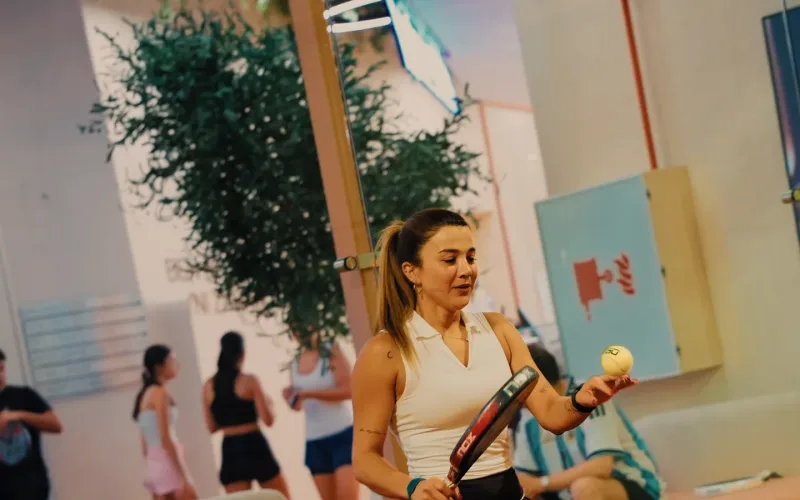


 Padel Courts
