
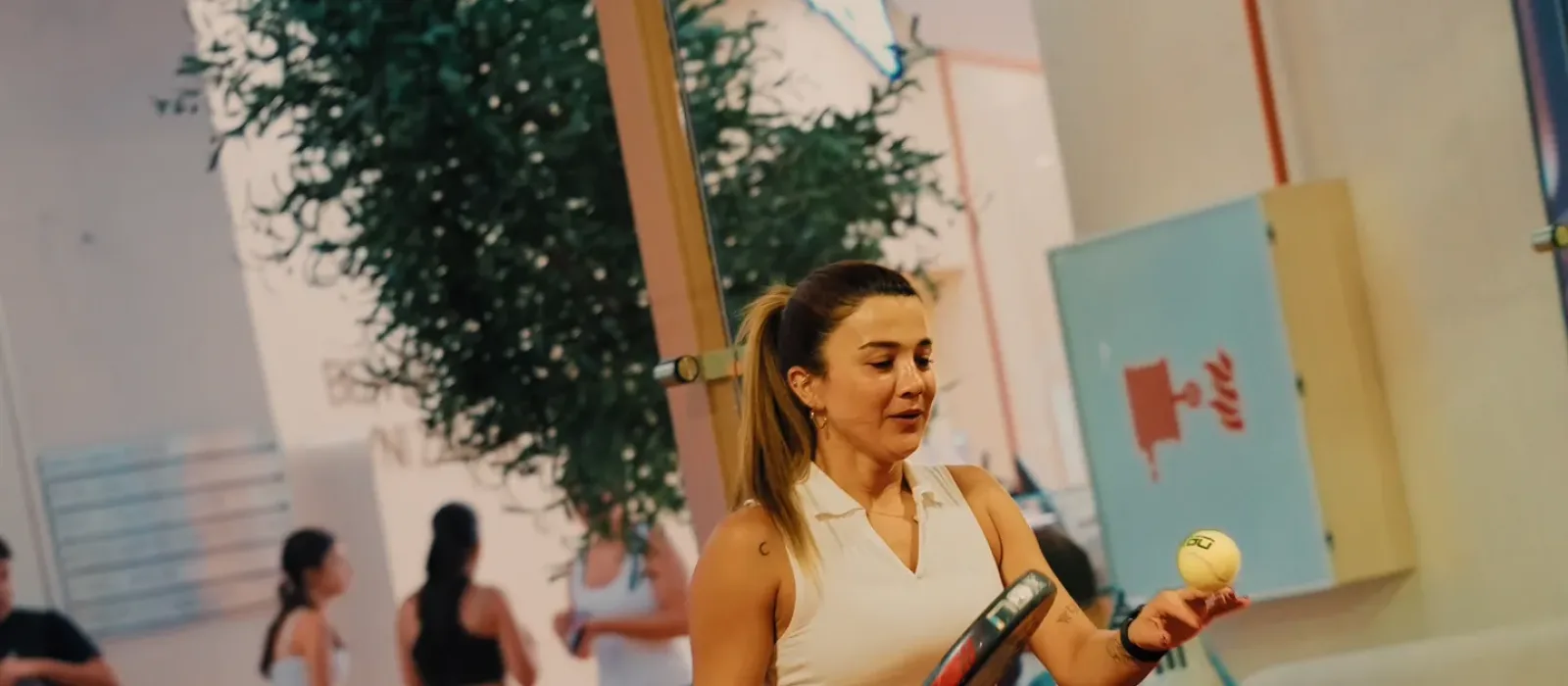
Sweat and grip in padel is a common comfort and performance problem, especially on indoor courts and during the summer months. A slipping racket disrupts shot control and forces you to grip harder, which increases the load on your wrist and forearm. The good news: this problem can largely be solved with the right equipment and simple habits. In this article we cover overgrip types, towel use, thickness adjustment and sweat management during a match.
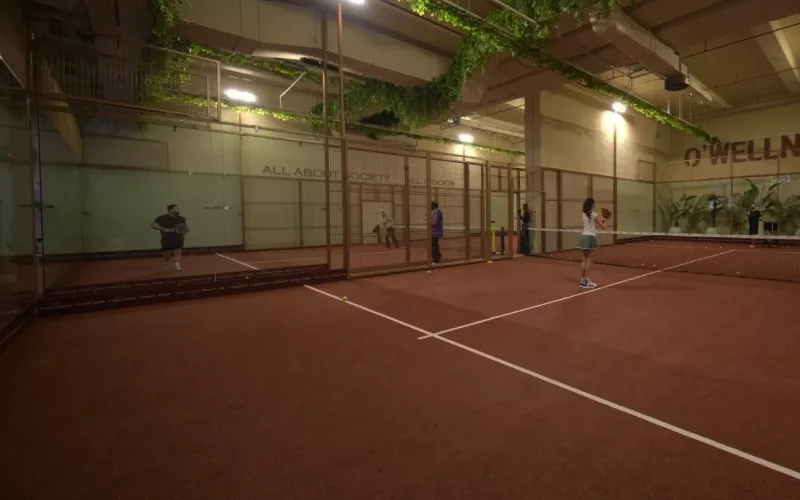
Why Is It More Noticeable on Indoor Courts?
- Limited air circulation: Sweat evaporates less, so cooling is reduced.
- Humidity builds up: Humidity rises, especially during busy hours.
- No wind: The factor that helps sweat dry on an outdoor court is missing.
- Rising temperature: The enclosed space heats up quickly.
Overgrip: The Core Solution
An overgrip is a thin tape wrapped over the racket's original grip. It has two functions: managing sweat and adjusting grip thickness.
Overgrip types
- Absorbent (dry / tacky-dry): Porous structure that absorbs sweat. The best option for heavy sweaters. However, its effect fades once saturated; you may need to change it during a match.
- Tacky: Slightly sticky surface with a strong feeling of grip. Ideal for light sweaters. It can become slippery when humidity rises.
- Perforated: Holed structure; a balance of absorption and tackiness.
- Thick overgrip: Adds thickness and absorbs sweat at the same time.
Which type suits you?
- If you sweat a lot: Absorbent type; keep a spare with you.
- If you sweat little: Tacky type; better grip feel.
- If you sweat moderately: A perforated type offers a good balance.
- On indoor courts in summer: Switching to an absorbent type makes sense.
How Do You Wrap an Overgrip?
- 1. Remove the old overgrip; check the condition of the original grip underneath.
- 2. Start from the bottom end of the handle (some players start from the top; it is a matter of preference).
- 3. Wrap the thin edge of the overgrip with a slight stretch.
- 4. With each turn, cover about one third of the previous turn; evenly and at regular intervals.
- 5. When you reach the top, cut off the excess.
- 6. Secure the end with the adhesive tape provided.
- 7. Take care that the wrist cord stays attached.
Stretching too much thins the overgrip and shortens its life; not stretching at all creates wrinkles and gaps.
Replacement Frequency
- Playing 1-2 times a week: Every 4-6 weeks.
- Playing 3-4 times a week: Every 2-3 weeks.
- Heavy-sweating player: Weekly or more often.
- Tournament day: A spare every match or every other match.
Signs it is time to change
- Feeling slippery.
- The surface becoming shiny.
- Thinned or worn texture.
- The racket spinning in your hand.
- Noticing that you need more force to grip.
- Odor buildup.
Grip Thickness: Its Relationship with Sweat
The wrong thickness makes a sweat problem worse.
- Grip too thin: More force is needed to hold the racket; more force means more sweat and fatigue. The racket spins in your hand.
- Grip too thick: Wrist range of motion is restricted; the palm does not make full contact and a slipping sensation occurs.
Finding the right thickness
Hold the racket in a continental grip. The gap between the tip of your dominant hand's ring finger and your palm should be about the thickness of the index finger of your other hand. If there is no gap, the grip is thin; if there is a gap wider than a finger, it is thick.
Adding an overgrip is the most practical way to adjust thickness: one overgrip gives a slight increase, two give a noticeable one.
Towel Use: The Simplest Solution
Keeping a small hand towel in your bag is the simplest and most effective step in sweat management.
- Between every point: Quickly dry your hands.
- Dry the racket handle too: Hands alone are not enough.
- At changeovers: Dry your face, neck and arms.
- Placement: Put the towel at the side of the court, somewhere easy to reach.
- Two towels: For long matches and tournament days.
Microfiber towels absorb quickly and dry fast; a practical option for a padel bag.
Other Solutions
Sweatband (wristband)
Prevents sweat on the arm from running into the hand. Especially effective on indoor courts and in summer. Wearing one band on each wrist is common practice.
Grip powder
Magnesium carbonate or special grip powders absorb moisture. They can be carried in a small pouch in your pocket.
- Apply a small amount between points.
- Overuse can transfer to the racket surface and the ball; apply in moderation.
- Some clubs may have restrictions; it is worth checking.
Headband or cap
Prevents sweat from running into your face and eyes; indirectly reduces the time spent drying your hands.
Spare T-shirt
On long matches or tournament days, changing your T-shirt reduces body moisture and therefore the overall feeling of sweating.
Antiperspirant hand products
Antiperspirant products suitable for the hand area are available for those who experience excessive hand sweating (hyperhidrosis). It is advisable to consult a physician before using these products; excessive sweating can in some cases be a condition that needs evaluation.
In-Match Sweat Management Protocol
- Before the match: New or good-condition overgrip; towel ready at the side of the court; sweatband on.
- Between every point: Quickly dry your hands and racket handle (2-3 seconds).
- After every game: More thorough drying.
- At the changeover: Face, neck, arms and racket handle; drink water.
- Between sets: If needed, change your T-shirt and overgrip.
- Grip check: Keep your grip loose in the ready position; constant squeezing increases sweating.
Grip Strength and Sweating
A very tight grip makes the sweat problem worse in two ways: the constant work of the hand muscles produces heat and sweat, and the feeling of slipping leads to an even tighter grip, creating a cycle.
The right grip
- In the ready position: Loose; the racket is held just enough not to fall.
- At the moment of contact: A brief tightening.
- After the shot: Relax again.
- Analogy: “Like holding a bird” — tight enough not to escape, loose enough not to crush.
Improving grip endurance (hand gripper, towel-squeeze exercises) can reduce the need for unnecessary squeezing throughout a match.
Racket Care and Sweat
- Wipe the racket handle with a dry cloth after the match.
- Do not leave the racket damp in a closed bag.
- Periodically remove the overgrip and check the original grip underneath; moisture builds up there too.
- Replace the original grip if it is worn; an overgrip alone is not enough.
- Store the racket in a well-ventilated place.
FAQ
How many overgrips should I use?
One or two, depending on your thickness needs. Doing a grip thickness test and deciding from that is the most accurate approach.
Can I change my overgrip in the middle of a match?
Yes, at a changeover or between sets. This is common practice on tournament days.
Can gloves be used?
Gloves are not common in padel; they reduce the feel of the racket. Some players try them in cases of excessive sweating, but most do not prefer them.
How long does an overgrip last?
Between 2 and 6 weeks, depending on frequency of use and sweat level. Watching for the signs is the most reliable method.
Does grip powder harm the ball?
When overused, it can transfer to the ball surface and make it slippery. It should be used in moderation.
Conclusion
Sweat-related grip problems in padel do not require complicated solutions. Three simple steps solve most cases: choose an overgrip type suited to your sweat level (absorbent for heavy sweaters), change your overgrip on time, and keep a hand towel in your bag, drying your hands and racket handle between every point. Add a grip thickness check and a loose-grip habit, and the difference becomes clear. On indoor courts in summer these measures matter even more; a spare overgrip and a second towel in your bag are a practical preparation.




 Padel Courts
