
Orta-ileri seviyedeki bir padel oyuncusunun hatalarını dikkatle incelediğinde şaşırtıcı bir şey fark edersin: kaçırılan vuruşların büyük kısmında teknik yeterlidir, sorun yanlış vuruşun seçilmesidir. Lob atılması gereken yerde smaç denenir, savunma gereken yerde hücum edilir. Bu yüzden karar verme, tekniğin sahip olduğu kadar ciddiyetle çalışılması gereken bir beceridir.
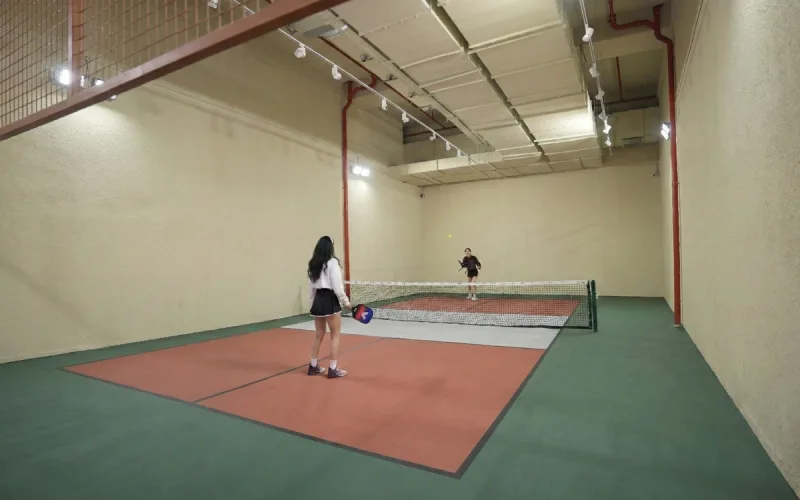
The ball in padel is not extremely fast but time is short. There is not much time to think. For that reason, to decide quickly you need a short, repeatable question pattern. The three questions below offer a simple framework that can be used inside a match on a court like O’Padel Sky.
To see why choosing is so hard, consider the load on the mind. The moment the opponent hits, the brain tracks the trajectory of the ball, the partner’s position and the opponents’ formation. While this much data is processed in a short time, an unstructured thought easily scatters. The three questions are a filter that organizes this flow of data.
An important distinction is between deciding before the shot and deciding during it. Many mistakes come from deciding during the shot; while the racket is coming to the ball you are still thinking “what should I do?” Making the decision at a trigger moment, such as when the ball hits the glass or clears the net, makes the shot fluid.
Question One: Where Am I Standing?
The first component of the decision is your own position. Are you near the net, in the middle or at the back? Are you balanced as you take the ball or hitting on the run? Your position largely determines which shots are possible. Trying an attacking shot from an unbalanced, deep position is usually risky and low-percentage.
The position question also includes your partner. Where is your partner standing? Which area is left open? If your partner has moved to the net and you are at the back, a defensive lob buys time to return to the net. If you are both near the net, attacking options increase.
A side effect of the position question is that it requires honesty. Admitting you are unbalanced sometimes means admitting your own mistake. But the sentence “I am unbalanced” is not an accusation but information. Turning to a safe option with that information often saves the point.
Question Two: What Is the State of the Ball?
The second component is the ball itself. High or low, fast or slow, coming off the glass? A ball arriving above the shoulder offers a smash or bandeja chance; a ball arriving at foot level requires control. A ball rebounding off the glass needs timing and is not suited to a rushed stroke.
Reading the state of the ball correctly is less a nervous reaction than a habit. For each ball you can do this short check: height, speed, spin. If all three are favorable, an aggressive option is possible; if even one is not, the safe option steps in.
- High and slow ball: consider attacking options
- Low and fast ball: control, block or a soft volley
- Deep ball rebounding off the glass: wait for timing, choose a safe exit
- Pressured, unbalanced ball: lob or high defensive ball
The spin of the ball is often overlooked. A sliced ball lowers and slows after hitting the glass, while a ball with topspin speeds up and rises. This difference directly affects stroke timing and choice. To read the spin you can watch the opponent’s racket movement, whether it goes from low to high or high to low.
Question Three: Where Is the Opponent Weak?
The third component is the opponent. Where are the opponents standing? Which area is open? Which player is in the weaker position? If the opponent has come to the net, a lob is an option; if the opponent stands at the back, a short ball can draw them forward. This question determines the direction and target of the shot.
The opponent’s weakness is learned over time but there are also signs readable on the spot: a player standing unbalanced, a player whose racket preparation is late, a tired player. Making the weakest point the target generally gives the highest percentage.
It is interesting to remember that the opponent applies a set of questions to you as well. When a player leans to a fixed stroke pattern, the opponent notices and prepares. Varying your choices from time to time makes your own pattern unreadable. The three questions do not force you into a single answer; if several options are suitable you can alternate them.
Combining the Three Questions
When the three questions come together, a clear choice emerges in most situations. For example: I am unbalanced and deep, the ball is low and fast, the opponents have come to the net. The most sensible option is a high, deep lob. Or: I am balanced and near the net, the ball is high and slow, one side of the opponent is open. In that case attacking is sensible.
This decision process feels slow and conscious at first, but becomes automatic with repetition. A player who masters it answers the same three questions in less than a second and almost without noticing. Working on it consciously speeds up the automation process.
Improving Decision Quality in Practice
One way to work on decision-making is watching video after a match. Pause a mistaken shot and ask yourself the three questions: where was I standing at that moment, how was the ball coming, where were the opponents? Then find which option would have been better. This exercise lets you decide faster in similar situations.
Another way is setting up restricted games. For example, a mini match where only certain shots are allowed: only lobs, only volleys, only crosscourt. These restrictions increase your awareness of options. If you have a joint or muscle problem, plan the training with your physician or coach.
Mental fatigue lowers decision quality as well. At the end of a long match the three questions are no longer asked automatically; so deliberately going back to simpler choices and consciously recalling the questions in the last part of the match is useful. Drinking water and taking a breath between points helps gather attention.
In conclusion, decision-making is a skill that can be worked on just like a stroke. A small question framework shapes intuition over thousands of repetitions and eventually needs no separate effort. What you do consciously today turns into instinct a few months later.
Using these three questions as a shared language with your partner is also useful. Talking between games about “how did I read this position, how did you read it?” makes both of you think within the same framework. As a pair, decision speed and harmony increase. Short, non-judgmental, curiosity-driven conversations work best in this process.
Every player should also recognize their dominant error. Some always choose too risky, others too safe. You can use the three questions as a tool that balances your own tendency: if you lean toward risky choices, answer “am I balanced?” more honestly; if you are overly cautious, answer “is there an opening?” more boldly.
FAQ
How do I remember the three questions during a match?
Use a short trio of keywords: “me, ball, opponent.” Running these three words through your mind during a short breath before the point is enough.
What should I do to speed up my decisions?
Repetition. Video analysis and restricted games automate the decision process and shorten the time.
Should I always choose the safest option?
No. If the three questions show a clear chance, attacking makes sense. The aim is not caution but making the right choice.
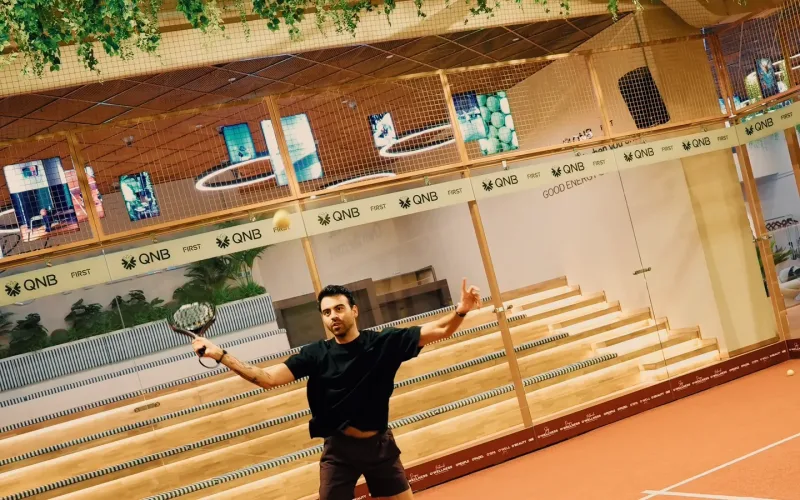


 Padel Courts
