
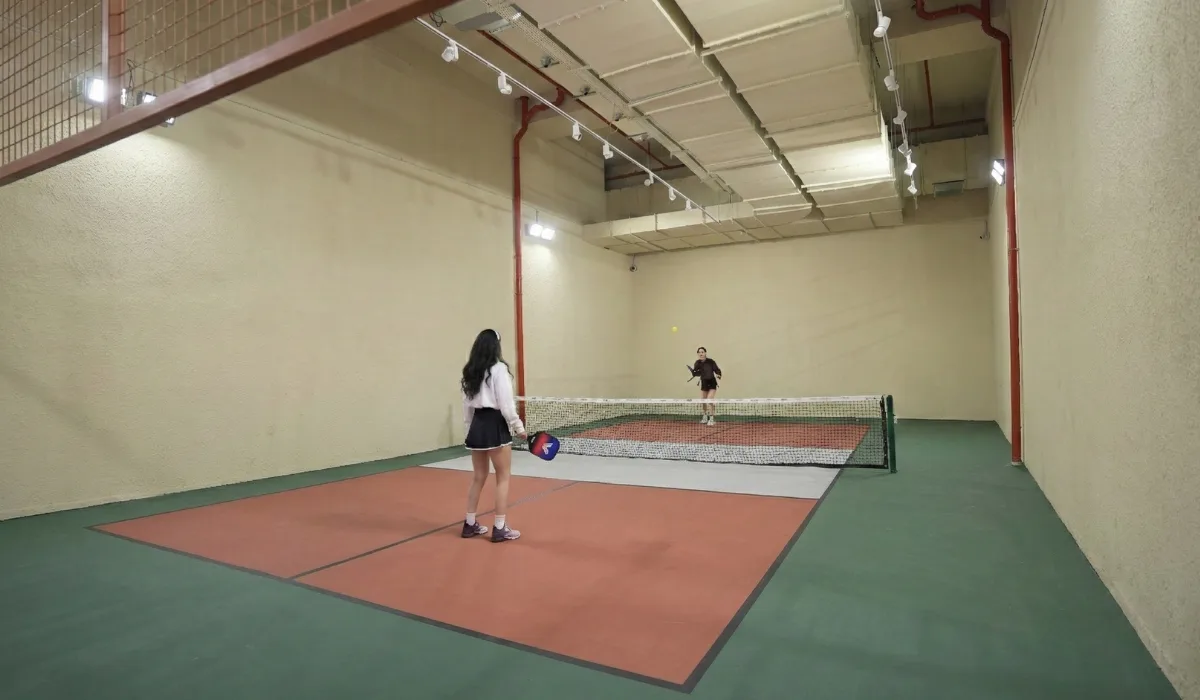
Playing padel against tall opponents is an experience that dents many players' morale at first. Facing an opponent who covers a wide area at the net with arms and racket, reaches your lobs easily and smashes high balls comfortably, it is easy to feel helpless. Yet height is not a decisive advantage on its own in padel. Every physical trait also has a weaker side. In this article we look at the natural advantages of tall players and the tactical ways to reduce them.
What follows describes general tendencies. Not every tall player plays the same way; some are very agile, others are extremely comfortable with balls close to the ground. Watching the player in front of you for a few games before applying any tactic is always the wisest step.
While observing, look especially at three things: does the player bend the knees on low balls or bend at the waist, which way do they turn when running back, and how quickly do they return to the net position after a smash? The answers to these three questions decide where your tactic puts its weight.
The advantages height brings on court
A tall player's most obvious advantage appears at the net. Long arms and a high reach make it possible to meet most balls coming to the side or overhead with a volley. That is why the down-the-line or half-height balls opponents try to pass through are often cut off. This makes it harder for the other pair to build rallies.
The second advantage is lob defense. In padel the lob is one of the most effective ways to make someone lose the net position. A tall player, however, can reach most lobs without running back, standing still or with a single step. Short and medium-height lobs usually turn into a smash opportunity for this player.
The third advantage is the smash angle. A player hitting the ball from a higher point can send it down at a steeper angle. This gives a clear edge, especially on smashes that leave the court or escape off the side glass. So giving a tall opponent a high ball often means handing them the point.
Beyond this, a tall player's serve also comes from a different angle. Even with the underarm padel serve, a longer arm can give the ball a different depth and bounce. When returning, allowing for the ball to go a little deeper or wider than you expect helps you keep your balance on the first shot.
The low game: keeping the ball below the waist
The most basic tactic against a tall player is keeping the ball low. Almost all the advantages height provides concern balls up high. When the ball stays below the waist, the tall player has to bend, flex the knees and hit with a wider range of movement. This forces a harder defensive shot instead of a volley.
The chiquita and slow, low balls are the main tools of this plan. With the opponent at the net, a soft ball heading toward their feet forces the tall player to get down to the ball. It is important not to rush these shots; the goal is control of height, not speed. A chiquita that clears the net too high turns into exactly the high ball you wanted to avoid.
Playing at the feet also exposes a difficulty tall players often face: getting down quickly. For a tall body, dropping fast to a ball near the ground and then returning to a high position can take more time and energy. In long rallies this turns into fatigue and errors increase. A patient plan takes advantage of this accumulation.
- Target the opponent's feet with soft balls that clear the net low
- Choose either a deep lob or a low ball instead of a short lob
- Create hesitation between the two opponents by playing through the middle
- Disrupt the tall player's rhythm by changing pace
Rethinking the lob
The lob should not be abandoned entirely against tall opponents; it should simply be used more selectively. A medium-height lob means an easy smash for the tall player. By contrast, a deep lob landing very close to the baseline forces even the tallest player to run back. The depth and timing of the lob matter more than its height.
In terms of timing, the best moment is when the tall player has come very close to the net or has lost balance with the previous volley. A deep lob over a player glued to the net leaves a long way to run back. So instead of using the lob straight away, first drawing the opponent forward with low balls increases the lob's effect.
Be ready for what happens when your lob falls short. When the tall player moves into a smash, taking a defensive position near the back glass and playing the ball off the glass is an option. In that case, using the rebound from the glass instead of facing the ball directly buys you time. The ball after the smash is a chance to neutralize the rally again with the low game.
Pace and movement: moving the tall player around
Tall players are often very strong in a fixed position. So making them move is another way to reduce their advantages. Sending the ball to one corner and then the other, or alternating short and long balls, forces the opponent to keep adjusting. Each adjustment increases the chance of an error a little more.
Changing pace is also an effective tool. A slow, low ball coming after a fast exchange upsets the opponent's timing. Long arms are good at cutting off fast balls, but transferring weight correctly into a slow ball takes more patience. When you set the rhythm, it becomes harder for the opponent to build their own game.
When applying this plan, you and your partner need to share the same goal. If one of you plays low while the other keeps giving high balls, the tall opponent will turn every rally in their favor. Agreeing on a shared approach in a short talk before the match or after the first few games ensures the tactic is applied consistently.
Adapting without losing your own game
Building your game around the opponent is important, but you should not abandon your own strengths entirely. Trying to play every ball low can increase your error count if you are not comfortable enough with that shot. So apply the tactic gradually: start with the low shots you are most sure of and vary them as the match goes on.
Practicing this scenario in training with a tall partner or coach makes you better prepared when you meet it in a match. Being paired with players of different physical profiles at clubs such as O'Padel Sky is a good way to develop these tactical adaptation skills naturally.
Finally, you need to avoid a psychological trap against a tall opponent. Each time a high ball is lost it is easy to say 'because of their height', but that explanation keeps you from looking for solutions. Assessing each lost point in terms of the ball's height, depth and timing makes it possible to adjust within the match.
FAQ
Should I never lob a tall opponent?
You do not need to give up the lob entirely. Avoid short and medium-height lobs, and use deep, well-timed lobs after first drawing the opponent forward.
Is a tall player always slow?
No. Many tall players are quite agile. So instead of generalizing, watch how the player in front of you actually moves in the first games.
Does this tactic work with a shorter partner too?
Yes. The low game and changes of pace can be applied regardless of height. What matters is that both players share the same plan and play consistently.



 Padel Courts
