
Rakibin vücut dilini okumak, padelde ileri seviyenin önemli bir parçasıdır. Aynısı karşı taraf için de geçerlidir: sen de okunuyorsun. Raket yüzünü, omuz hattını ve ayak ağırlığını vuruştan önce açık eden oyuncu, rakibine bilgi hediye eder. Hazırlığı gizlemek, yani aynı duruştan birden fazla vuruş çıkarabilmek, bu bilgi akışını kesen bir beceridir.
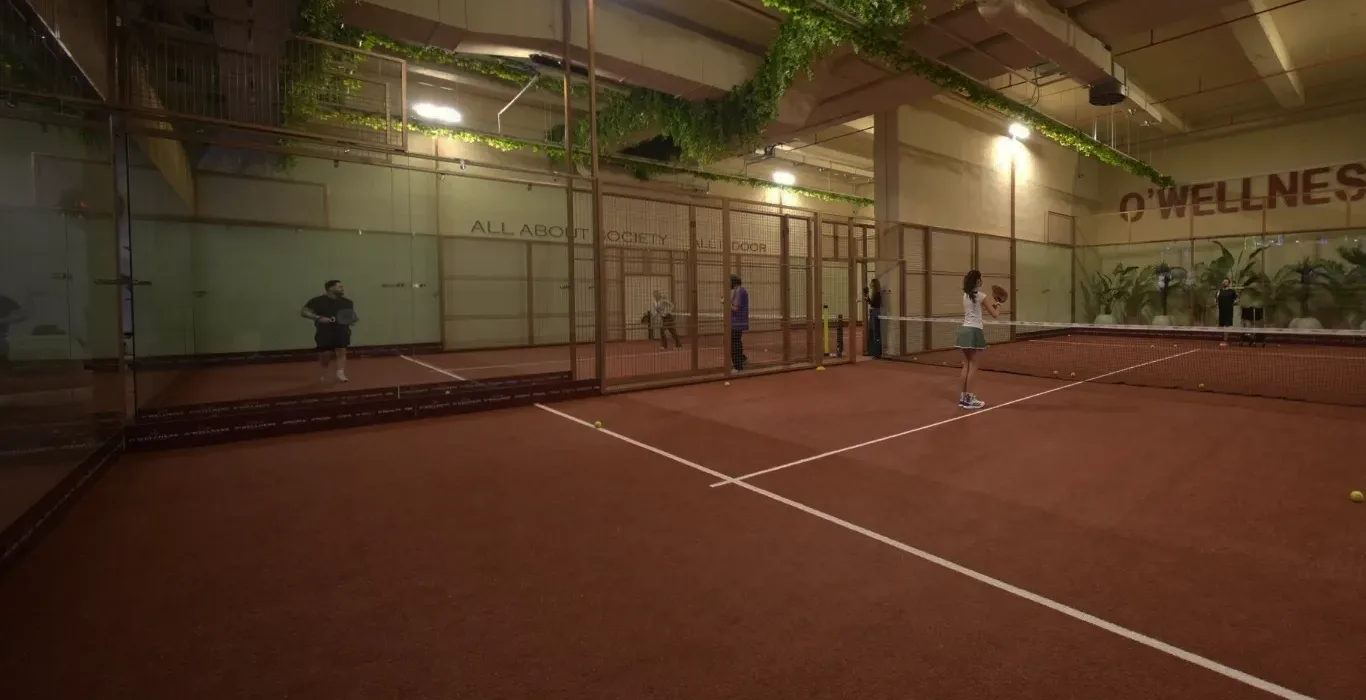
Players on the courts of O’Padel Sky in Sarıyer can try this work during the warm-up.
For intermediate-advanced players this is often the last small detail of the game. But when worked on properly it turns into a powerful weapon that shortens the opponent’s reaction time and increases their mistakes.
Why Is Being Predictable a Problem?
A predictable player gives the opponent time to prepare. Against a player who reveals a lob by opening the racket upward, the opponent steps back and answers with a smash. Against a player whose racket preparation is the same every time, the opponent can be wrong about direction for a moment, and that half second makes a big difference in defense.
Hiding does not mean deceiving or cheating; it is a completely legitimate strategy within the rules. It is a common principle in racket sports such as tennis, squash and badminton as well. The aim is not to mislead the opponent but to keep them from guessing correctly.
An intuitive analogy for hiding the preparation is the game of poker: a good player does not reveal the card in hand through facial expression. In padel too a good player should not reveal the stroke in hand through the stance of the racket. The analogy is simple but effective: asking yourself on every stroke “what does the opponent see right now?” creates awareness of how the preparation looks.
The Common Preparation Principle
The basis of hiding the preparation is to create a common starting stance for different strokes. For example the racket position on a volley should not reveal until the last moment whether the stroke will be a fast block, a soft dejada or a directed crosscourt. The racket preparation should stay at the same height and angle, and the separation should happen very close to the moment of contact.
After this common start, the separation is made with small adjustments of the wrist and forearm; the feet and torso stay the same. Changing the torso rotation or foot weight breaks the common stance that hides the direction of the stroke. So the separation should be made at hand level, independent of the torso, as far as possible.
- Racket height and angle stay the same across different strokes
- Separation is made very close to contact, with the wrist and forearm
- Feet and shoulder line do not reveal the direction of the stroke
- Every preparation has at least two possible strokes
Hiding the preparation also covers gaze direction. Many players look where they want to go, and this gives the opponent a cheap clue. Fixing the gaze on the ball at the moment of the stroke and deciding the target in advance cuts this clue. Eyes and racket not giving the same information is the most subtle part of hiding.
Applications at the Volley
The preparation at the volley should make it possible to choose both crosscourt and down-the-line directions from the same position. Keeping the racket face upright until the moment of contact and then slightly opening or closing it at the last instant makes it harder for the opponent to guess which way you will play. This fine adjustment works even over a short distance.
Being able to produce a fast block and a soft short ball from the same preparation is especially valuable. If the opponent steps back expecting a fast shot and a short ball arrives, they have to run toward the net and lose balance. This method both moves the opponent and pushes them to make mistakes.
Hiding is possible on the serve and return as well. Keeping the ball-bounce rhythm and tossing motion constant when serving and deciding the direction at the last moment makes it harder for the returning side to take position. On the return, choosing a lob or a ball at foot level with the same racket preparation makes the server’s move to the net harder.
At the Back and on the Bandeja
The same principle applies at the back. When meeting a ball rebounding off the glass, keeping the racket preparation and foot position the same and choosing a lob or a low answer at the last moment strains the opponent’s position. In the bandeja, the preparation phase is the same as the smash; that way the opponent cannot know whether the stroke will come fast or controlled.
This uncertainty breaks the opponent’s defensive position. An opponent who waits for the smash and steps back is drawn forward by a slow, low bandeja. The reverse is true as well: an opponent who expects the bandeja and comes forward is caught unprepared when the smash arrives.
Another benefit of hiding is that it increases the opponent’s effort to prepare against you. An opponent trying to predict every stroke gets mentally tired; wrong guesses bring mistakes and loss of confidence. In long matches this mental load accumulates and can turn into an advantage in your favor.
Balanced Use and Risks
The risk of hiding the preparation is losing stroke control. Changing direction at the last moment adds some uncertainty and can raise the error risk. For this reason you must first be able to play the basic strokes with confidence. Hiding is a layer added on top of solid technique; it does not work on a weak foundation.
Overuse is a risk too. Trying something different on every ball makes your own game inconsistent. Hiding should be a chosen tool used when needed: on critical points, when the opponent has fallen into a pattern or when their position is open.
How to Practice
While volleying from short distance with a partner, try to produce two different strokes from the same racket preparation. Your partner’s job is to try to guess the direction of the stroke by looking at your preparation. If the guess success rate drops, your preparation is starting to be hidden. This feedback is the measure of the work.
You can also work with video. Watch your own preparation frame by frame: in the half second before the stroke, which stroke do the racket face, shoulder and foot weight give away? Correcting the revealing details is the most effective step in hiding the preparation. If you have joint or muscle problems, consult your physician before forcing fast wrist movements.
Be patient while developing this skill. In the first attempts stroke quality may drop, because you are trying to manage both the preparation and the separation at once. With a few weeks of regular work the separation movement becomes automatic and quality returns. What matters is to settle the skill in a pressure-free setting before carrying it into a match.
After the match you can talk to your partner about this too. Asking what the opponent could read from your preparation and on which strokes they were surprised shows whether hiding really worked. Your partner’s observation from outside is often more reliable than your own feeling.
This work also develops your ability to read opponents. As you notice which clues leak from your own preparation, you see the same clues more easily in others. The two skills feed each other and your game intelligence rises as a whole.
Finally, there is a simple way to measure the skill of hiding: how often does the opponent move the wrong way on your stroke? As this rate rises, your preparation is being read less. The numbers become clearer over time and confirm the direction of the work.
A small tip: trying this preparation freely during the warm-up increases confidence inside the match.
This work takes patience, but in the end it adds unpredictability to your game.
FAQ
Is hiding the preparation cheating?
No. It is a strategy that stays within the rules and is common in all racket sports.
Is it suitable for beginners?
The basic strokes must be played with confidence first. Hiding is a layer added at intermediate-advanced level.
Should I use it on every ball?
No. Use it as a chosen tool on critical points and when the opponent has fallen into a pattern.


 Padel Courts
