
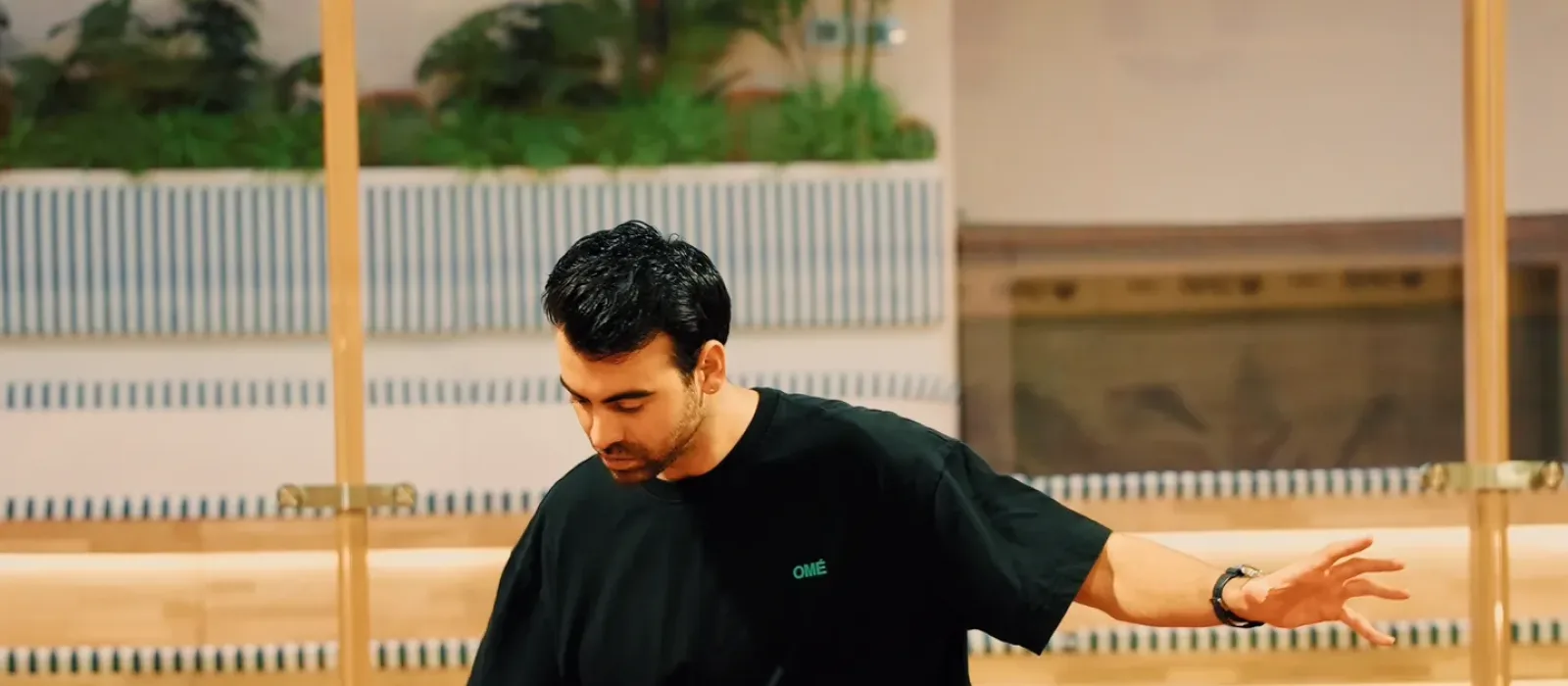
Bajadais the padel technique of meeting a ball that comes off the back glass high, at or slightly above shoulder height as it drops, and turning it into an attacking shot. Meaning “descent” in Spanish, the term refers to the moment the ball bounces off the glass and starts to drop again. A well-executed bajada turns a defensive situation into an attacking opportunity in a single shot and forces your opponents to deal with a difficult ball at the net.
In this article, we at the O’Padel Sky coaching team cover when to use the bajada, its technical steps, the shot options that complete it and the most common mistakes. The bajada holds an important place in the repertoire of intermediate and advanced players, but understanding its basic principles improves your use of the glass at any level.
Summary
- The bajada is the technique of meeting a ball that comes high off the back glass as it drops and turning it into an attack.
- The key to success is reading early where the ball will come off the glass and positioning yourself at the right distance.
- The shot is played side-on with trunk rotation, while the ball is in front of your body.
- The target is usually the opponents' feet, the gap between the two players or the corners near the side glass.
- If your position isn't good, it's safer to keep defending with a globo instead of a bajada.
What Is the Bajada and When Is It Used?
In padel, when your opponent hits a powerful remate or a deep bandeja from the net, the ball hits the back glass and rises again. At that point you have two basic options: send the ball back with a safe globo, or meet the high ball off the glass as it drops and go on the attack. The second option is the bajada.
The bajada is especially effective in these situations:
- When the ball comes off the back glass high enough and under control: There needs to be time for the ball to drop to around shoulder height.
- When your opponents are at the net but off balance: For example, while your opponent is recovering after a smash.
- When your own position is balanced: Your feet should be set and your body turned side-on to the ball.
- When your opponent hits a weak bandeja or a short smash: The ball doesn't come off the glass too hard and stays at a controllable height.
On the other hand, if the ball comes off the glass very fast and low, if you're stuck in the corner or your position is unbalanced, the bajada becomes a risky choice. In those situations, it's usually smarter to keep defending with a globo and wait for the right moment to win back the net. For defensive principles, see padel defense tactics post.
Reading the Glass: The Foundation of the Bajada
The hardest part of the bajada isn't the shot itself but reading in advance how the ball will come off the glass. The angle, speed and height at which the ball hits the glass determine its path back. The earlier you read it, the more time you have to get into position.
Three cues to watch to improve your glass reading:
- Where the ball bounces on court: If the ball bounces close to the glass, the rebound is steeper and shorter; if it bounces farther from the glass, expect a longer, higher rebound.
- Ball speed: A powerful smash comes off the glass harder; a slow bandeja hits the glass gently and drops close to it.
- Ball angle: Cross-court balls can rebound at a different angle due to the side glass; on corner balls, both the back and side glass must be taken into account.
For a basic framework on playing off the glass, check out our articles on using the walls in padel and for the details of the rules, padel glass and fencing rules . Because glass behaves consistently on indoor, standard-size courts, this reading skill develops faster. In training, simply trying to predict the rebound point before hitting the ball noticeably speeds up your reading within a few sessions.
Bajada Technique: Step by Step
To execute the bajada solidly, we recommend practicing the steps below in order. Each step builds on the previous one; if footwork in particular is skipped, the rest of the shot falls apart too.
1. Early turn and retreat
As soon as you see the ball is headed for the back glass, turn sideways and move back toward the glass. Use crossover steps or side steps as you retreat; avoid turning your back fully to the net and keep your eyes on the ball.
2. Adjusting your distance
Position yourself slightly behind and to the side of where the ball will drop after coming off the glass. If you stand too close, the ball drops on top of you and you get jammed; if you stand too far, you have to reach for it and lose your balance. The ideal distance lets you meet the ball in front of your body at a point you can comfortably reach.
3. Racket preparation
The racket is prepared early and high; elbow slightly bent, racket head up. This preparation is similar to the bandeja, but the timing is different because the ball comes off the glass. For bandeja fundamentals, our how to hit a padel bandeja article is a good reference.
4. Contact and trunk rotation
The ball is met as it drops, at or slightly above shoulder height. Power comes not from the arm but from trunk rotation that starts at the hips and extends to the shoulder. The contact point should be in front of your body.
5. Follow-through and quick recovery
After the shot, make a controlled follow-through and immediately return to the ready position. The bajada is usually a transition shot that lets you move forward to the net; look for the chance to move up together with your partner. For more on this transition, see moving from defense to attack in padel our article.
Glass-reading skills develop best on consistent courts. Book an hour for bajada drills at our indoor, climate-controlled courts at Skyland Istanbul.
Shot Options After the Bajada
The bajada isn't a single shot but the umbrella name for different shots played from one position. Depending on the game situation, you choose from the options below.
| Option | Purpose | Goal | When is it the right choice? |
|---|---|---|---|
| Flat, hard bajada | Putting pressure on opponents, not giving them an easy volley | The opponents' feet, the gap between the two players | If the ball is at a comfortable height and you are well balanced |
| Slice bajada | Keeping the ball low, control | Opponent's feet, around the service line | When you want a safer attack |
| Cross-court bajada | Creating an angle | Corner near the side glass | When the opponent drifts toward the middle |
| Down-the-line bajada | Surprise, punishing the gap | Opponent's down-the-line corner | When the opponent expects cross-court |
Whichever option you choose, the core principle is the same: don't give your opponents an easy volley at the net. Keeping the ball low and close to their feet forces them to hit upward and buys you time to move up to the net. For more on soft shots aimed at your opponents' feet, see our padel chiquita technique post.
The Partner's Role in the Bajada
Because padel is a doubles game, the bajada is not just the job of the player hitting the shot. As you retreat toward the back glass, your partner's position directly shapes what happens after the shot.
During a bajada, your partner usually stays level with you at the back of the court, waiting for your shot. If your bajada creates a good attack, you move up to the net together; if the shot falls short, you keep defending together. This synchronization depends on both players moving in parallel on the court. If your partner rushes to the net too early, a weak bajada leaves a big gap behind.
Short, clear calls make a huge difference here. Saying “Mine” to take the ball and “Up” to signal when to move to the net ensures both players make the same decision at the same time. For communication habits, check out our partner communication in padel article. For general principles on who covers which side of the court, see our right and left player roles in padel article will help.
Common Mistakes
The bajada is very effective when done correctly, but it is an error-prone technique. As the O’Padel Sky coaching team, these are the mistakes we see most often in lessons:
- Late turn: Noticing too late that the ball is heading for the glass leaves you no time to set up. Fix: Start retreating the moment you see your opponent preparing an overhead.
- Standing too close to the glass: The ball drops on top of you and you get jammed. Fix: Position yourself one or two steps away from the glass and let the ball come to you.
- Meeting the ball too low: If the ball drops below waist height, attacking becomes harder. Fix: Meet the ball at shoulder height, early in its descent.
- Hitting with the arm: A bajada without trunk rotation is both weak and tiring for the shoulder. Fix: Start the movement from your hips.
- Trying to play a bajada on every ball: Forcing it when your position isn't right leads to easy errors. Fix: If you're not sure, keep defending with a lob.
- Waiting after the shot: Staying put after the bajada means missing the chance to move up to the net. Fix: Move forward as you hit.
Bajada Drills and Physical Preparation
The bajada combines reading the glass, footwork and overhead technique. That's why the drills bring these three elements together step by step.
- Hand-fed glass drill: A coach or partner throws the ball against the back glass by hand; you read the rebound and only set up your position without hitting. Goal: automate your distance control.
- Controlled bajada: With the same feed, this time a flat bajada at a slow tempo. 3 sets × 8 reps.
- Target bajada: Bajadas aimed at targets placed around the service line on the opposite side. Track your accuracy.
- Smash + bajada: Your partner hits a controlled smash from the net, and you play a bajada off the ball coming back from the glass. Switch roles.
- Bajada + moving to the net: After the bajada, move up to the net with your partner and finish the point with a volley.
Physically, the bajada requires a quick retreat, side steps and powerful trunk rotation. That's why core and leg strength work directly benefits this shot; for details, see our core training for padel article. Since repetitive overhead movements put load on the shoulder, progressing gradually is important. If you have shoulder pain or limited mobility, consult your doctor before starting intensive overhead training; our padel and shoulder injuries article also offers a general overview of the topic.
To work on the bajada and other advanced techniques in a structured program, check out our padel lessons page. And to see your full shot repertoire, our padel shot techniques guide article is a great map.
Conclusion
The bajada is one of the shots that best reflects padel's glass-based nature, turning a defensive moment into an attacking opportunity. When early reading, the right distance, trunk rotation and target selection come together, you put your opponents in a tough spot at the net. At O’Padel Sky in Skyland Istanbul, Sarıyer, the glass behaves consistently on our indoor, FIP-standard courts with 12 mm tempered glass, so you can develop this skill through regular repetition. The O’Padel Sky coaching team is waiting for you on court; check out the when making your court reservation and court details on our padel courts pages, then put what you've learned to the test in our tournaments and leagues .
FAQ
The bandeja is a controlled overhead shot played at the net against a lob coming through the air. The bajada, on the other hand, is played after the ball rebounds off the back glass, as it drops, and is usually used to go on the attack from the back of the court.
It is generally recommended once you have mastered basic glass play and the bandeja motion, typically as you move up to the intermediate level. Starting with controlled feeds under a coach's guidance is the safest approach.
No. The bajada's effectiveness comes more from placement than power. A low, controlled ball to the opponent's feet is usually more effective than a hard but high ball.
Yes, but the backhand bajada requires more technique and timing. It's best to build a solid foundation on the forehand side first, then move on to the backhand.


 Padel Courts
