
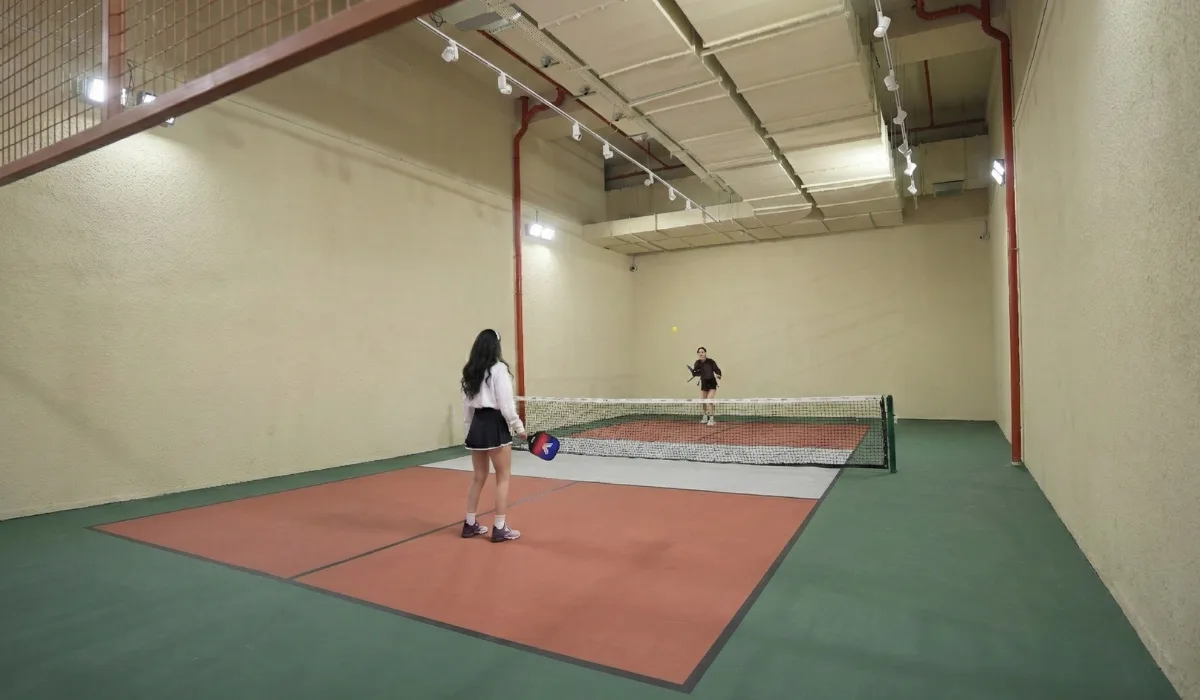
The first month is a critical period that decides the future place of the sport for those new to padel. During this time the basics of the game settle, the court rules are understood and, most importantly, a habit and affection for the sport form. Those who start without a plan sometimes quit after the first two weeks, while those with a plan progress quickly. In this article we describe a simple four-week roadmap through the questions that beginners playing at O'Padel Sky and in Sarıyer often ask.
Before you start: setting expectations
The first month does not aim at perfection; the goal is learning to control the ball, knowing the rules and having fun. Making many mistakes in the first weeks is normal. Padel is known as an easy sport to learn compared with other racket sports, but mastering it takes time.
Keep the programme realistic: two sessions a week, each around an hour. More than that can bring fatigue and arm soreness risk at first. Let your body adapt first; then increase frequency.
Don't rush on equipment. Renting a racket from the club or borrowing one from a friend during the first month helps you make equipment investment consciously. Comfortable sports clothing and suitable shoes, though, matter from the start.
Week 1: Getting to know the court and the ball
The aim of the first week is understanding court geometry, the walls and how the ball bounces. Taking a first lesson with a coach is the best start for learning the correct grip and stance from the beginning. Even doing simple rallies and watching the ball hit the glass during the lesson is big learning.
Don't look for power this week. Keeping the ball in court and doing mini rallies is enough. Also have a short talk or read about service, scoring and basic rules. Mild muscle soreness after the first session is normal.
Week 2: Basic strokes
The second week focuses on forehand, backhand and serve. This week you can start including the wall in play by letting the ball hit the glass and come back. Consistency is the most important goal at this stage, not speed and power.
The next step is a short introduction to net play. Simple volley attempts build the basic reflexes you will use later. Write down the small corrections your coach suggests and apply them in the next session.
- Week 1: court, walls, mini rally, grip
- Week 2: forehand, backhand, serve
- Week 3: volleys, wall play, first scored game
- Week 4: friendly match, rotation, partner communication
Week 3: The wall and the first match
In the third week you start to feel the rhythm of the game. Reacting to balls coming off the wall and making simple volleys near the net bring the game closer to a real padel match. Choosing a short, non-competitive format for the first scored game is important for morale.
Playing with someone at the same level or with a coach is the ideal way for this week. Much stronger opponents can lower a beginner's morale. The padel community in Sarıyer is usually open and helpful to newcomers.
Week 4: Playing matches and building habit
The fourth week aims at joining friendly matches and learning communication with a partner. Matters such as who takes which ball, who goes to the net and what the service order is settle in practice. A short review after the match clarifies what went well and what to improve.
At the end of the month ask yourself: do I want to play padel again? If the answer is yes, moving to a regular lesson routine or a fixed playing group makes sense. Social formats such as pairing or Americano are a great way to make new friends.
Common mistakes in the first month
Beginners often try to hit too hard. Yet in padel power is secondary to control and placement. The player who keeps the ball in court and forces the opponent into errors often beats the hard hitter. Your goal in the first month should be to establish this understanding.
The second frequent mistake is skipping warm-up and cool-down. A short preparation and stretching prevent much of the muscle soreness in the first weeks. The third mistake is gathering all the power in the arm and not using the legs. A stance with slightly bent knees and active feet raises the quality of every shot.
Another mistake is trying to progress too fast. Instead of trying to learn advanced shots such as the smash, bandeja and víbora in three or four sessions, first gaining consistency in the basic strokes builds a firmer foundation.
Taking lessons: why and how much?
Taking at least one or two lessons in the first month prevents wrong habits from forming. A movement settled with a wrong grip or wrong stance can become much harder to correct later. A coach notices these basic errors in a short time and helps you correct them.
The balance between lessons and free play is also important. Lessons teach, while free play reinforces what has been learned. One weekly lesson and one free play session is an ideal combination for most beginners. You can learn current lesson options and schedules from O'Padel Sky.
Taking notes or filming a short video during the lesson also speeds up improvement. Recording the two or three key sentences the coach says lets you apply them consciously in the next game.
Personalising the plan
This four-week plan was offered as a template; it should be adapted to your life. If you can do one session a week, you can spread the time over six weeks, and if your workload is high you can add morning or lunchtime sessions. What matters is maintaining regularity.
If you have played another racket sport before, your progress may be faster. In that case it makes sense to combine the second and third weeks and play the first match earlier. If you are a complete beginner, don't try to rush; complete each week's goal comfortably.
Putting your goals in writing also increases motivation. At the end of the month define small achievements for yourself such as 'I can play controlled after the ball hits the glass' or 'I completed a scored game' and celebrate them.
Also during the first month, track not your body measurements or performance metrics but your enjoyment level. How you feel after a session is the most reliable indicator of your desire to continue. If you leave each session smiling, you are on the right track.
Small preparations you can do at home also ease the process: light mobility moves for the wrist and shoulder, simple squat and lunge exercises for the legs, a few minutes of balance work. These help you move more comfortably on court.
Getting through the first month healthily
Not skipping the warm-up and cool-down, balancing arm and shoulder load and wearing suitable shoes are the basic rules for a first month free of injury. Don't forget to drink water and put rest days into the programme. If pain persists, take a break from play.
Use this plan as a template and adapt it to your own pace. Spending your first month on the indoor courts at O'Padel Sky provides regular progress independent of weather conditions.


 Padel Courts
