
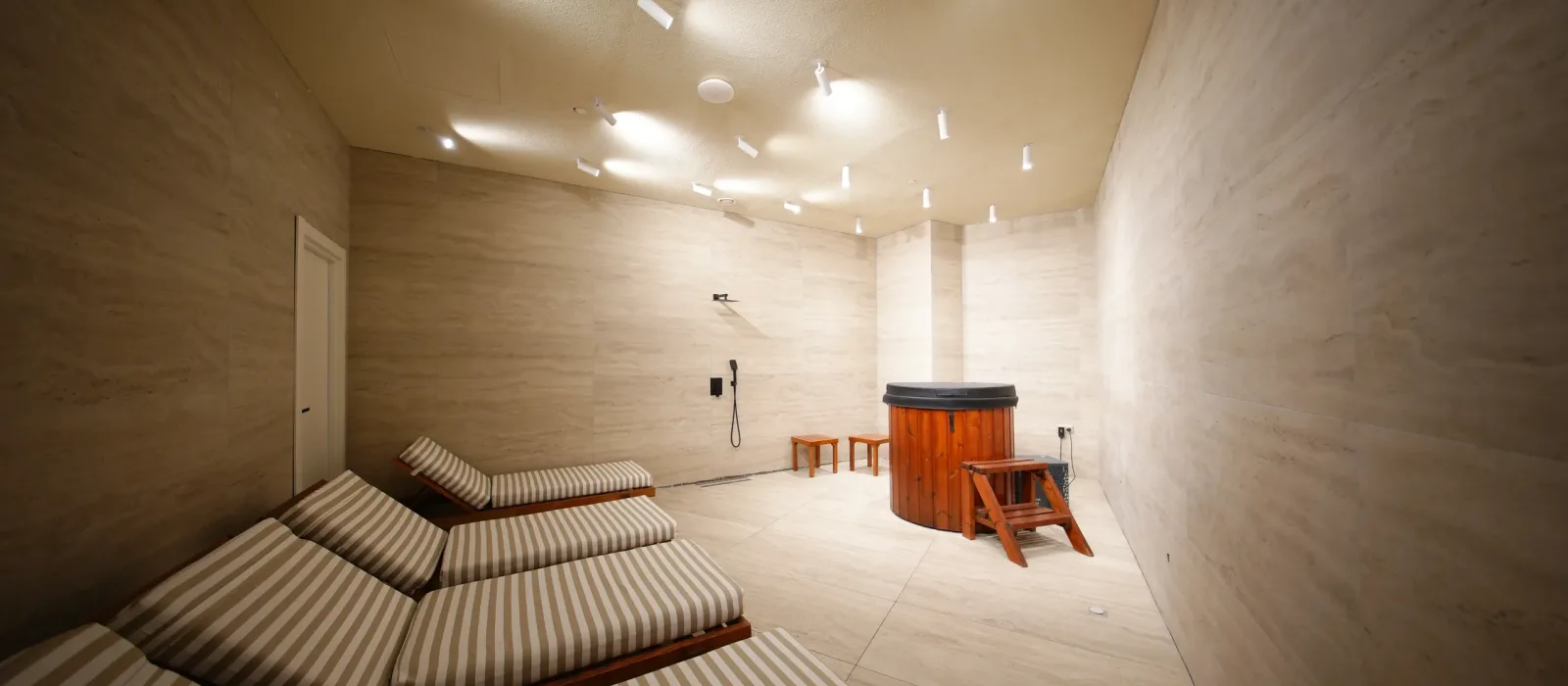
Sports massage for padel playersis a recovery and maintenance practice that targets the muscle groups that work hardest on court, timed around your training and match schedule. Applied at the right time and to the right areas, it can help players feel more relaxed and mobile, notice areas of tension and get through busy weeks in a more balanced way. However, massage is not a treatment; when pain, injury or a health issue is involved, the first step is always to consult a doctor.
In this article, the O’Padel Sky coaching team explains how padel players can benefit from sports massage, when massage can be done, the areas under the most load in padel and the points to watch out for. Sports massage is offered at O’Spa Sky within the same complex at Skyland Istanbul, making it easy to plan massage alongside your playing schedule.
Summary
- Sports massage is a complementary practice for recovery and body awareness; it does not replace treatment.
- A short, light massage may be preferred before a match, and a more thorough one after matches and on rest days.
- Key areas in padel: shoulders and upper back, forearm, lower back and hips, calves and soles of the feet.
- If you have an acute injury, swelling, fever or unexplained pain, see a doctor instead of getting a massage.
- Massage makes sense alongside sleep, nutrition, hydration and active recovery.
What Is Sports Massage, and How Is It Different from Classic Massage?
Sports massage is a massage approach shaped by the needs of physically active people. What sets it apart from a classic relaxation massage is that it's planned around the person's sport, training load and schedule. The massage therapist adjusts technique, pressure and duration by considering which muscle groups work hardest, whether a match is coming up and how the person feels at that moment.
For a padel player, this means massage can be used not just to “relax” but as a maintenance tool that fits the rhythm of the week. For example, a more thorough session may be preferred after an intense tournament week, while a short, light treatment may be preferred on the morning of a match.
It is important to be realistic about the effects of sports massage. Many athletes say they feel more relaxed, lighter and more mobile after a massage, and that feeling can be a valuable part of a recovery routine. However, massage on its own does not guarantee performance or prevent injuries. The best results come when massage is used as part of a comprehensive recovery approach.
The Areas Under the Most Load in Padel
Padel involves repeated overhead shots, trunk rotation, long periods in a bent-knee stance, sudden changes of direction and short sprints. This movement pattern can cause load to build up in specific areas. Focusing on these areas during a massage session responds better to the player's needs.
| Area | Why is it loaded in padel? | Possible massage focus |
|---|---|---|
| Shoulder and upper back | Overhead movements such as the bandeja, víbora, smash and serve | Around the shoulder, between the shoulder blades, trapezius |
| Forearm and wrist | Racket grip, volleys and wrist control | Forearm flexor and extensor muscles |
| Lower back and hips | Trunk rotation, shots played while bending, low stance | Lower back muscles, glute muscles |
| Thigh | Waiting in a bent-knee stance, lunges and changes of direction | Front and back of the thigh, inner thigh |
| Calf and foot | Sprints, jumps, sudden stops and moving on your toes | Calf muscles, sole of the foot |
Which area needs more attention can vary depending on your playing style and the side of the court you play on. For example, a player who hits a lot of overheads may feel more tension in the shoulder and upper back, while a player who constantly defends from the back of the court may feel it more in the legs. Telling your massage therapist about your playing style and the tension you feel makes the session more effective. It is also important to mention any differences you notice between your racket arm and your other arm, or between your right and left leg; padel can create asymmetric load, and these differences can become more pronounced over time.
For more on the shoulder, see padel and shoulder injuries; for the forearm and elbow, see tennis elbow and padel; and for the lower body, see knee and ankle in padel .
Timing: Before or After the Match?
The timing of a sports massage also determines its purpose. An intense massage at the wrong time can leave a player feeling heavy or too loose before a match. That is why it is important to plan massage around your playing schedule.
Before a match or tournament
A massage shortly before a match is usually short, light and stimulating. The goal is to “wake up” the muscles and help the player feel ready. Deep, intense techniques are generally not preferred at this point. A pre-match massage does not replace a good warm-up; at most, it complements it. For warm-up tips, see pre-padel warm-up post.
After the match
A treatment right after a match is usually light and calming. While the body is coming down from intense effort, gentle techniques are preferred over deep pressure. After a match, your priorities should be cooling down, hydration and nutrition; massage can be considered a step that follows them. For cooling down, see post-padel cool-down and stretching article.
Rest days
The best time for a more comprehensive, deeper sports massage is usually on rest days or one to two days after a hard match. This timing gives the body a chance to recover from both the match and the massage. It is generally safer not to schedule an intense deep tissue massage for the day right before an important match. Some people may feel mild muscle soreness the day after an intense massage, so observing how your body responds in your first sessions will help you plan the timing of future ones.
Plan your game and your recovery in one place. Book your match on our indoor courts at Skyland Istanbul, then recover at O’Spa Sky in the same complex.
Where Massage Fits in Your Weekly Plan
Massage makes the most sense when it is treated as part of your weekly schedule. There is no single frequency that works for everyone; playing load, budget, personal preference and how your body responds are the deciding factors. The examples below give a general idea:
- Social player (one or two matches a week): Massage as needed, for example after a demanding week or when you feel specific tension.
- Regular player (three or more sessions a week): Scheduled massage sessions at set intervals, with simple self-applied techniques in between.
- Tournament period: A light session before the tournament and a more comprehensive one within a few days after it.
It is also important to plan massage together with other recovery methods. For example, doing sauna, cold water and massage back to back on the same day can be tiring for some people. It helps to discuss with a specialist which treatments to do and in what order. For an overview of recovery methods, see padel recovery guide and cold plunge for padel players .
Before the Session: What Should You Tell Your Massage Therapist?
How effective a sports massage session is depends largely on a short conversation beforehand. The better your therapist knows your game, your schedule and the current state of your body, the more accurately they can plan the treatment. We recommend sharing the following before your session:
- How often you play and your last match: How many times a week you play and when you last played a hard match.
- Upcoming events: Whether you have a league match or tournament in the coming days; this directly affects the choice of pressure and technique.
- Your court side and playing style: Whether you play on the right or left side, and whether you hit a lot of overheads.
- Areas where you feel tension: Where you feel stiffness, fatigue or tenderness.
- Your health history: Past injuries, surgeries, medications you take and chronic conditions.
Giving brief feedback after the session also helps: Where did you feel relief, which technique worked well for you, how did you feel the next day? This information makes the next session even more personalized. Over time, you will discover together which timing and intensity suit your body best.
Self-Massage: Foam Roller and Massage Ball
Between professional massage sessions, you can do self-massage with a few simple tools. Foam rollers and massage balls are commonly used by padel players.
- Calves: Slowly roll your calf back and forth on a foam roller; pause for a few seconds on tender spots.
- Thighs: Use a foam roller for the front and outer thigh; adjust the pressure with your body weight.
- Hips: Apply light pressure to the glute muscles with a massage ball; this can be done seated or leaning against a wall.
- Upper back: Lie on your back on a foam roller and gently work the area between your shoulder blades. Avoid using a foam roller directly on your lower back.
- Soles of the feet: While seated, slowly roll a small ball under the sole of your foot.
The basic rule of self-massage is that the pressure should be uncomfortable but not painful. If you feel sharp, stabbing or radiating pain, stop. Do not apply direct pressure to bony prominences, over joints, or on swollen or bruised areas. To combine it with mobility work, our article padel mobility routine is a good complement.
When to Avoid Massage
Although sports massage is generally a safe practice, in some situations you need to see a doctor first instead of getting a massage. In the following situations, always consult your doctor before getting a massage:
- Acute injury: A recent sprain, strain, swelling or bruising.
- Unexplained pain: Pain with no clear cause, pain that does not go away or pain that gets worse at night.
- Fever or infection: Periods of illness with fever or signs of skin infection.
- Circulation problems: Vascular disease, a history of blood clots or use of blood-thinning medication.
- Chronic conditions and pregnancy: In conditions such as cardiovascular disease, diabetes and pregnancy, whether the treatment is suitable should be assessed with a doctor.
- Recent surgery: Doctor approval is required for the surgical site and the surrounding area.
If you feel discomfort during the massage, do not hesitate to tell your massage therapist; pressure and technique can always be adjusted to your needs. When returning to play after an injury, sports physiotherapy support from O’Athletic Sky at Skyland Istanbul can accompany the process under your doctor’s guidance.
Conclusion
When applied at the right time and to the right areas, sports massage can be a valuable part of a padel player’s recovery routine: light and stimulating before a match, calming after a match, and more comprehensive on rest days. The shoulder, forearm, lower back and hips, and legs are the areas that need the most attention in padel; however, if you have an injury, pain or a health problem, the first step is always to consult your doctor. After playing at O’Padel Sky, located in Skyland Istanbul in Sarıyer, you can plan your recovery at O’Spa Sky in the same complex with sports massage, sauna and cold plunge. For details, check out the recovery & wellness; for our courts, see padel courts and, for reservations, the when making your court reservation pages; for your training program, our padel lessons options are also waiting for you.
FAQ
No. You may feel mild discomfort with some techniques, but massage should not be painful. Pressure can always be adjusted to your needs; if you feel discomfort, tell your therapist.
Playing after a light massage is usually fine. However, it is better not to schedule an intense match right after a deep, intense massage; give your body time to recover.
Massage on its own does not prevent injuries. It should be seen as part of an overall care approach, together with a proper warm-up, strength and mobility work, appropriate training load and adequate rest.
For appointments and service details, you can reach our team on the +90 539 675 54 54 phone/WhatsApp line or at sky@owellness.tr.


 Padel Courts
