
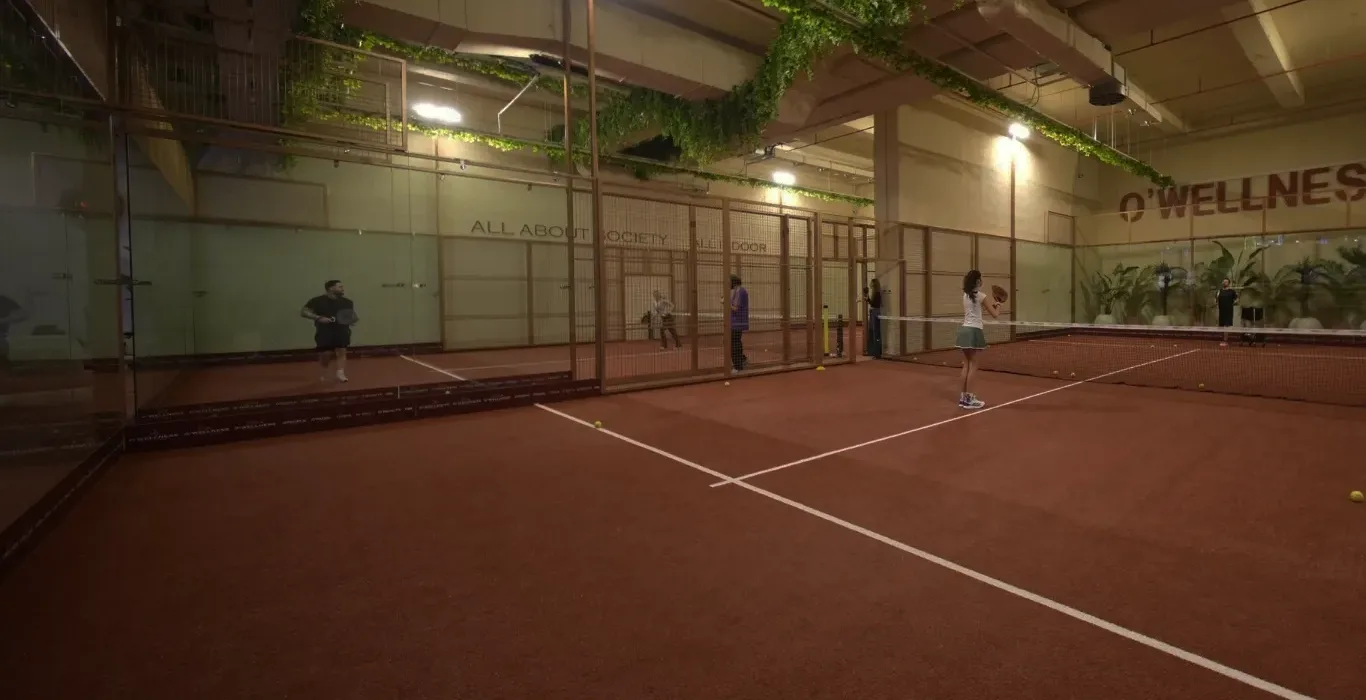
Bir padel maçında topun oynandığı süre, toplam süreye kıyasla şaşırtıcı derecede kısadır. Zamanın büyük kısmı puanlar arasındaki bekleyişlerde geçer. Orta-ileri seviyede bu aralar çoğu zaman boşa gider: oyuncular skoru düşünür, hatalarını tekrar yaşar ya da rakibi izler. Oysa puan öncesi rutin bu zamanı odak kazanmak için kullanabilen basit bir araçtır.
This routine is short and workable for those playing at O’Padel Sky in Sarıyer as well.
There is a sentence often heard on critical points: “I didn’t know what to do.” A routine offers a structure that reduces indecision at exactly these moments.
Why Does a Routine Work?
A routine gives the mind the message “a new point is starting now.” It makes it easier to release the emotional load of the previous point and begin the new one with fresh attention. At the same time the body calms thanks to the repeated sequence of movement; breath slows and muscles relax.
What matters is the consistency of the routine rather than its content. Applying the same sequence of movements before every point makes it work as an established habit even under pressure. Instead of trying something new on a critical point, taking refuge in a familiar pattern gives comfort.
Without going into scientific detail, we can understand why routines work through a simple observation: high-level athletes repeat similar movements before points. This repetition directs attention to the process and lets result anxiety recede. Trying it on your own court requires no extra training.
A Simple Three-Step Routine
An effective routine does not have to be complicated. Three steps are enough: breath, target, trigger word. First you calm the body with a slow inhale and exhale. Then you decide where the next serve or return will go. Finally, you pick a single word that will give you focus at the moment of the stroke.
- Breath: inhale slowly, exhale more slowly; drop the shoulders
- Target: decide the direction and depth of the serve or return
- Trigger word: a single word such as “deep,” “soft,” “go”
- Start the stroke and play the point without judging the result
The breath step is particularly important, because shallow, fast breathing grows excitement. Making the exhale longer than the inhale calms the nervous system and loosens your grip. This small detail noticeably affects stroke quality.
The Routine Before Serving
The serve is the only stroke the opponent cannot interfere with; so it is a moment where you can apply the routine fully. Keeping the number and tempo of ball bounces constant gives the body a familiar rhythm. With a brief look before serving you take the last information about the opponent’s position and clarify the target.
A rule works for the target: decide the serve in advance and do not change it at the last moment. Changing the target at the last moment makes the stroke hesitant. If a doubt arises at the moment of the stroke, it is noise rather than information; staying with the earlier decision gives more consistent results.
Another fine adjustment before serving is for the second serve. When the first serve is a fault, instead of shortening the routine you need to add the step of releasing the error. The second serve is often hit with tension, so the error risk is high. Keeping the breath and target steps lets the second serve go deep with confidence.
Gaze direction during the routine also matters. Looking at the target area rather than at the floor or the scoreboard before serving gives the mind a clear picture. Seeing the target is a silent guide that steers the stroke toward that direction.
The Routine Before Returning
On the return the routine works a bit differently, since time depends on the opponent’s serve. Before the serve take your ready position, set your gaze on the opponent’s racket and choose a target: will you play this return deep or at the feet? Then take a breath while the opponent bounces the ball and prepare for the split step.
The trigger word is especially useful on the return. A short word like “soft” or “deep” reminds you to make the stroke controlled. The quality of the return matters as much as its speed; a hurried, hard return usually gives the opponent an opportunity.
Another detail in the return routine is preparing in advance for the opponent’s serve direction. Briefly reviewing previous serve directions in the mind and preparing slightly for the most likely one shortens reaction time. This preparation is not overcommitting to a guess though; you need to stay flexible enough to adapt if the opponent changes direction.
Your mood on the day also affects the routine during a match. On a tired, stressed or distracted day it can help to extend the routine a bit and add a couple of extra breaths. What matters is to see the routine not as a rigid rule but as a skeleton adaptable to the conditions of the day.
After a Bad Point
The most valuable use of the routine is after a bad point. Applying a short “release ritual” right after a mistake makes it easier not to carry the negative emotion into the match. Lightly squeezing and releasing the racket, taking a deep breath or adjusting the strings of the racket gives the mind the message “done, new point.”
Sharing this ritual with your partner is also a strong tool. If you both make the same short gesture after a mistake, the pair’s recovery speed increases. The routine thus stops being an individual tool and becomes a shared language.
Developing and Sustaining the Routine
Settle the routine in practice before trying it in a match. Applying it before each point in practice matches and friendly matches makes it work automatically at critical moments. Keep the duration of the routine short too; a ritual lasting minutes both bothers the opponent and breaks the rhythm of the match. Five to ten seconds is enough.
Fine-tune the routine over time. Which breath helps you most, which word gives focus, which way of choosing a target is clearer? After a few matches you find your own version. If you feel excessive anxiety or panic, getting support from a specialist such as a sports psychologist is also valuable.
Finally, the aim of the routine is not perfect calm but a consistent start. Excitement may still be there; but the routine steers that excitement in a direction that does not spoil stroke quality. This structure, which looks like a small habit, becomes a real source of stability in long matches.
It is possible to carry the routine into life off the court too. Using the same three steps (breath, target, trigger word) before an important meeting or exam turns the routine from a sports skill into a habit of focus. This habit you gain on the court also serves you in daily life.
To evaluate the effect of the routine you can do a short experiment: apply the routine before every point in one match, skip it in the next, and compare your error count. The difference is usually felt more than numerical: a calmer tempo, clearer decisions. That feeling is enough of a reward to keep up the routine.
Developing a routine is not a competition; every player needs their own tempo and their own word. Instead of copying someone else’s routine exactly, drawing inspiration from it and adapting it to your own body gives more lasting results.
FAQ
Does the routine bother the opponent?
Not when kept short. A routine of five or ten seconds stays within the normal match rhythm.
What should the trigger word be?
Choose a short, positive, action-oriented word; avoid negative phrases like “don’t.”
Does the routine work on critical points too?
Yes; it works best there, because returning to a familiar pattern under pressure gives comfort.



 Padel Courts
