
Rakip bir lob attığında padel çiftinin yaşadığı küçük ama kritik an, yani pozisyon değişimi kararı, orta-ileri seviyede en çok puan kaybettiren anlardan biridir. Bir oyuncu geriye koşar, diğeri yerinde kalır ya da ikisi birden yer değiştirir. Kararın doğru ve hızlı verilmesi, maçın yönünü belirleyebilir.
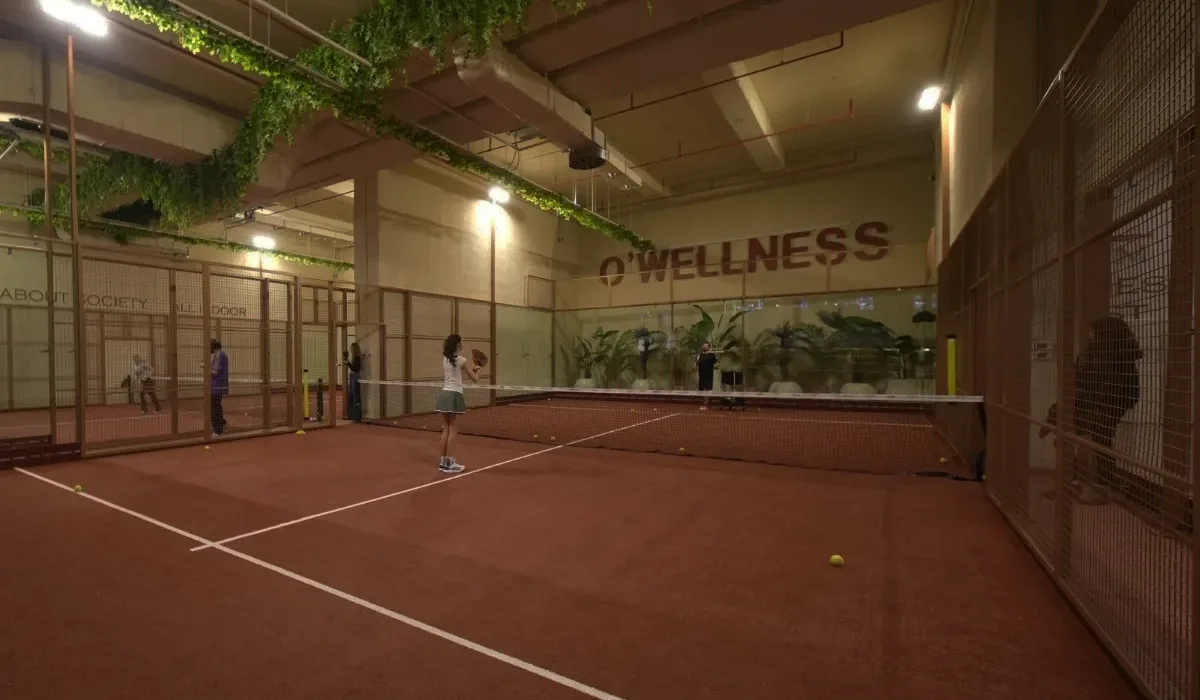
Most pairs make this decision instinctively in the moment, and as a result both players go for the same ball or neither does. Yet a short shared language and a few simple rules largely eliminate this confusion. Let us treat this situation, which also occurs on indoor courts like O’Padel Sky in Skyland, in a systematic way.
The Basic Logic: Who Is in the Better Position?
When a lob arrives, the player who can reach the ball first and make the most comfortable shot should run back. This is usually the player standing on the side the ball is coming to. But if the player on the other side can take a crosscourt lob more comfortably, swapping makes more sense. What matters is deciding who has the better position at that moment, not in advance.
Two questions underlie this decision: which side will the ball land on, and which player’s forehand is safer? Directing the player with the safer forehand to the landing area as much as possible forms the logic of the swap. This rule is not always valid, though; some players are more comfortable with backhand balls rebounding off the glass.
Reading the opponent’s lob is half the decision. Is the opponent lobbing from defense or with deliberate tactics? Most defensive lobs arrive high and deep; short, low, deliberate lobs are mostly designed for a quick smash or a surprise. Watching the opponent’s body position teaches this difference within a few points.
The direction of the lob can also be read. If the opponent opens the racket face upward and shifts weight backward before hitting, a lob is coming. A player who notices this sign starts moving not when the lob is in the air but at the moment of the stroke. That half second decides the success of the swap.
Swap Signals and Shared Language
When a lob arrives, seconds fly by. That is why a one-word language is very helpful for a pair. Short commands such as “mine,” “yours,” “switch” or “go” make the decision clear. Staying silent or using long sentences delays the decision and often confuses both players.
Fixing the direction of the signals in advance is also very useful. For example, a basic rule like “on a lob I always take the crosscourt, you watch the line” makes the decision easier in unclear moments. This rule should stay flexible, however; the speed and height of the opponent’s lob can create exceptions.
- If the lob is short and low, the player at the net can meet it with a smash or bandeja; no swap is needed
- If the lob is deep and high, the player closer to the ball goes back and the partner changes places
- On a crosscourt lob, the player who can reach the landing side faster decides on the swap
- Always call out with one word; running silently leads to collisions
Covering the Gaps After a Swap
The real risk of a position swap is a zone of the court suddenly being left open. When the player who ran back reaches the ball, the partner may not yet have settled into the new position. In this transition the opponent may target the open area with a short ball or a fast drive. The answer is to make the swap early and clearly, not late and unclear.
The shot choice of the player who ran back also affects the gaps after the swap. A safe lob or a high defensive ball buys time for the partner to settle into the new position. A rushed attacking attempt both loses position and brings risk.
The partner’s task is to support the player who went back and to rebuild the position fast. Not losing sight of the ball and the opponent while settling into the new place keeps you ready for a possible sudden answer.
After a swap there is also a question of position management. The player who went back usually stays in the back court after hitting, while net control is with the partner. In this case the pair is split into “staying at the net” and “playing from the back” roles. To return to the net at the next opportunity, you need to consider the direction and quality of the ball.
A good defensive lob gives the player who went back a chance to return to the net. When the opponent cannot smash or is pressed, the pair can move back into an attacking position. This transition is the most valuable payoff of the swap: a calm return from defense to attack.
When Not to Swap
Not every lob requires a swap. If the player on that side can take the ball comfortably, swapping creates unnecessary complexity. Especially in tired or excited moments, a simple and clear decision is safer. A swap only makes sense when the player taking the ball has a clear advantage.
Another case is when the opponent plays a very short lob and the player at the net can answer comfortably with a smash. In that case swapping loses the smash opportunity. The height and depth of the lob are the most important criteria of the swap decision; over time this criterion becomes readable by eye.
On indoor courts the lob height is limited by the ceiling. For that reason it is somewhat easier to predict in advance how deep the lob will come than on open courts. Still, balls passing close to the ceiling can rebound off the glass at unexpected angles; knowing the court beforehand is important for the player at the back to read those bounces.
The physical condition of both players should also be taken into account in the swap decision. A swap that requires the more tired player to run back too much brings mistakes in later points. Distributing the load fairly as a pair and negotiating position changes when needed provides an important advantage in long matches.
How to Practice
The most effective exercise to improve the swap decision is short lob rallies. One pair stands at the net and the other at the back; the back pair lobs, and the net pair swaps and returns. As decisions are repeated, commands become automatic. Vary the exercise by changing directions from time to time and by varying the speed and height of the opponent’s lob.
A short conversation after the match is valuable too: on which lob was the decision late, which swap worked, which command caused confusion? This brief review clarifies the shared language of the next match. If you feel pain or signs of injury, consult your physician.
Finally, think of the position swap not as a plan but as a conversation. If the two players check each other with a brief glance after every point, trust grows at decision moments. That trust creates coordination, the strongest weapon of a pair.
Swap decisions become natural over time. Making frequent mistakes in the first weeks is normal; what matters is not turning them into blame but trying again with a clearer command on the next point. Patient and consistent work strengthens the pair’s coordination.
FAQ
Is a swap always necessary?
No. If there is a player who can take the ball comfortably, a swap is unnecessary. A swap should be made only when it provides a clear advantage.
Who should call the command?
The player with the better view of the ball, usually the one nearer the net, gives the command. Deciding this role in advance reduces confusion.
What should I say for commands?
Keep it short and clear: “mine,” “yours,” “go.” Long sentences during a match lengthen decision time.





 Padel Courts
