
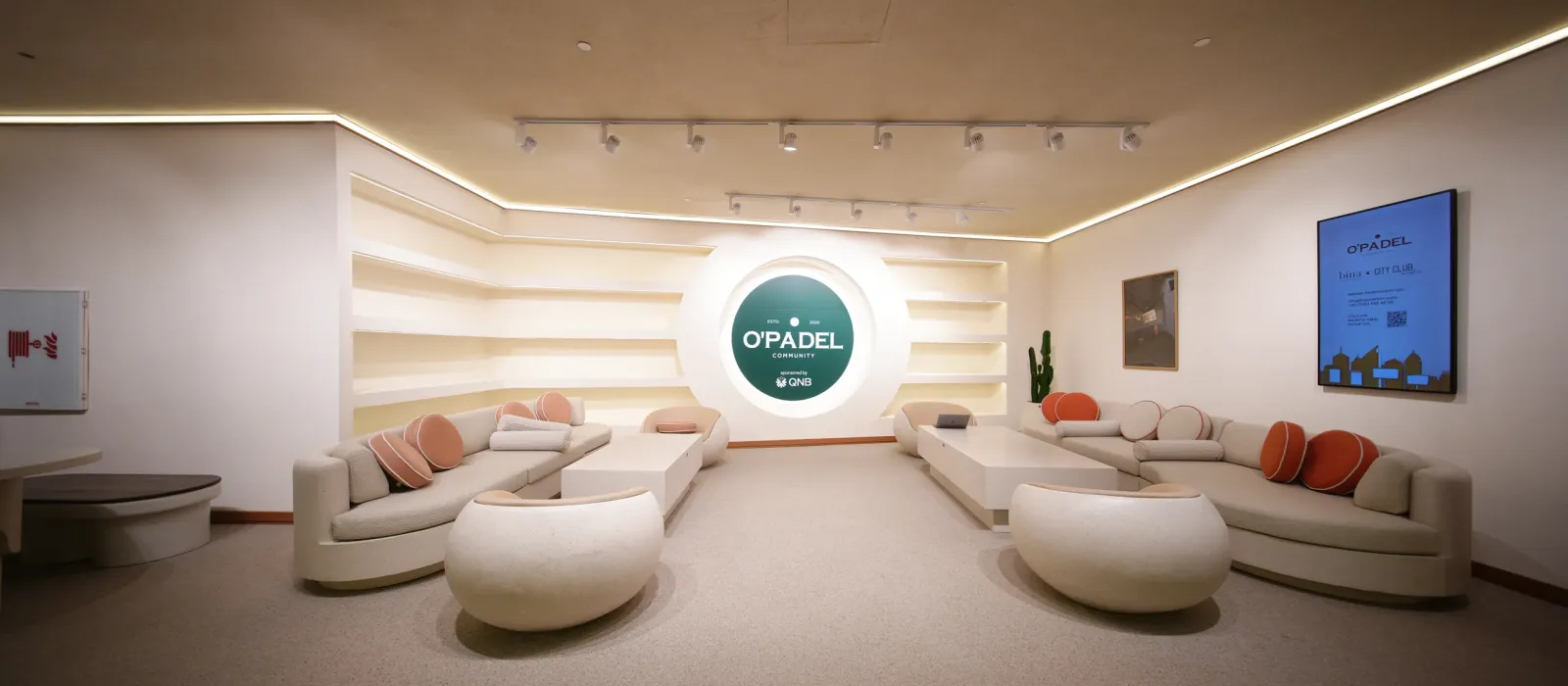
Building a business network through padel, has become a clear trend in recent years, especially in business districts like Maslak, Levent and Ayazağa. Professional relationships once built on golf courses are now built on padel courts. The reasons are practical: padel takes less time, is easier to learn, costs less and, thanks to doubles play, creates natural interaction. In this article we cover why padel has spread so quickly in the business world, the approach to networking on the court and the points to watch out for.
Why Is Padel Popular in the Business World?
Time efficiency
A round of golf takes four to five hours; a padel match is completed in 60-90 minutes. Playing a match after work is far more feasible than setting aside half a day.
Low barrier to entry
Someone who has never played starts hitting the ball in the first 20 minutes and enjoys it. It does not require long technical preparation like golf or tennis. This makes it possible for people of different experience levels to meet on the same court.
Doubles dynamics
In padel you constantly communicate with your partner: who will take it, where will we play, how are we going. This produces a natural interaction that leaves no need for an artificial “icebreaker” activity.
Court proximity
A padel court is small and the four players are close to each other. People talk between points. In sports like tennis or squash this interaction is more limited.
Cost
Court rental is split among four people; equipment costs are noticeably lower compared to a golf set. This makes the activity more accessible.
Inclusivity
Differences in age, gender and fitness matter less than in other sports. This makes it easier for mixed teams to play together.
Location
City-center facilities are within walking or a short drive of business districts. Golf courses are usually outside the city.
Networking on the Court: A Natural Approach
In padel, networking is not a forced business meeting; it happens as a natural result of spending time together.
The approach that works
- Game first, business later. Trying to talk business on the court spoils both the game and the relationship. Post-match conversation is the natural place for it.
- Show your playing character. People get to know you from how you play: your reaction after a mistake, how you treat your partner, your attitude in disputes over points.
- Regularity. A single match is an introduction; regular weekly play builds a relationship.
- Being a partner. Playing on the same team creates a stronger bond than playing against each other.
- Supporting the beginner. Helping someone in their first match leaves a lasting impression.
The approach that doesn't work
- Making a sales pitch in the middle of the court.
- Returning to business topics between every point.
- Being overly competitive; focusing on winning in a social match and spoiling the atmosphere.
- Exaggerating your level; a dishonest claim shows in the first match.
- Criticizing your partner; this also affects the perception of you outside the game.
- Looking at your phone; both discourteous and unsafe.
Playing Character: What Is Observed on the Court?
Padel says unexpectedly much about personality. This applies both to you and to the person opposite you.
- Reaction after a mistake: The ability to stay calm and recover.
- Partner communication: Supportive or critical?
- Risk management: Aggressive, cautious or balanced?
- Dispute management: The approach to disputes over points in a game without a referee.
- Taking responsibility: Admitting your own mistake.
- Attitude to winning and losing: Behaving with moderation in both.
- Behavior toward a beginner: Patience and inclusiveness.
These observations work both ways: how you behave on the court becomes part of the impression you leave in your professional circle.
Planning a Business-Focused Padel Event
Client or business partner event
- Format: Americano; everyone plays with everyone, with no pressure of a fixed pairing.
- Number of participants: 8-12 people is ideal; more dilutes the interaction.
- Duration: 90 minutes of play + 45-60 minutes of social time.
- Level information: Ask participants in advance; needed for balanced pairing.
- Instructor support: Essential if there are participants who have never played.
- Equipment: Make sure racket rental is available.
- Social close: The part where the real conversation happens; it should be well planned.
Regular business-circle play group
- A fixed slot: “every Wednesday at 19:00.”
- A core group of 6-8 people; played with rotation.
- Coordination through a messaging group.
- Being open to new participants.
- Weekly regularity builds far stronger relationships than one-off events.
Industry meetups
- Regular padel meetups of professionals from the same industry.
- Can be organized through the club.
- A more relaxed atmosphere than formal networking events.
Invitation Etiquette
- Ask about level. The question “Have you played before?” is the foundation of planning the event.
- Do not push. It is normal for an invitation to play to be declined.
- Brief them. What to wear, what to bring, how long it lasts.
- Provide equipment. Do not expect a beginner to bring a racket.
- Clarify the cost. If you are the one inviting, covering the court rental is courteous.
- Give transportation information. Parking and metro information.
- Ask about health. It is important to mention that it involves intense physical activity.
- Mention shower facilities. Critical for those with a program after the event.
For Women Professionals
Padel offers a more inclusive option in the field of sports-based networking in the business world.
- Differences in physical strength matter less than in other sports.
- The mixed doubles (mix) format is standard and widespread.
- Women's padel meetups are a rapidly growing community segment.
- The low barrier to entry makes it easy to get started.
- Many clubs have special programs and groups for women players.
Keeping Balance
Seeing padel only as a networking tool lowers the quality of both the game and the relationship.
- Love the sport for itself. Genuine interest is always more effective than a forced approach.
- Do not see every match as an opportunity. Some matches are just matches.
- Remember the health benefit. Regular padel is a valuable activity for cardiovascular health and fitness.
- Build real relationships. A superficial network is worth less than a few deep relationships.
- Invest in improving your game too. Taking lessons increases both your enjoyment of the game and the respect you earn on the court.
Practical Advantages at Skyland and Nearby
- Location: A short distance to the Maslak and Levent office towers; after-work access.
- Indoor courts: A year-round, uninterrupted program; low cancellation risk.
- Metro connection: Access for participants who do not drive.
- Parking: Indoor parking within the complex.
- Shower and changing room facilities: Necessary for those with a program after the match.
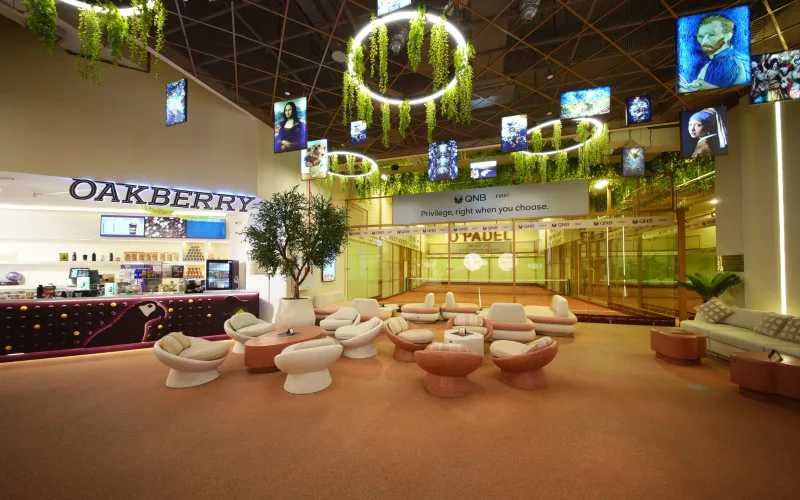
- Social area: A suitable setting for post-match conversation.
- Corporate packages: Programs arranged for company events.
- Spa and relaxation areas: Additional facilities that enrich the event.
FAQ
I have never played; can I join a business event?
Yes. That is padel's biggest advantage: with a 20-minute instructor-led introduction you can join the game. A significant share of the participants are usually beginners.
Which format is most suitable?
Americano for mixed-level groups; everyone plays with everyone and differences in level are balanced out.
How long does it take?
90 minutes for play and 45-60 minutes for social time; a total of 2.5 hours is a reasonable plan.
Can I come in business attire?
No; sportswear and suitable shoes are required. Confirm that the facility has changing options.
Is business discussed on the court?
Generally not. Focusing on the game during play and leaving room for conversation after the match is the most natural approach.
Conclusion
The reason padel has spread so quickly in the business world is the combination of time efficiency, a low barrier to entry, doubles dynamics and in-city accessibility. The most effective approach to networking on the court is to play without forcing it: focus on the game first, leave business conversation for after the match and, most importantly, be regular. A single match is an introduction, while a regular weekly play group builds a real network of relationships. When inviting, asking about level, providing equipment and giving clear briefings are the practical details that determine the success of the event.




 Padel Courts
