
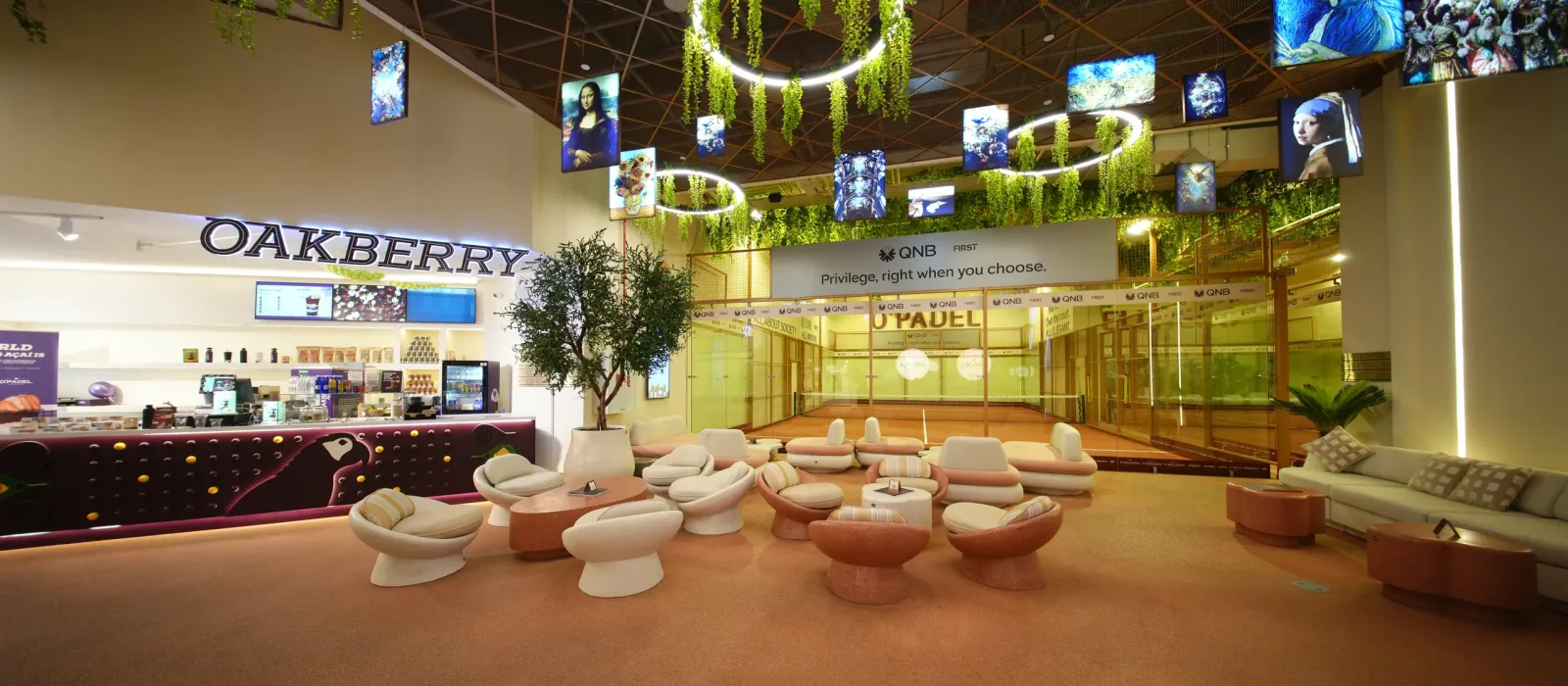
Padel social events, are one of the most important reasons for this sport's rapid spread. Padel is a doubles game; in every match you interact with three more people. The court is small, the players are close to each other, and people talk between points. This structure naturally turns padel into a social sport. In this article we cover social padel formats, ways to build a community, event organization and social padel culture around Sarıyer Skyland.
Why Is Padel a Social Sport?
- Doubles play: Every match requires four people; playing alone is not possible.
- Small court: The distance between players is small; communication happens naturally.
- Low barrier to entry: A beginner can play a match after the first lesson; this makes mixed-level groups possible.
- Short learning curve: Unlike tennis, basic enjoyment does not require long technical preparation.
- Partner rotation: Playing with different people is a natural part of the game.
- Post-match culture: Having a drink together is an established habit of padel communities.
Social Padel Formats
Americano
The most popular social format. Players are paired with different partners each round and collect individual points.
- Structure: Each round is played to a set number of points (for example 16 or 24 points).
- Partner rotation: Changes every round; everyone plays with everyone.
- Scoring: Individual; points won are added up.
- Advantage: You meet all participants; differences in level are balanced out.
- Number of participants: 8, 12 or 16 people is ideal.
- Duration: 2-3 hours.
Mexicano
A variation of the Americano; pairings are made according to the current standings.
- The 1st and 4th ranked players play against the 2nd and 3rd.
- Matches become more balanced.
- The sense of competition is slightly higher than in the Americano.
Game night (open play)
- Courts are reserved for a certain time slot; those who show up play with rotation.
- Booking does not require a partner.
- More productive if organized in level groups.
- The easiest entry point for beginners.
Beginners' night
- Open only to new players.
- A short technical introduction followed by play.
- Very effective when led by an instructor.
- Noticeably reduces anxiety about starting to play.
Women's padel meetups
- Sessions set aside for women players.
- The fastest-growing community segment in many clubs.
- Organized in level-matched groups.
Level league
- In 8-10 week seasons.
- Organized by level groups; matches are played every week.
- The most effective format for regular play and community formation.
- Provides motivation with a leaderboard and a promotion-relegation system.
Club tournament
- Organized by categories; usually over a weekend.
- Competition and celebration together.
- Strengthens community identity.
Finding a Partner: Practical Ways
Beginners' biggest problem is the question “who will I play with?”
- Group lessons: The most effective way. Regular contact with players of a similar level.
- Americano nights: In one night you play with 6-8 people; there is a high chance of clicking with at least one.
- Club groups: Many clubs set up messaging groups; player-wanted notices are shared.
- Matching service: Tell the club reception your level and available times.
- Leagues: A guarantee of regular matches.
- Open play hours: Come without a partner and join the rotation.
- Colleagues: Introduce padel to your work circle; corporate groups form quickly.
Social Padel Etiquette
An enjoyable social play culture rests on a few simple rules.
- State your level honestly. Presenting yourself as better or worse than you are spoils the experience for you and others.
- Show up on time. In rotation formats, a delay affects the whole program.
- Do not criticize your partner. In social play this is the fastest atmosphere spoiler.
- Be flexible in a dispute over a point. In a game without a referee, replaying the point is the most practical solution rather than arguing.
- Support beginners. Today's new player is next year's partner.
- Manage the level difference. When playing with a weaker partner, do not push them out of the game; share the balls.
- If you are going to cancel, tell us early. A last-minute cancellation affects three people.
- Vacate the court on time. The next group is waiting.
- Stay after the match. The community forms not on the court but after the match.
Organizing an Event: Practical Guide
If you want to set up your own play group or event:
Planning
- Number of participants: According to the number of courts; 8 people for 2 courts, 16 people for 4 courts is ideal.
- Choice of format: Americano if the focus is meeting people; Mexicano if the focus is competition.
- Level balance: A very wide range of levels spoils the experience; form groups of similar level.
- Duration: 2-2.5 hours; longer events reduce participation.
- Time: Weekday evening 19:00-21:30 or weekend morning.
- Booking: Reserve the courts in advance.
Organization
- Prepare the pairing chart in advance; doing calculations on the court is a waste of time.
- A simple system for tracking points (paper or an app).
- Balls; enough for each court.
- Water and light refreshments.
- Appoint a coordinator; they manage the rotation.
- Time discipline; each round must not exceed the set time.
Building a community
- Create a messaging group.
- A regular calendar; a fixed slot such as “every Wednesday evening.”
- Making room for new participants.
- Planning social time after the match.
- Sharing photos and the scoreboard (with permission).
- Closing out the year with a seasonal club tournament or league.
Managing Skill Gaps
The biggest practical challenge in social padel is the gap in skill levels. Ways to address it:
- Skill groups: Separating events by level.
- Balanced pairing: Pairing a stronger player with a weaker player (Mexicano logic).
- Rule adaptations: Friendly-match arrangements, such as giving the weaker player an extra serve.
- Tactical harmony: The stronger player takes more balls without pushing their partner out of the game.
- Expectation management: In social play, the goal is not to win but to put on a good game.
- Honest communication: Sharing skill-level information clearly before the event.
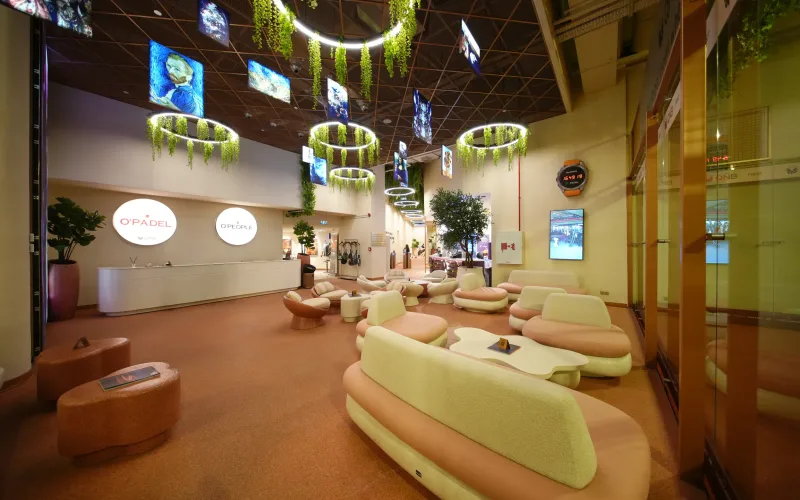
Social Padel Around Sarıyer and Skyland
Location has a big effect on community building. For people who live or work around Maslak, Levent, Ayazağa and Zekeriyaköy, a central facility offers these advantages:
- After-work access: Joining 7 PM game nights becomes easier.
- Corporate groups: Setting up a regular game group with office colleagues is practical.
- Weekend schedule: A morning match, followed by the spa or breakfast.
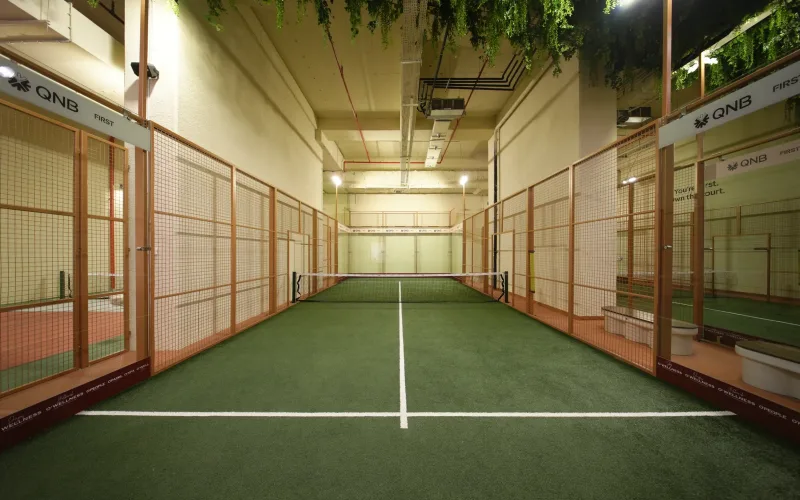
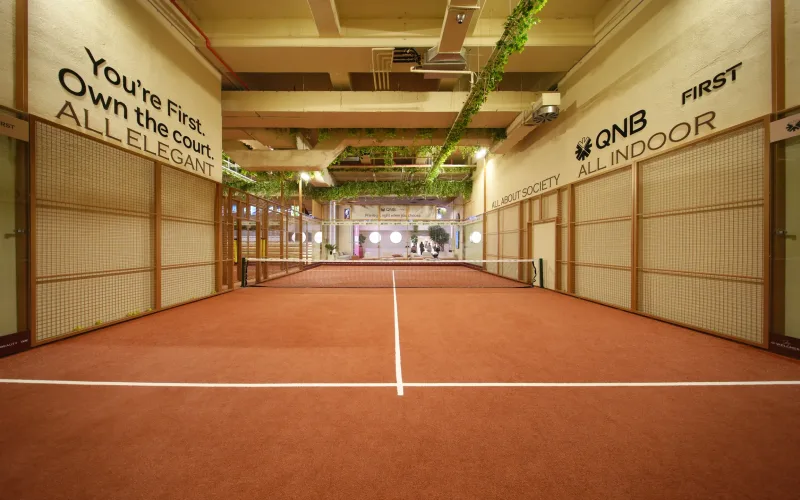
- Indoor courts: A year-round, uninterrupted program; the community doesn't scatter in the winter months.
- Multi-format facility: Sauna and relaxation after padel extend the social time.
How Social Play Contributes to Improvement
Social padel is not just fun; it is also valuable for development.
- Exposure to different styles: Every partner and opponent offers a different game.
- Adaptability: Playing with changing partners improves communication and adaptation.
- Playing volume: Regular social play is the most effective practice.
- Pressure experience: Tournament formats get you used to real match pressure.
- Motivation: Social connection is the strongest predictor of consistency.
- Tactical variety: Trying different tactics with different partners.
Conclusion
The social nature of padel is one of this sport's most valuable features: being a doubles game, the small size of the court and the low barrier to entry make community building feel natural. Americano and Mexicano nights, open play hours, beginner groups and level leagues are the formats that build this community. The most effective way to find a partner is to join group lessons and rotating events; the most effective way to build a community is a fixed calendar and social time after the match. Managing skill gaps honestly and making room for beginners keeps this culture sustainable.


 Padel Courts
