
Plyometric training for padel consists of jumping and bounding movements built on a muscle being rapidly stretched and then rapidly contracted. Most points in padel are won with short, explosive movements: a sudden move toward the net, a run back after a lob, a reach for a ball heading to the side glass. In this article we explain how plyometrics relate to these movements, who they suit and how a safe progression can be built.
Plyometric work places a significant load on joints and tendons. If you have an ongoing complaint in the knee, ankle or lower back, have recently been injured or have been inactive for a long time, consult your physician and a specialist before starting this kind of program.
What do plyometrics correspond to in padel?
A padel court is small and the distances are short. So the quality of the first two steps matters more than top sprint speed. Landing with a split step the moment you read the opponent's shot and immediately pushing off in that direction is a plyometric movement. The muscles are loaded briefly on landing and that energy is transferred straight into the next step.
The small hops before a smash or bandeja, quick foot changes as you approach the net and the step forward when moving from defense to attack use the same mechanism. The goal of plyometric training is to make these short transitions more efficient and more controlled. The priority should be shortening ground contact time, not jumping high.
Landing first, then jumping
The foundation of plyometric training is correct landing. In a good landing the feet touch down quietly, the knees point in the same direction as the toes and do not collapse inward, the hips move slightly back and the torso stays balanced. Noisy, hard landings with the knees caving inward are both inefficient and put unnecessary load on the joints.
Landing on one foot is especially important for padel, because many movements in a match finish or start on one foot. In single-leg landings, the ankle should not roll in or out, the knee should stay in line with the foot and the hip should not drop. Building this balance takes time, so it is better to move on to single-leg work only after two-footed landings are solid.
Basic strength is also part of preparing for plyometrics. Giving the leg and hip muscles a solid base with movements such as squats, lunges and calf raises makes it easier to carry the load of jumps. A body with a weak strength base passes force on to the joints rather than absorbing it on landing. That is why many coaches see plyometrics as a layer added on top of strength work.
A few short strength sessions a week are often enough for this foundation.
In the first weeks, almost forgetting about jumping and practicing only landings is a good start. Stepping down from a low step in a controlled way and holding the position for two seconds helps muscles and joints learn to absorb load. At this stage a mirror or phone camera is a good aid for checking the direction of the knees.
Suitable movements for beginners
- Small, rhythmic ankle hops in place
- Short two-footed jumps forward with a controlled landing
- Single lateral bounds with balance on the outside foot
- Split step repetitions: a small hop, landing and a two-step push-off
How to set volume and frequency
In plyometrics, quality always comes before quantity. Every repetition should be done with full attention and clean technique. When fatigue starts to break down technique, the set is over. Long, tiring jump sets may feel like conditioning, but they drift away from the real purpose of plyometrics and increase injury risk.
At the start, a small number of contacts per session is enough. A contact here means every moment the foot touches the ground. Starting with few but excellent repetitions and slowly raising the number over several weeks while keeping technique intact gives the body a chance to adapt to the new load. Sudden increases can lead to tenderness, especially around the Achilles tendon and the knee.
Balancing the days you play padel with plyometric training days is also important. Padel itself already contains many jumps and changes of direction. For someone who plays matches several times a week, it makes more sense to keep extra plyometric work short and place it on a day away from heavy match days. Building your personal program with a strength and conditioning specialist is the soundest route.
Starting plyometrics without a warm-up is a mistake. Preparing the body with a few minutes of light jogging, dynamic stretching and ankle movements makes the first jumps safer and cleaner. Likewise, a short cool-down after the session can help reduce the stiffness you might feel the next day.
Tracking progress
You do not need complex devices to measure plyometric progress. A simple method is to repeat a specific drill every two weeks under the same conditions and note how it feels and its quality. For example, in a lateral hop series you can record how quiet your landings are, how many repetitions you lost balance on and how tired you feel at the end of the set.
There are signs of progress on court too. Noticing that you can turn earlier behind a lob, enter the first volley at the net with better balance or still have light feet at the end of long rallies shows the training is carrying over into the game. Writing these observations in a match notebook also helps keep your motivation.
When judging progress, look not only at getting faster but also at recovery. If your legs feel very heavy the day after a plyometric session, keep the load steady for a while. Once the body adapts, the same session feels lighter; considering an increase only at that point gives steady development.
If at any stage you feel sharp joint pain, swelling or clear discomfort that carries into the next day, stop the program. Plyometrics is a powerful tool, but it only works when your body is ready; otherwise it can cost you time on court rather than giving you the speed you wanted.
Linking plyometrics to the game on court
For a movement learned in the gym to work on court, it needs to be carried into the context of the game. For example, doing a split step while a partner randomly points a ball to the right or left and then taking two quick steps in that direction combines jumping with decision-making. Explosiveness then stops being just a physical trait and works together with reading the game.
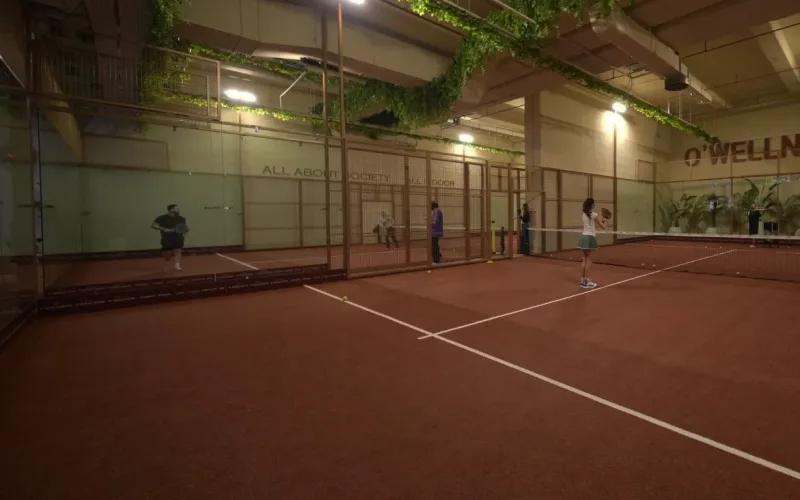
At an advanced stage, net approach drills can also be used. Three steps toward the net after the serve, a split step and then meeting the first volley is one of the sequences repeated most often in a match. Starting this sequence at low intensity and speeding it up over time carries the plyometric gain directly into the game. On indoor courts, at O'Padel Sky for example, floor conditions are consistent, which makes it easier to track progress in these drills.
FAQ
Is plyometric training suitable for beginners?
Basic landing and small hop work is suitable for many people. It is safer to move on to intensive jump programs only after basic strength and correct landing technique are in place.
Are box jumps essential?
No. Box jumps are one option, but short, direction-changing hops on the floor are at least as useful for padel. What matters is contact quality, not height.
Can I do plyometrics on match day?
A few low-intensity hops as part of your warm-up can be useful. But putting a tiring plyometric session right before a match fatigues the legs unnecessarily.


 Padel Courts
