
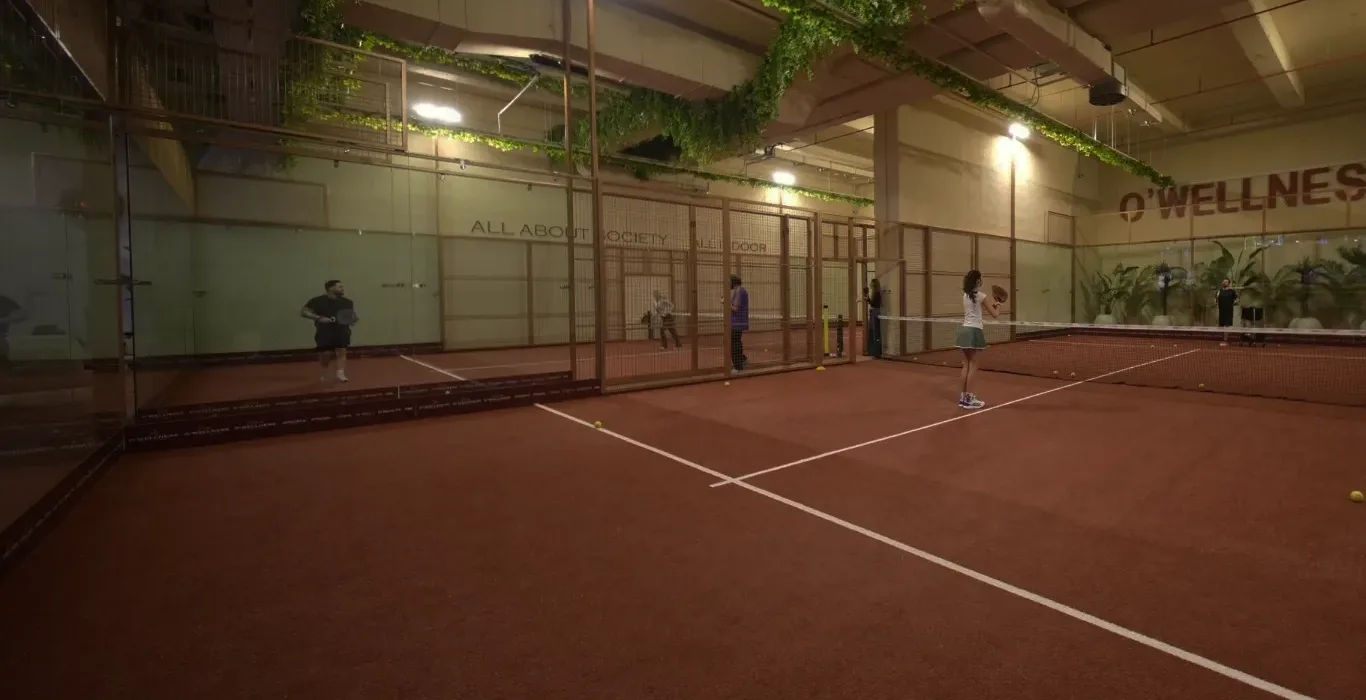
Padel maçının üçüncü setinde fark edilen bir şey vardır: tekniği iyi olan oyuncular bile birden dağılır. Bacaklar ağırlaşır, raket hazırlığı gecikir ve vuruşlar kısalır. Padelde yorgunlukta tekniği korumak, yalnızca kondisyon meselesi değil, aynı zamanda oyunu bilinçli biçimde sadeleştirme becerisidir.
Suggestions for those who play long matches at O’Padel Sky in Skyland follow below.
This subject is very familiar for players who play long matches and tournaments. The suggestions below explain what changes when fatigue arrives and how to respond.
When fatigue begins varies from person to person; there is no general rule. Some players break down after the first hour, some in the second set. Knowing your own pattern lets you build your plan accordingly. After a match or two it is not hard to notice at which minute and with which sign you tire.
The First Signs of Fatigue
Fatigue shows itself in footwork before strokes. The split step shrinks, the first step is late and recovery slows. Noticing these signs early lets you simplify the game in time. Many players do not notice these signs because they focus on seeing the ball rather than on what their feet are doing.
The second group of signs is a change in stroke quality: meeting the ball later, losing control of the racket face, strokes going into the net or falling short. The third group is mental: slowing in decision-making, impatience and taking unnecessary risks.
- The split step shrinks or is forgotten
- Racket preparation is late; you reach the ball late
- Strokes go into the net or fall short
- Decisions slow down, impatience and unnecessary risk rise
Simplifying the Game
When fatigue arrives the smartest reaction is to simplify the game. Returning to basic and safe options instead of complex strokes and risky choices balances the drop in technical quality. For example a high, deep lob, a short volley or a safe ball to the middle suits a tired body better.
Simplifying does not mean passivity. Playing the basic strokes at high quality also tires the opponent and pushes them to make mistakes. In the last part of most matches, points are won not by spectacular strokes but by the side that does not make mistakes.
Part of simplifying is deliberately controlling the tempo. If the opponent plays fast, breaking the rhythm with slow balls forces both you and the opponent to catch your breath. Letting the opponent set the game tempo when tired drains your energy quickly.
Use the time between points efficiently as far as the rules allow. Build a natural rhythm for collecting balls, drinking water and breathing. Hurrying increases fatigue; deliberately keeping your rhythm balances energy expenditure.
Shortening the Footwork
Taking long steps when tired quickly drains energy and disrupts balance. Short, quick, economical steps are more sustainable. Instead of running to every ball, choosing your position well and reaching the ball with less movement is the most effective way to deal with fatigue.
Sharing the load as a pair is also important. Narrowing the area of the tired player a bit and having the other cover a slightly wider area preserves energy balance. This is a simple adjustment that can be made with brief communication during the match.
Under fatigue the grip on the racket is also often seen to tighten. A tight grip creates unnecessary tension in the forearm and elbow and spoils stroke control. Remembering to loosen the grip between points both rests the arm and preserves stroke feel.
Breath, Water and Energy
Drinking water regularly throughout the match delays the arrival of fatigue. Taking small sips between points and at changeovers is better than drinking a lot at once. In long matches a light source of carbohydrate (such as a banana or dried fruit) can ease energy drops.
Breath control manages fatigue too. Taking slow, deep breaths between points lowers the heart rate and restores the body. Fast, shallow breathing increases fatigue. This small habit noticeably affects your energy in the third set. If you feel dizziness, chest pain or extreme shortness of breath, stop playing and see a physician.
Mental fatigue is separate from physical fatigue but feeds it. As attention scatters in a long match, mistakes increase and the body’s fatigue is felt more heavily. Short routines (breath, target, keyword) regather the mind and also reflect positively on the body.
Building Endurance in Advance
The most lasting way to protect technique under fatigue is to build endurance before the match. Interval-type work done once or twice a week (short high-tempo movements and short rests) creates a load similar to the tempo of a padel match. This work lets you keep the match tempo longer.
Leg strength and core work also help maintain posture and balance at the moment of fatigue. A strong torso keeps racket preparation and the stroke chain going even when tired. If you have an existing health problem or have not exercised for a long time, consult your physician before starting a program.
Progress in endurance work requires patience. You may not see a clear difference in the first weeks; but after four to six weeks of regular interval work you notice you tire less in the third set. Increasing the workload gradually protects both efficiency and safety.
Sleep and Recovery
Part of match-day fatigue begins in the days before the match. Insufficient sleep, heavy training and lack of recovery cause you to tire earlier in the third set. Reducing load in match week, taking care of sleep and organizing nutrition are an invisible but important part of endurance.
Post-match recovery also affects the fatigue level of the next match. Light movement, fluid intake, a balanced meal and enough sleep help the body process the match load.
Sharing fatigue with your partner when you notice it during the match also helps. A short sentence, “I’m a bit tired, can you take the middle?”, rebuilds the pair’s energy distribution. Hiding fatigue leads to mistakes and high energy expenditure; honest communication makes the pair more resilient.
Practicing technique under fatigue in training is also a valuable tool. Repeating a certain stroke while lightly tired in the last part of the session teaches you that technique can be sustained under fatigue. However, this work should be kept short and stopped immediately if there is pain; the aim is not to risk injury but to create a controlled challenge.
After the match note when fatigue began and with which sign you noticed it. Over time these notes build your personal fatigue map and show which measure to take in which period. This information is very valuable for energy management in long tournaments.
Finally, it is useful to see fatigue not as an enemy but as manageable data. Fatigue is the body telling you something simple and right: “play simple now.” A player who listens to this message often keeps control longer than the opponent.
The first step to apply this approach is to watch only your footwork in your next long match.
FAQ
Why do I make more mistakes in the third set?
Fatigue lowers footwork and decision quality. Simplifying the game and shortening steps reduces this effect.
How much should I train for endurance?
One or two short interval sessions per week are a good start for most players. Plan according to your personal situation with a coach or physician.
Should I change my game plan when tired?
Yes; reducing risky choices and turning to safe, simple strokes balances the effect of fatigue.


 Padel Courts
