
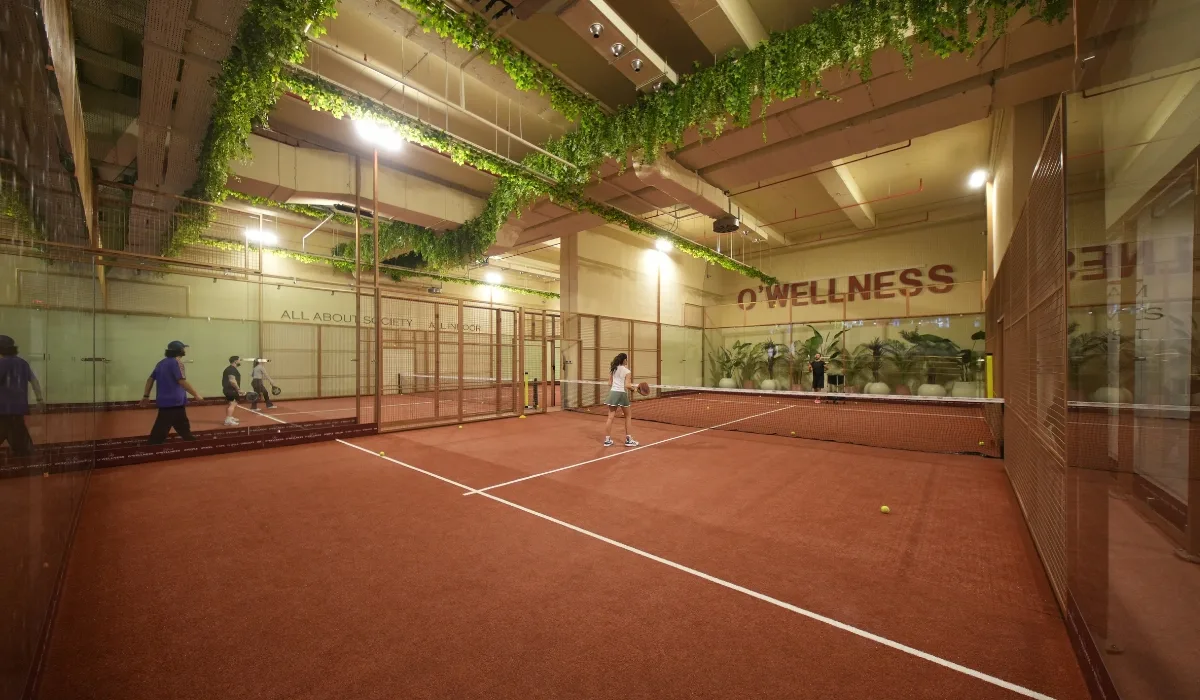
Padel position is the quiet decider of matches. A team gains an advantage when it takes the net; but when the opponent sends a lob or a high ball, that advantage can disappear within seconds. What you do in that moment decides whether you win or lose the point. In this article we describe the process of moving from attack to defence, that is, how to avoid losing position and how to recover when you do. For those playing on the indoor court at O'Padel Sky, ceiling height and the glass structure also affect these decisions.
How does position loss happen?
The most common cause of position loss is being lobbed. When the team standing near the net faces the opponent's high ball it has to turn back, and loses rhythm during this return. Another cause is late reaction; a player who realises late that the ball is a lob does not find enough time to get back.
A faulty attacking shot also leads to position loss. A weak bandeja or a volley that stays high gives the opponent a counter-attacking chance and brings them to the net. So part of protecting position is shot quality.
Return timing
The key to timing is reading the opponent's racket preparation. If an upward movement from below the ball begins, a lob may be coming and you need to prepare to go back. This prediction is effective when made just before the shot, not at the moment the ball rises.
When leaving the net, the first step should be a crossover step back; going back by looking at the ball over your shoulder instead of turning your back keeps the ball in sight. To be ready for a big run, the knees should be slightly bent and the weight on the toes.
Partner coordination
Position loss is not a problem solved alone in doubles. When a lob comes, the player nearest the ball goes back and the other decides to hold the net or move back. Clear communication is a must: short calls like 'Mine!', 'Yours!' or 'Go!' prevent confusion.
When coming back as a team, both of you staying at the same speed and distance prevents you from being defenceless against a ball the opponent places in the middle. If the pair drift too far apart, a gap forms in the middle.
- Read the opponent's racket preparation and sense the lob early
- Go back with a crossover step, watching the ball over the shoulder
- Make a clear call: who takes it, who covers
- Move at the same distance and speed as your partner
- On return the first aim is a ball of defensive quality
Where to hit after switching to defence
When you get back, the first aim is not to give the opponent an attacking chance. A deep lob or a ball directed to the middle line pulls the opponent back and buys time for you to retake the net. Rushing and sending a short, weak ball makes the situation worse.
Patience is important while recovering. Instead of retaking position immediately, first set the defence firmly, then move forward when you find the opportunity. This transition should be balanced and controlled; otherwise there is a risk of being caught again.
Shot quality that prevents position loss
The best remedy for position loss is first of all to play shots that don't create the loss. A volley or bandeja from the net, when it goes deep and controlled, pushes the opponent back and reduces the chance of a lob. A short, high ball gives the opponent both lob and attack options. So depth and direction consistency matter a lot in attacking shots.
The bandeja is the most valuable weapon in this respect. When played correctly it places the ball slowly in the opponent's back area and lets you hold the net. Finishing with a smash can be risky; if missed you can lose position at once. Controlled attacking shots like the bandeja and víbora are the basis of the strategy of holding the net.
Finding the right timing is also needed when approaching the net. Advancing after a weak ball makes sense; but if the opponent is still ready for a strong shot, advancing puts position at risk. Ask yourself: am I going to the net while this ball pushes the opponent back, or am I advancing on a ball where they are ready?
Recovery drills
To develop this skill you can use a simple exercise: one player stands near the net while a coach or partner feeds lobs at different heights. On each lob the net player makes the return step and sends the ball back with a defensive shot. This exercise develops reaction, footwork and communication together.
In the second exercise the pair moves together. When a lob comes both go back and then return to the net on a pre-agreed signal. The aim is to move without separating from each other and with the same rhythm. Over time this drill turns position loss from a disaster into a routine situation.
Do both exercises in short sets while maintaining quality. Return movements done when tired can form bad habits. If necessary rest between sets and keep movement quality first.
When to stop while advancing to attack
Advancing to the net is not always right. Advancing while the opponent has a powerful ball can be risky. Being caught halfway is the weakest point; so doing a split step and stopping before the opponent hits lets you read the direction. Standing balanced rather than being caught moving is often a better choice.
The middle area, around the service line, is also known in padel as a 'dead zone'. A player standing here is suited neither for a volley nor a groundstroke. Not staying long in this zone, even keeping moving during the transition, is a habit that reduces position loss.
Knowing the opponent's strengths makes the decision to advance easier. Against an opponent with a weak smash you can go to the net more aggressively, and against a strong smasher more cautiously. Making this observation at the start of each match raises the quality of your decisions.
Finally, stay calm when position loss is unavoidable. Panic produces wrong decisions; a calm defence often saves the point. Take a breath, focus on the ball and wait for the next opportunity.
The concept of position isn't only about the net; holding the right place at the back of the court is also very important. Getting cramped right against the back glass or stepping too far forward lowers defensive quality. Returning to the proper area of the court after every shot is the foundation of the entire positional game.
The effect of the indoor court
In indoor courts, ceiling height affects lob play. Very high lobs must stay within the limits of the ceiling; this can make it easier to predict how deep the opponent's lob will go. Observing the facility's ceiling structure in the warm-up helps you adjust your lob reactions.
In conclusion, position loss is not an unavoidable event but a manageable situation. In your next session at O'Padel Sky, practise getting back together as a pair: with one waiting at the net, repeat with a coach or partner lobbing from the other side.


 Padel Courts
