
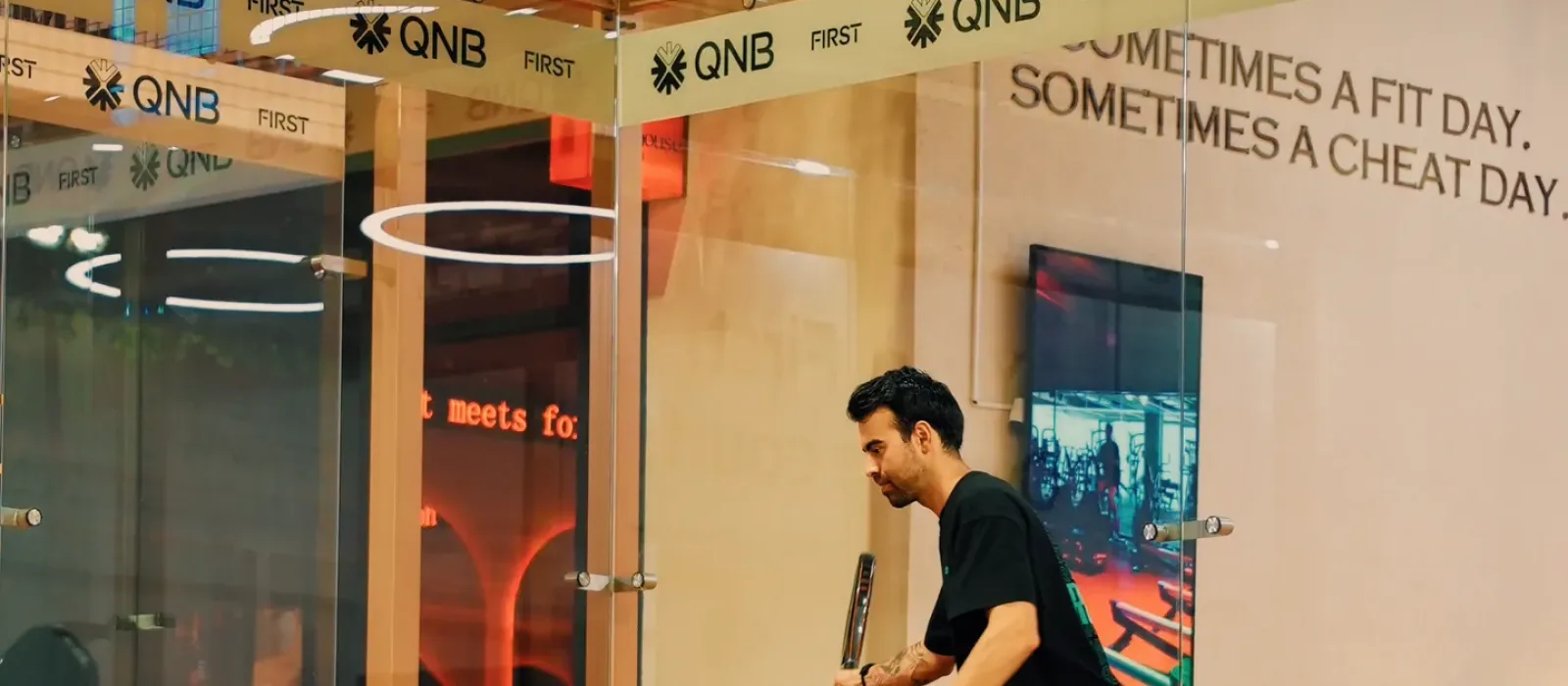
Padel serve tactics are the art of turning the serve, which by rule is hit underhand after a single bounce, into an opening move. In padel, the serve doesn’t win points; the serve wins position . A well-placed serve takes you and your partner to the net and pushes the opponent onto the defensive from their first shot. The short answer: in padel, the purpose of the serve isn’t to trouble the opponent but to make sure the next ball comes in your favor.
In this article, the O’Padel Sky coaching team breaks the serve down into four questions: where to serve, how fast to serve, when to change direction and how to move to the net after serving. You can find the logic on the return side padel defense tactics in our article; for the whole tactical framework, padel tactics guide make this your starting point.
Summary
- In padel, the serve isn’t a finisher but a ticket to the net; accuracy and depth come before speed.
- The default target is the slice serve that skids toward the side glass; it jams the opponent against the glass.
- Hitting the second serve with the same intent as the first lowers the risk of a double fault and preserves your position.
- Moving to the net after the serve should be gradual; hitting on the run wipes out the serve’s advantage.
- Changes of direction aren’t random; they’re based on the opponent’s stance and footwork preference.
The rules framework of the padel serve and its effect on tactics
In padel, the serve is hit below waist height after the ball has bounced once on the ground, and it must land in the diagonal service box. Your feet must stay behind the service line. These rules naturally limit the speed of the serve; you can’t produce a shot that goes straight for a winner as in tennis.
This limitation is actually an advantage. With speed out of the picture, the serve becomes a purely tactical shot: direction, spin, depth and movement after the serve. In other words, you don’t need to be powerful to improve your serve; you just need to be consistent.
One more point matters: in padel, the serving side also earns the right to move to the net right after the serve. So a bad serve doesn’t just cost you one shot; it costs you the entire positional advantage in that point.
Where to serve: three basic targets
Instead of reinventing your serve target every point, it’s more efficient to choose among three fixed options. Knowing these three targets makes decisions under pressure easier.
- Slice serve skidding toward the side glass. The default option. The ball skids toward the side glass, comes off it and forces the opponent to hit in a tight space. The return usually comes back shallow and makes it easier for you to move to the net.
- Serve into the body. A serve close to the opponent’s feet and body makes it hard for them to choose forehand or backhand. It’s especially effective against players who are slow to move.
- Serve down the middle, to the T. It closes the angle. It makes it hard for the opponent to produce a crosscourt return and creates decision uncertainty between the two players.
You don’t have to spread these three evenly throughout the match. On the contrary: repeat whichever one works, and save changes of direction as a surprise weapon.
How fast: the balance between control and pressure
In padel, increasing serve speed has a low payoff and a high cost. Because the rules limit speed, extra power mostly turns into lost accuracy, double faults and an unbalanced move to the net after the serve.
Instead, turn speed into spin. A slice serve rises less at the same speed, comes off the glass lower and forces the opponent to play the ball below chest height. Every ball taken low increases the chance of a shallow return.
The slice serve also has a side effect on rhythm. Different spins coming from the same preparation make it harder for the opponent to predict how the ball will come off the glass. Most club-level returners watch the ball itself, not the racket; that’s why keeping your preparation the same is a source of advantage on its own.
Depth matters at least as much as direction. A ball landing near the back edge of the service box pushes the opponent behind the box and makes them return from deep. A short serve pulls the opponent forward, and a player coming forward can reach the net before you. In other words, losing depth means losing position.
| Serve type | Risk | Effect on opponent | When to use it |
|---|---|---|---|
| Slice, skidding toward the side glass | Low | Forces a shot in a tight space | Default; at any score |
| Into the body, at the feet | Low–medium | Disrupts the choice of forehand or backhand | Against an opponent who moves slowly |
| Down the middle, flat | Medium | Closes the angle, creates decision uncertainty | Against an opponent with a good crosscourt return |
| Fast, deep | High | Creates time pressure | Rarely; as a surprise |
| Soft, short | Medium | Pulls the opponent forward, sets up the lob | Against an opponent comfortable in the back court |
Moving to the net after the serve
The real value of the serve shows up in the first three seconds after it. Hitting the right serve and then moving in the wrong way means handing the advantage back yourself.
The move in should be gradual. After serving, advance two or three steps, make a short stop just before the opponent hits, and cover the rest of the distance once you see the height of the ball. Hitting on the run leaves you exposed to a low return.
- The first stop after the serve is around the service line. Trying to stick to the net in one move gets punished with a lob.
- Your partner advances with you. If your partner stays back while the server moves forward, the pair is split.
- Your first shot should be deep and controlled, not a finisher. The goal is to secure the net.
- If the return is a lob, the decision to retreat is made quickly. Hesitation makes a ball going over your head unrecoverable.
The order of pressure after taking the net padel attacking tactics is covered in this article through the bandeja, víbora and smash sequence.
The serve and the move in after it are the easiest tactical block to practice on your own. On our indoor courts at Skyland Istanbul, even a 30-minute serve block makes a difference.
Movement after the serve also has an eye discipline. As you move toward the net, fixing your gaze on the opponent’s racket rather than the ball tells you half a second earlier whether the return will come high or low. That half second determines whether your first volley is deep or defensive.
There’s also a common mistake to weed out: standing still after serving to watch the ball. This is exactly the most common moment the serve advantage is lost in club matches. Your feet should start working the moment the serve is done; there’s no time to watch.
Choosing the serve based on the opponent
Hitting the same serve to everyone is the most common serving mistake. The returner’s stance, preferred side and reaction to balls coming off the glass determine your serve choice.
If the returner stands close to the glass, a serve skidding toward the side glass jams them. If they wait at the front of the service box, a deep serve creates time pressure. If they don’t know how to wait for the ball off the glass, the slice serve pays off twice as much.
You can make this observation in the first few points of the match. Opponent analysis The short observation list in our article lets you build your serve plan in the very first game. Once you find a serve that works, repeat it until the opponent adapts.
Second serve philosophy
Taking pace off the second serve is a common reflex, but it’s the wrong one. A noticeably softened second serve gives the opponent a chance to return aggressively and take over the net. The right approach is to keep the same intent as the first serve and only add a little more safety margin: same target, slightly higher over the net.
Finally, the serve is a team decision. Sharing which target you’ll serve to with your partner before the point lets them set their position at the net correctly. If you’re serving toward the side glass, your partner covers a little more of their side; if you’re serving down the middle, they move closer to the center. This small piece of shared information noticeably increases the share of points won on the first volley.
There’s no need to complicate it. A single hand signal or a one-word code is enough. The goal is to keep your partner informed, not to make the opponent crack a code.
Serve decisions based on the score
Serve decisions aren’t independent of the score. At 40-0 or 0-40, the cost of risk is different, and in formats that use golden point, a single serve can decide the whole game.
A simple framework helps: when ahead, repeat your most reliable serve; when behind, choose the serve the opponent struggles with most; and on critical points, go back to the serve already proven to work in that match instead of trying something new. Looking for surprises on critical points increases the margin for error in most club matches.
Tempo is also a serve decision. Deliberately slowing your rhythm before the serve breaks the opponent’s momentum; speeding it up preserves your own flow. In the tempo control and match management our articles cover these two tools in detail.
The serve also has a cadence side. Since you set the time between two points, the serve is the one moment you control the rhythm of the match. If you want to catch your breath after a long rally, lengthen your pre-serve rhythm; if the opponent is making error after error, shorten it to keep them in play without giving them time to think.
A practical plan for practicing the serve
The serve is one of the rare padel skills you can practice on your own. You can make meaningful progress in twenty minutes on court.
- Target cone drill. Put a marker in the side-glass corner of the service box and hit 20 serves. Note your success rate; let the rate improve, not the speed.
- Three-target rotation. Serve in turn to the glass, the body and the middle. The goal is to produce all three targets from the same preparation.
- Serve plus two shots. Serve, move in gradually and send your first volley deep. Don’t finish the point; just hold your position.
- Pressure set. Apply a one-point penalty for every double fault; that’s how the habit of accuracy under pressure takes hold.
Doing these blocks under a coach’s eye corrects movement errors early. Padel lessons In our program, the serve and the move in are practiced together; the court infrastructure padel courts on this page, and available times when making your court reservation on this page. If you want to test your serve under match pressure, tournaments and leagues check out our calendar.
Conclusion: the serve is a small shot, a big decision
In padel, the serve isn’t a show of power but a setup move. A serve with a deliberately chosen direction, controlled spin and a planned follow-up turns the first three seconds of the point in your favor. The way to earn that is repetition, and the way to repeat is consistent conditions. On O’Padel Sky’s indoor, climate-controlled courts at Skyland Istanbul, Sarıyer, wind and light don’t throw off your serve’s accuracy; players coming from Maslak, Levent and Zekeriyaköy can train to the same standard from 06:00 to 23:00 on weekdays. If you want to improve your serve, what to do is simple: same target, same conditions, a little more repetition.
FAQ
It gives a limited advantage. Because the serve is hit below the waist after a single bounce, speed is naturally limited; adding power mostly comes back as lost accuracy and double faults. Investing the same energy in spin and directional accuracy pays off more.
Not until the opponent adapts. Dropping a serve that works for the sake of variety means needlessly handing back your advantage. The right time to change direction is when the opponent starts returning that serve comfortably.
Your partner positions near the net, covering their half, and as you move forward after the serve, you meet them on the same line. If the return is a lob, you both retreat together; when this isn’t in sync, the serve advantage is lost on the first shot.
Don’t change the target; change the height over the net. Serving in the same direction a little higher and a little slower noticeably increases your success rate while keeping your tactical intent. A noticeably softened serve, on the other hand, gives the opponent the chance to take over the net.
The serve is one of the padel skills you can practice most efficiently on your own; a 20-30 minute accuracy session with a basket of balls makes a meaningful difference. For the move in after the serve and the first volley, though, you need a partner or a coach.


 Padel Courts
