
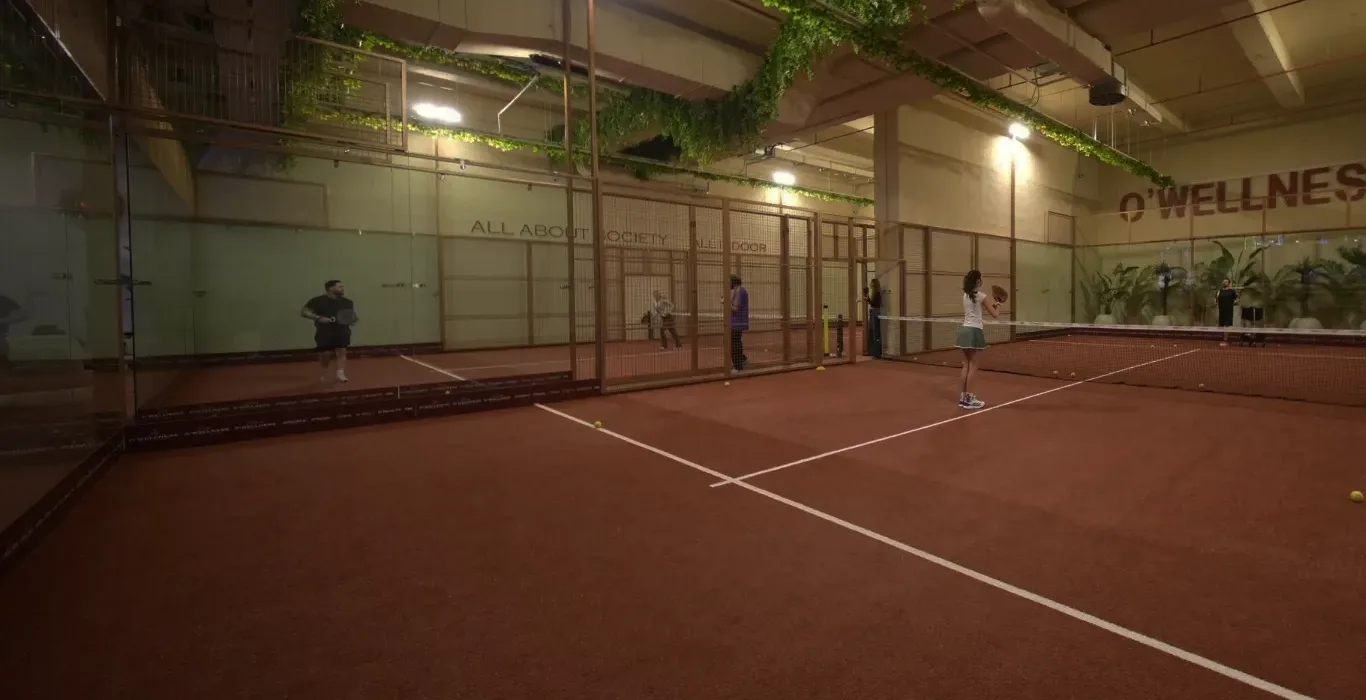
Padel back pain is one of the most common complaints from players who play several times a week and work at a desk all day. Although padel may look low intensity, constant bending, rotating, sudden changes of direction and reaching overhead work the muscles around the spine hard. This article contains general information; it does not diagnose and does not replace a medical assessment. Our greatest aim is for everyone who plays at O'Padel Sky to play healthily and enjoyably for a long time.
Where does the load on the spine come from in padel?
During play the trunk spends much of its time in a ready position, slightly bent forward with knees flexed. This stance requires the lower back muscles to work statically for long periods. Then trunk rotation comes in on forehand and backhand, and a lean back close to hyperextension on bandeja and smash. Hard rotation done without a warm-up, in particular, can strain muscles and the tissues around the joints.
Another factor is constant bending for low balls. Learning to sink through the knees instead of bending from the waist noticeably reduces the load. Weak hip and abdominal muscles leave the spine to do this job. In other words, the problem often lies not in the back itself but in the insufficiency of the muscles that support it.
When desk life meets padel
When someone who sits all day moves into fast action on court in the evening, the hip flexors may be shortened and the glutes sluggish. In that case the lower back tries to compensate for movements the hips should be making. For players who work around Sarıyer, Maslak and Ayazağa and come to padel after work, this picture may feel very familiar.
The solution is simple but must be regular: getting up for a short walk every hour during the workday, and waking the hips and trunk with an active warm-up on court. A dynamic routine of a few minutes prepares the muscles for play and reduces the risk of sudden loading.
Practical steps for prevention
- Do a dynamic warm-up for the hips and trunk before play
- Approach low balls by bending the knees, not the waist
- Add core and hip strengthening to the weekly programme
- On smashes, get under the ball with your feet instead of leaning far back
- Cool down with light stretching and a walk after the match
- Shorten the session when tired so your technique does not break down
None of these steps is complicated; what matters is turning them into habits. Not skipping the warm-up, in particular, is the single behaviour that reduces pain complaints the most.
Strengthening: which areas to focus on
Core training is not just abdominal work; it is a system in which the deep abdominals, obliques, lower back and hip muscles work together. Plank variations, side planks, the bird dog and controlled rotation work are basic exercises suited to padel. Doing them two or three times a week, slowly and with correct technique, builds strong spinal support.
Movements such as the glute bridge, squat and hip abduction strengthen the glutes and relieve the lower back. On the mobility side, thoracic spine rotation and hip internal rotation work let you move from those areas instead of the lower back. If you are just starting, getting a technique check from a coach or physiotherapist is a good investment.
Managing and recognising pain
Mild muscle fatigue after play is considered normal and usually passes within a day or two. But if the pain is increasing, wakes you at night, spreads into the leg or does not go away with rest, you should stop playing and get assessed. Ignoring pain and playing on can turn a temporary problem into a long-lasting one.
Signs such as numbness or loss of strength in the leg, back pain with fever, severe pain after trauma or changes in bladder or bowel control require urgent assessment; in that case go to a healthcare facility immediately. For ongoing complaints otherwise, an orthopaedic specialist, physical medicine doctor or physiotherapist will give the right direction.
Small in-session adjustments
Part of preventing pain happens inside the court. Preparing the racket too late pushes the body to twist at the last moment; early preparation lets you produce the shot from the legs and the whole trunk. Technical improvement is therefore also part of spinal health. Improving footwork removes many situations in which the lower back has to compensate.
A short standing stretch or walk between sets is also helpful. Instead of waiting in the same position for a long time, gently opening the hips and rotating the trunk prevents the muscles from stiffening. These mini breaks help you keep the same movement quality even in the last set.
Sleep and recovery are the invisible half of pain management. Insufficient sleep slows muscle repair and may increase pain perception. In a busy tournament week, writing rest days into the programme from the start makes it easier for your body to handle the load. Keeping a regular programme on indoor courts, independent of the weather, supports this consistency.
Finally, do not forget equipment. An overly heavy racket or the wrong shoe size can make the body take load in a chain reaction. Keeping the racket at a level your arm and trunk can handle protects both the wrist and the back. If in doubt, asking the coaches at the club can be a first step.
If a practical warm-up template is needed: two minutes of brisk walking, then hip circles, walking lunges, side steps and light rotational trunk movements are enough. After that, increase the load gradually with slow-tempo mini-tennis style hits with the racket. This routine, no longer than ten minutes in total, noticeably reduces muscle stiffness at the start of the first set for most players.
Keep in mind that in special situations such as pregnancy, a known spinal condition, a disc problem or previous surgery, these general suggestions may not be enough. In such cases getting your doctor's approval before starting or continuing padel is the right path.
In short, back health is protected not by a single exercise but by an integrated chain of habits made of warm-up, technique, strengthening, rest and the right equipment. Each link in the chain is small, but together they make a big difference.
For a player experiencing back pain, the most valuable step is to note where and when the pain starts. Do you feel it during play, afterwards or when you get up in the morning? These details are guiding information for a coach or physiotherapist and speed up the assessment needed.
Returning to court safely
A gradual approach is essential when returning to court after pain. Start with walking and light mobility, then short, low-tempo rallies; leave smashes and hard rotational shots to last. Indoor courts with a stable surface offer a controlled environment for a calm return.
Looking after your back keeps your padel journey long and enjoyable. When you are ready, see you on our courts at O'Padel Sky; just don't forget the warm-up.


 Padel Courts
